
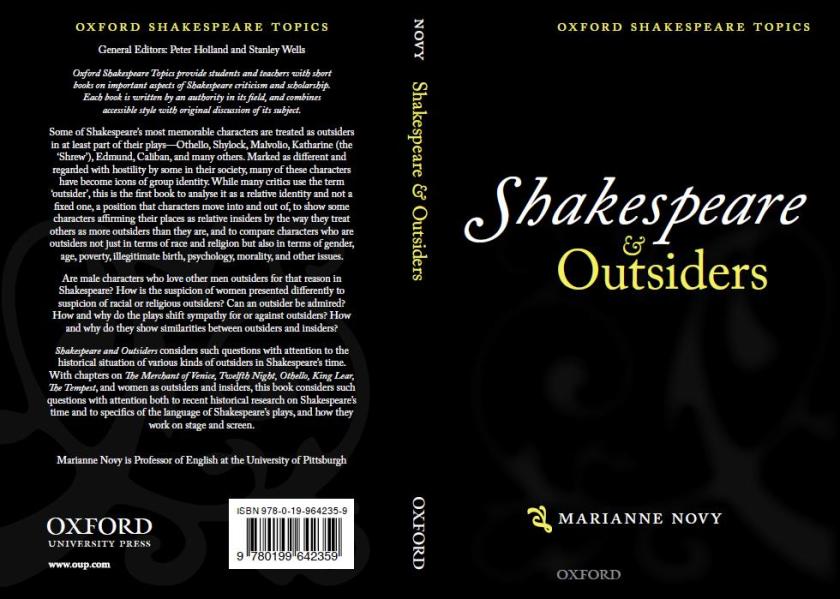
Only a short book, yet once I’d understood its central premise, it felt too long.
Far too long.
Continue reading “Book Review: Marianne Novy’s Shakespeare & Outsiders”
Only a short book, yet once I’d understood its central premise, it felt too long.
Far too long.
Continue reading “Book Review: Marianne Novy’s Shakespeare & Outsiders”
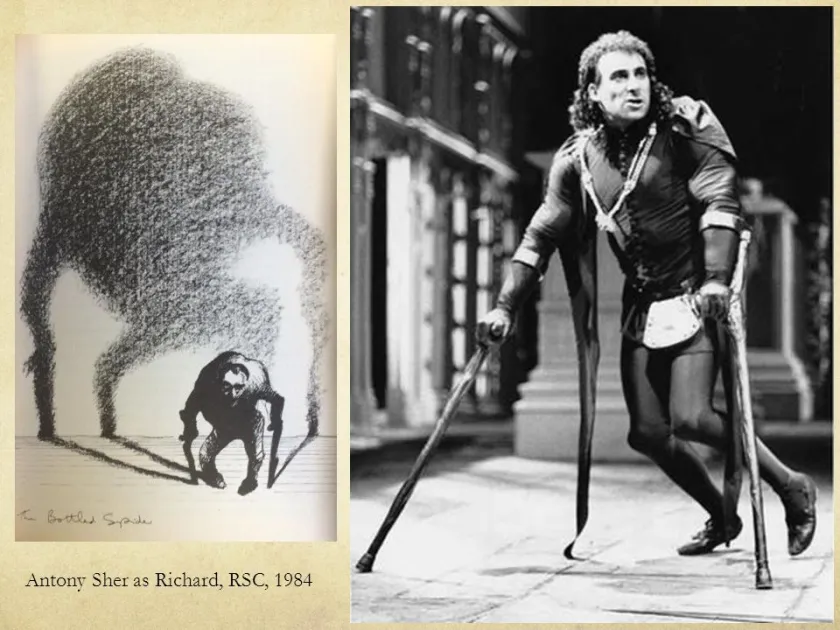
It’s nearly a year (where has the time gone?) since I last picked up a book and decided I’d love to get down the pub for a session with the author (and bear in mind I’m still not drinking: day 70 today). Imagine me, Anthony Sher and Michael Bogadanov setting the Shakespearean world to rights over a few scoops …
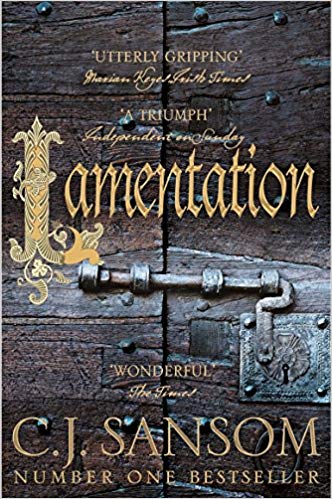
If last year was one in which I read hardly any fiction, then 2019 is one in which I’ve gone the opposite way, making a point to explore some of the popular Tudor historical fiction byways …
At some stage I might even produce a comparative guide, but for the moment here’s a review of ‘Lamentation‘, sixth instalment of CJ Sansom‘s ‘Shardlake’ series.
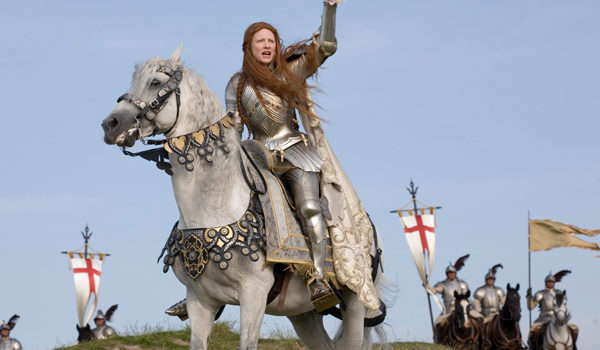
Elizabeth I looms in the background of Shakespeare’s early-to-mid work like the spectre at the feast.
It isn’t solely the question of censorship: she is, I think, the yardstick for every depiction of monarchy, leadership or indeed of strong women. Remember, too, that after a frantic period when the monarch (and ruling religion) changed every few years, she assumed the throne before Shakespeare was born, and was perhaps one of the few constants in that dangerous, fluid age, until she died in 1603.
She was also a real anachronism – a woman ruler in an incredibly patriarchal society. But was she a feminist? Should she be regarded as a feminist icon now?
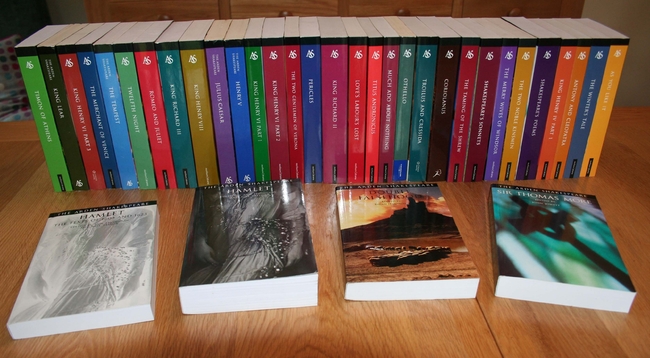
Not quite as frugal as October 2018‘s haul, sadly, but on the whole equally satisfying.
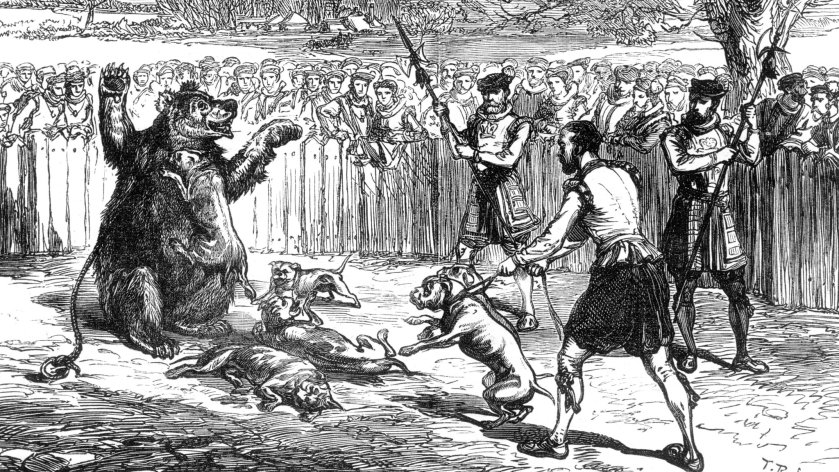
But, bear-like, I must fight the course’. Macbeth, V,vii [a]
It’s something to especially bear in mind now The Merchant of Venice has come round in my read-through.

And we’re back with Forensic Fridays …
Partly because I’m teaching Richard III to a new A Level class, partly because my exam class will benefit, should they ever visit (you know who you are), and partly because yes, they are fun.
You can see the full rules here, but if you’ve been before, the task is to write a prize-winning forensic analysis of a very short extract in just 250 words, working to OCR’s mark-scheme in order to provide some models for my students.
In this passage, I returned to the dramatic moment when deposed Queen Margaret of Anjou, devastated by the killings of her son and then her husband (within 17 days, historically), calls down the heavens to curse Richard, Duke of Gloucester, who in the Henry VI cycle did what had to be done. It’s a very tense moment …

‘Bring your baggage to the texts‘, I always say …
By this I mean your life experiences, the nature, the nurture, the things that define you, good and bad. These are what make your responses to texts individual; they are what lets texts get under your skin as you measure yourself against the moral and ethical dilemmas they present; they, as experience changes you, are what make occasional re-reading such a thought-provoking and rewarding exercise.
So why am I feeling so uneasy about Antonio this time round?

First (my QotW comes later), a few pithy words from Donald Rumsfeld in February 2007:
‘There are known knowns. There are things we know that we know. There are known unknowns. That is to say, there are things that we now know we don’t know. But there are also unknown unknowns. There are things we do not know we don’t know.’
Something worth bearing in mind as the Ponytail Shakespeare read-through canters on to The Merchant of Venice …
“this it is, when men are ruled by women” – or at least by their groins …
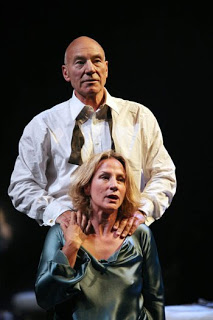
Although I’m never going to end up on stage, I often compare teaching to acting.
Non-teachers, think for a second: up to six performances a day, with audiences who require subtly different characterisations from you. (My timetable goes from Y12 to Y7 without interval on a Friday afternoon, for instance). That plus the teacher persona you can only shrug off when you’re safely indoors (because even walking down the street you end up intervening when you see pupils in uniform mucking about). To say nothing of the range of people you have to be – in five minute chunks – at Parents’ Evenings …
No wonder I’m perpetually exhausted.
But if I were asked to play a Shakespearean role, what would be my top three choices?
 The Boar's Head, Eastcheap