‘Elizabethan London was livelier, noisier, smellier, probably more dangerous and certainly more colourful than the city we know today.’
Gamino Salgãdo, The Elizabethan Underworld, (The Folio Society, London: 2006)
Just another Saturday night at The Boar’s Head, Eastcheap?
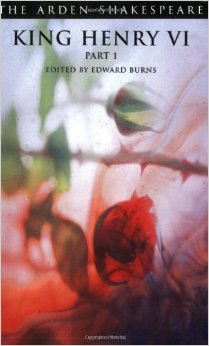
I needed cheering after going back to school today at the end of the Easter Holidays. And, look what I collected from the Post Office on the way home …
I wanted to reflect on the play as a whole, looking back to my ‘Expectations’ back at the end of January.
Good literature is like a magic trick.It makes you believe you are in a different time and place, and care for characters who are constructs, and react to their (also fictitious) actions as if you were a participant.
Writing about this act has been an almost painful task.
It would have been too too easy to continue with the ‘Carry On Up the Dolphin’ theme I’d adopted for Act II, but I didn’t feel up to it, aside from referencing the incorrigible overfamiliarity of Charles:
Ay marry, sweeting, if we could do that,
France were no place for Henry’s warriors. (III.iii.21-2)
And off we go. First-time visitor? Click here and here to find out what Ponytail Shakespeare is all about. Then come back, read, and comment – either here or at the Shakespeare Reddit sub.
On to the play, and post two of God knows how many in this project.
I wonder if I lowered my expectations too far …
To shrug and say it was fine, good, OK, would be to do the opening act of Henry VI part I a disservice. Sure, there were moments of clunkiness – not least when the French Master Gunner feels the need to declare – to himself, his son, and thereby the audience – his employment:
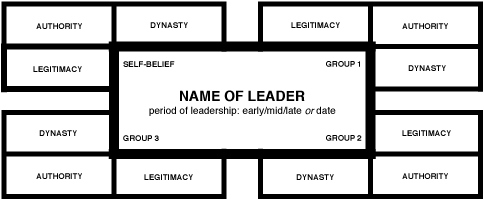
Abstract for the busy:this paradigm crystallises or articulates my recent thinking about kingship/leadership as it applies in Shakespeare’s plays and, I increasingly suspect, beyond.It gained critical mass after teaching Richard IIIat Key Stage 5 (Age 16-17) in Autumn 2016, where I found myself returning again and again to questions of Legitimacy, Authority and Dynasty, in plotting not just Richard’s journey and motives, but Richmond’s and, in fact, Queen Elizabeth’s.
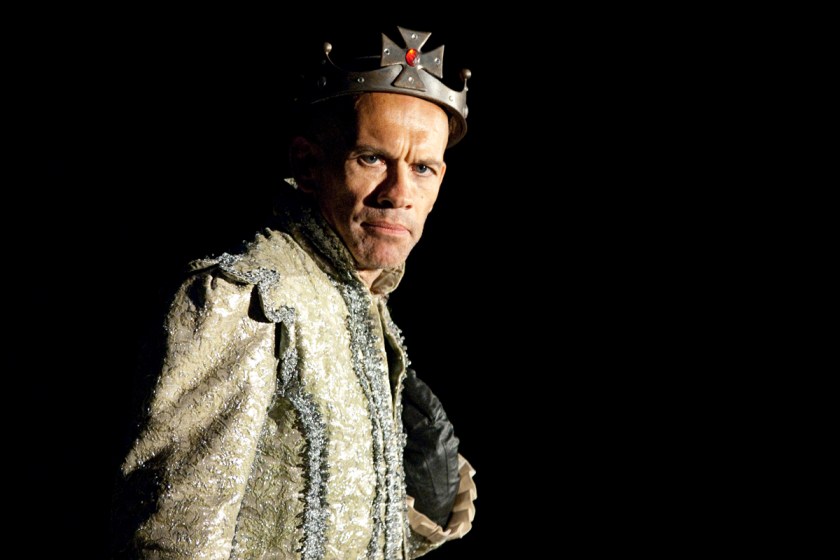
I took this image of ‘Richard’ at the Cambridge Shakespeare Festival in 2013.
“I am unfit for state and majesty”
Why do we still study Shakespeare 400 years after his death?
Our year 12 stint on Richard III is now beginning to wane – we start Act 5 next week, and will essentially be done by the end of the Autumn Term on 16 December. Then I’ll sadly take a break from teaching Shakespeare until after Easter, when I’ll be looking at Much Ado About Nothing (year 8), probably Hamlet or Julius Caesar (year 9), and Macbeth (year 10). My only ‘early modern’ fix in the Spring term is Marlowe’sEdward II. Happy Days.
As the year 12 course has unfolded, keeping pace with the final stages of the US elections, I’ve found it increasingly difficult to leave the next leader of the free world out of our discussions. With one difference: I grudgingly admire one of these larger-than-life characters, and have nothing but contempt for the other …



 The Boar's Head, Eastcheap