

I’ve thought long and hard since I saw this article in the Guardian yesterday … and the upshot is, I’m simply not having it!
I’ve thought long and hard since I saw this article in the Guardian yesterday … and the upshot is, I’m simply not having it!

‘Good comedy is tragedy narrowly averted’ Jonathan Bate
The Two Gentlemen of Verona: Act V
Over the past year I’ve used the question ‘What’s in a name?’ more than once, dismissing labelling in its many forms, but this feels the best way of articulating my unease with The Two Gentlemen as I finish the play …
Continue reading “PTS 05/031: I Don’t Know Whether To Laugh or Cry …”

The Two Gentlemen of Verona: Act IV
Thus far, I feel like I’ve been quite objective about the play, glossing over the obvious errors about travelling by boat between land-locked cities, etc. I’m not one to lionise Shakespeare (whatever my other half thinks), but nor am I interested in joining the current fad I see online for ‘dissing’ him.
Having said that, Act IV begins with a ‘mote to trouble the mind’s eye‘, though – and more on it later, but Act V trumps even this episode. What am I talking about?
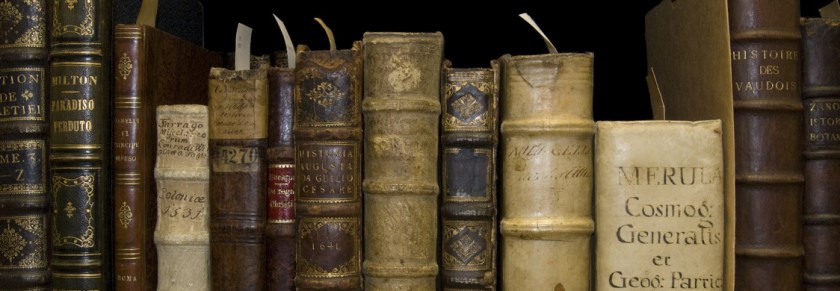
Spending practically all of the summer holidays away from home, you’d think I travelled loaded with books?
Not a bit of it – I simply brought down my Ponytail Shakespeare texts, so I could try to catch up on writing about the read-through. Plus, experience told me that I’d be buying books wherever I went. Shakespeare’s an exacting master, and wherever I go I usually end up returning to Cumbria laden like a donkey.
Half way through the hols, my score so far is:
Continue reading “Boar’s Head Bookshelf update: ‘travelling light’ …”
My gut reaction deserted me a little for this one, perhaps because of the subject matter, so I found myself consulting both my girlfriend and my best friend, the latter also an English teacher. Second and third opinions corroborating my initial intake of breath, and therefore I am pleased to present you my latest Crimes Against Shakespeare Award …

Ponytail Shakespeare: The Two Gentlemen of Verona, Act II.
If The Taming of the Shrew was about disguises, William C Carroll is right in considering The Two Gentlemen as a text about metamorphosis in the tradition of Ovid.
Before we look at these transformations, though, a word on Silvia. It drives me mad every time I hear or read someone preface some ill-informed remark with ‘Shakespeare was …’ More on this at regular intervals, I suspect. But for the moment, let’s take a small nibble at ‘Shakespeare was misogynist‘.

“What do you do, then, if you don’t watch TV?”
One of my opening gambits with new classes every year is the simple statement that I don’t do TV. ‘We might as well get it out of the way, folks.’ I loathe, truly loathe, the way it commands all my senses, to the exclusion of anything else. I usually read with mood music, I can type listening to something too (it’s Pink Floyd‘s Brick In The Wall at the moment), but I simply dislike TV as a way to spend my precious spare time. Reading, no, reading is NOT the same.
The Two Gentlemen of Verona: Act 1
Recently, I wrote about bringing your personal baggage to your interpretation and enjoyment of texts. It’s why I re-read: every few years I genuinely believe I approach a text as a different person, changed in infinite, indescribable ways by my experiences.
This is my first time with the Two Gentlemen, though, and I approached this text with some trepidation. It has a reputation – despite being the first play performed at the newly-built Globe – and Dennis Carey‘s reaction on being asked to direct the play was not reassuring:
“I had only just read the play, and was badly shaken. Could the author really be grateful to anyone for preserving this youthful, unfinished, minor exercise?”
A read-through is a read-through, though …
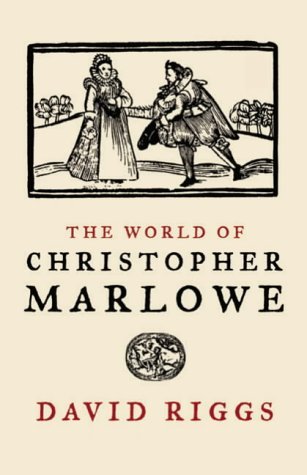 David Riggs: The World of Christopher Marlowe (Faber and Faber: London, 2004)
If you squint, you’ll see that this was one of the books I bought as retail therapy a short while back. I tackled this one first owing to my commitments to teach Edward II again this coming school year – I was hoping to get a few additional nuggets about Marlowe‘s private life.
The book has turned out to be an absolute revelation …

Ponytail Shakespeare: The Taming of the Shrew, Act IV
KATHERINA: ‘And be it moon or sun or what you please,
And if you please to call it a rush-candle,
Henceforth I vow it shall be so for me.
PETRUCCIO: I say it is the moon.
KATHERINA: I know it is the moon.
PETRUCCIO: Nay then, you lie; it is the blessed sun.
KATHERINA: Then God be blest, it is the blessed sun.’
(IV.v.13-19)
I so often say to students (usually when we’re looking at poetry) that you should ‘bring your baggage’ to a work. It’s one of the things that makes re-reading an unexpected joy, as you arrive at a familiar work with fresh eyes. The ‘baggage’ can, of course, be life experiences, or other works that you’ve read: regular readers will already know that I have a habit of conflating Caliban, Richard III and Frankenstein’s monster, to talk through a sympathetic lens about those three characters and the nature vs. nurture argument.
Continue reading “PTS 04/024: How many fingers am I holding up, Winston?”
 The Boar's Head, Eastcheap