

To begin, a little quiz. What connects the following texts?
- Ian McEwan: On Chesil Beach (2007)
- Alfred, Lord Tennyson: ‘Maud’ (1855)
- Christopher Marlowe: Edward II (1592)
- William Shakespeare: Richard III (1592), and
To begin, a little quiz. What connects the following texts?

Will the real Richard III please stand up?
The differences between our screen Shakespeares can be easily as great as those between Thomas More‘s view of him pitched against Sir Horace Walpole in the fascinating book, The Great Debate.
This essay explores how Shakespeare’s script has been interpreted to portray our tragic hero …
subtitled: ‘Sir’s rule number 1‘ …

‘Who’s there?’
‘Nay, answer me. Stand and unfold yourself.’ [a]
Bernardo and Francisco have a point. The entire path of the scene is determined by who is on stage. Think of the ways the conversation could go if instead of Bernardo, another unknown Dane approaches Francisco’s guard-post, or one of Fortinbras’ troops.
From Hamlet to real life, and the idea of decorum – behaving or speaking appropriately to the circumstances and audience.

… sharper than a serpent’s tooth it is
To have a thankless child! (Lear: I.iv) [a]
PTS read-through: The Merchant of Venice, Act III
Daughters. Who’d have them?
The Merchant of Venice, Act III, scene i

Unlucky for some?
Life’s pretty poor for Shylock as is, but his world falls apart when his flighty daughter elopes with a ne’er-do-well Christian lad, taking his fortune to boot. Famously, Act III scene i sees the dam of his frustration and resentment overwhelmed, leaving him only the potential satisfaction of revenge against his mortal enemy, Antonio.
But why is Shylock’s speech so memorably powerful?
 Although this novel (published 2011) begins the Hew Cullan mysteries, I arrived having read the latest, ‘1588: A Calendar of Crime‘ (2016) – whose review you can read here – first.
In many ways, therefore, this felt like a prequel, assembling the cast and creating several relationships I’d already become familiar with.
Think a far superior version of Star Wars episodes I-III …

For my nephew, ‘Brian‘, as part of my ongoing mission to help him get a 4 in his Shakespeare exam.
At this stage, by the way, I still have no idea when his exam is, or whether he has yet read or seen the play.
I’m not sure if he knows, himself … Continue reading “SPOILing Macbeth”

PTS read-through: The Merchant of Venice, Act II
‘Watch the plays, don’t read them!’
Advice given so often to people who say they ‘don’t get’ Shakespeare – advice I almost always disregard, much preferring the film running in my head as I read. But there’s one time when I find reading difficult, and that’s the multi-scene act. It distracted me last time I read The Merchant of Venice, and it has done this time, too. Just don’t speak to me about Antony and Cleopatra‘s 42 scenes …
And yet, for all that there are nine scenes in Act II, there are only really two plots.
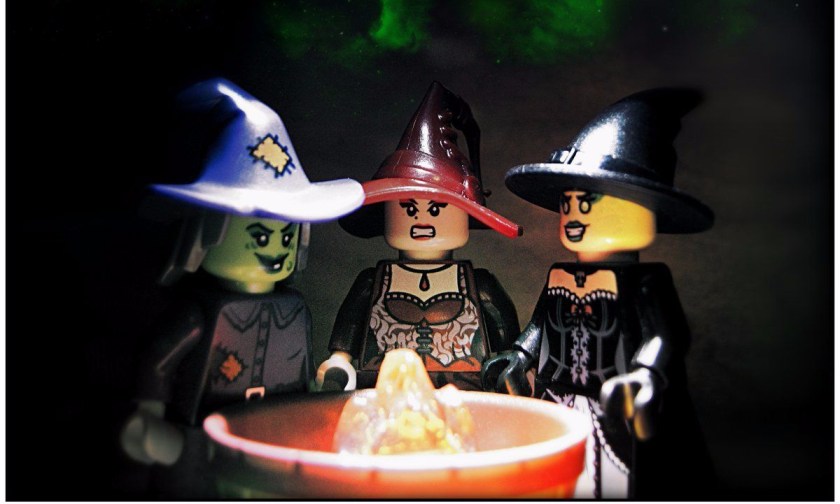
‘Can you do anything to help Brian? He’s got a Macbeth exam coming up,‘ said my Dearest Partner of Greatness.
Brian is not his real name. He’s a nephew. Being a typically feckless Y10 lad, none of us have any idea whether he has read the play, or seen it, or what type of test / exam he has coming up, or when it might be. We doubt Brian knows himself.
So what’s to do, for someone with a target of 4 (for overseas visitors, the highest target at GCSE is 9, and 4 tends to be the grade employers ask for as a minimum) and a complete disinterest in English?
Time to work my magic, and on my birthday, too! Time, in fact, for a mindmap – it’s almost a present being asked to do one, because I LOVE a nice mindmap.
 I came to this novel via Finney’s nom-de-plume, PF Chisholm, and her entertaining Sir John Carey novel, A Famine of Horses.
Appropriately enough, Firedrake’s Eye is an entirely different beast …
Continue reading “[book review] Patricia Finney: Firedrake’s Eye”
 The Boar's Head, Eastcheap