All’s far from well for Richard, and a facility with words isn’t helping …
image: RSC
PTS read-through: Richard II, Act I
The lengthy gap since I finished posting about A Midsummer Night’s Dream has everything to do with volume of work, and absolutely nothing to do with what I’m about to confess you now.But we ought to get it out of the way, or it will cloud all my posts about Richard II …
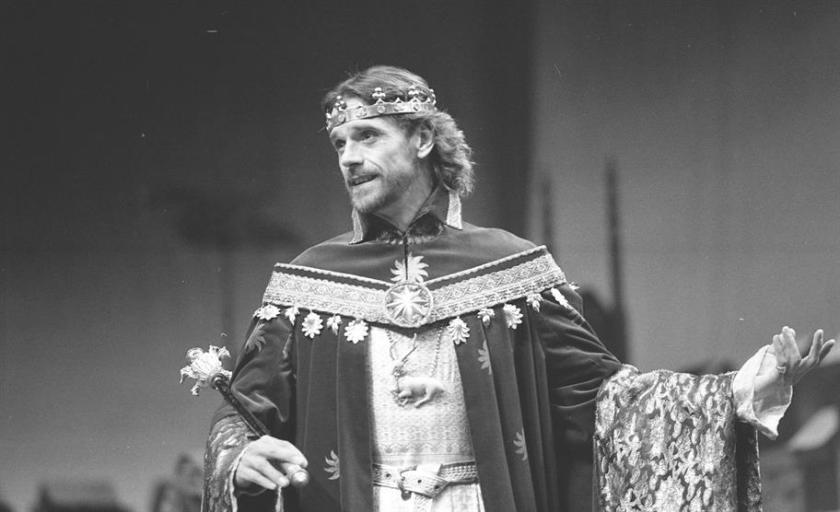
On today’s journey to the late 1590s, let’s take a detour via 1987 …
Being a Production Photographer has its moments – this is my favourite image from The Dream in Cambridge, 2012.
Ponytail Shakespeare read-through: A Midsummer Night’s Dream, Act V.
One of the things about a project like this read-through it that it gives you a certain discipline. In this case, although my timetable may be only notionally followed, it has forced me to read or re-read plays that I might not have, otherwise. Occasionally (Love’s Labour’s Lost, I’m looking at YOU), my reservations have been fully justified. On other occasions, this new-found steel in my soul has been intensely rewarding. I might not otherwise have read the Henry VI plays, for example. Or, indeed, re-read The Dream in any hurry (believing I knew it ‘well enough’), and that would have been a shame …
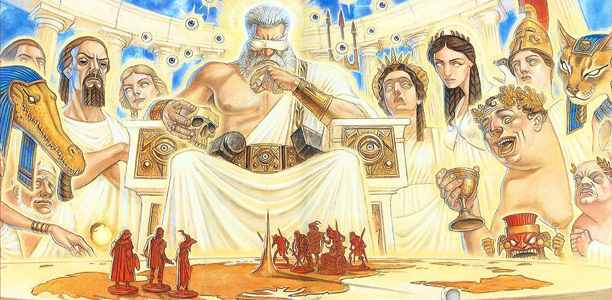
Act III places us at the game table, jostling Shakespeare for a view of the goings-on in that VERY busy wood …
‘No smiting. Not up here. It is the rules. You want fight, you get your humans fight his humans. [1]A Midsummer Night’s Dream, Act III: with apologies to Albert Einstein [2]
On reflection, it seems odd that as a child experiencing / undergoing / suffering a Catholic education, once a year, on our ‘Saint’s Day’ – St Martin de Porres: 03 November – we were treated to a film in the school hall which was invariably a Ray Harryhausen epic.
Not that I want to complain. I loved them, and still do.
They fostered an appetite for the ancient world – for Perseus, Theseus, Hercules, Jason … any number of heroes and their associated monsters. And, like the Book of Genesis, they’ve proved to be invaluable in teaching Literature.
WE CANNOT, MUST NOT, WIPE ART WITH ANTI-BACTERIAL WIPES BEFORE ALLOWING THE NEXT GENERATION TO HANDLE IT …
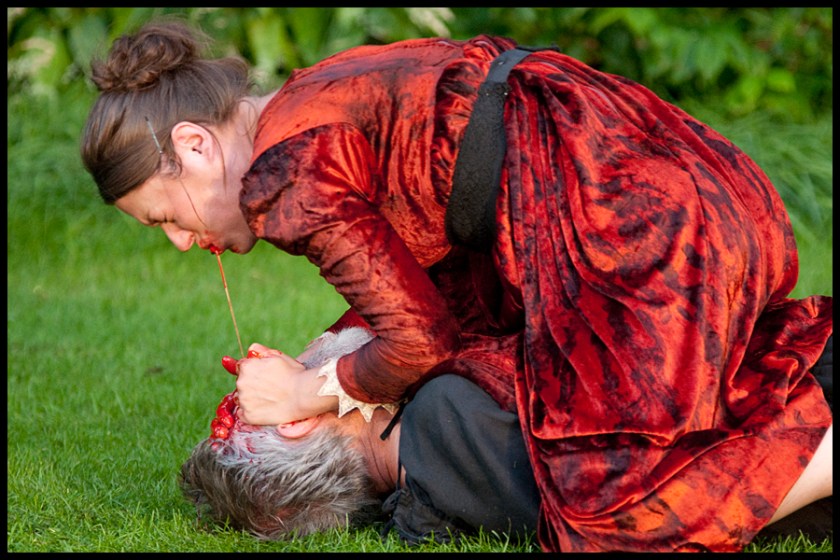
‘Out, vile jelly’: the blinding of Gloucester …
I took this picture – from King Lear – at the Cambridge Shakespeare Festival back in 2012. I often show it to pupils who try to tell me that Shakespeare is ‘boring‘. Or indeed I give them some of the plot details from Titus Andronicus that have caused such concern of late …
It’s taken me a little while to allow this one to sink in to the extent that it became a ‘crime’, but in the Dock, ladies and gentlemen of the Jury, I give you no less than the English Faculty of Cambridge University (or at least some members of that august institution) …
Is anyone going to step up and make this a great Lear with me? (Kevin R McNally asks for help)
Whilst not one of my true favourites, Lear’s a play I know quite well and which, having a taste for Tragedy more than Comedy, I enjoy. I studied it at University, and I’ve seen at least two stagings before that I can remember. The first, at the Cambridge Shakespeare Festival some years back, was memorable for the blinding of Gloucester, which involved one of his eyeballs being sucked out. I’ve got a great photo of it (with a stretched ‘optical nerve’ leading from eye socket to mouth) which I often use to frighten children who claim that Shakespeare is boring. The second performance starred Derek Jacobi. The most striking things about it were Jacobi’s unsatisfyingly-camp Lear, and the use of strobe lighting to great effect in recreating the storm. Reading it, I’m always struck by Edmund‘s louche sexuality, and that always seems to have been missing. What did I want today? Hubris, wanton cruelty, ingratitude, and ‘the Globe experience‘ …




 The Boar's Head, Eastcheap