Writing about this act has been an almost painful task.
It would have been too too easy to continue with the ‘Carry On Up the Dolphin’ theme I’d adopted for Act II, but I didn’t feel up to it, aside from referencing the incorrigible overfamiliarity of Charles:
Ay marry, sweeting, if we could do that,
France were no place for Henry’s warriors. (III.iii.21-2)
A cheeky way of muscling in some commentary on one of my favourite plays, way ahead of SCHEDULE?Perhaps. I shouldn’t be discussing Julius Caesar (let alone Star Trek) until September 2018 …
Dost thou think, because thou art virtuous, there shall be no more cakesandale? (Twelfth Night)
Allow me to introduce the non-Redditors amongst you to the Democratic People’s Republic of R/Literature. When you get there, it sounds great, doesn’t it?
Welcome to /r/literature, a community for deeper discussions of plays, poetry, short stories, and novels. Discussions of literary criticism, literary history, literary theory, and critical theory are also welcome–strongly encouraged, even.
and yet, all this fancy aspirational stuff doesn’t really mean a thing. Read the following from the bottom up.
Note to u/DiggDejected: you are NOT Donald Trump, so why attempt to restrict my free and not-really-that-controversial-at-all speech? In any event, ‘Mein Trumpf’ uses Twitter, not Reddit. PS: ‘YOU can still view and subscribe to my ass’ whilst I await your reply.
This is, in many ways, one of the reasons why I started blogging …
And off we go. First-time visitor? Click here and here to find out what Ponytail Shakespeare is all about. Then come back, read, and comment – either here or at the Shakespeare Reddit sub.
On to the play, and post two of God knows how many in this project.
I wonder if I lowered my expectations too far …
To shrug and say it was fine, good, OK, would be to do the opening act of Henry VI part I a disservice. Sure, there were moments of clunkiness – not least when the French Master Gunner feels the need to declare – to himself, his son, and thereby the audience – his employment:
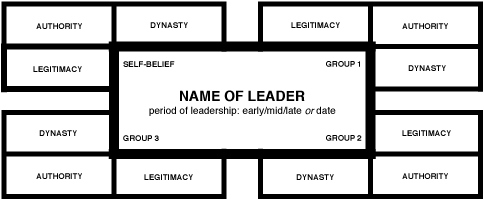
Abstract for the busy:this paradigm crystallises or articulates my recent thinking about kingship/leadership as it applies in Shakespeare’s plays and, I increasingly suspect, beyond.It gained critical mass after teaching Richard IIIat Key Stage 5 (Age 16-17) in Autumn 2016, where I found myself returning again and again to questions of Legitimacy, Authority and Dynasty, in plotting not just Richard’s journey and motives, but Richmond’s and, in fact, Queen Elizabeth’s.






 The Boar's Head, Eastcheap