Quote of the Week: 04 September

BH Heard cover

HEARD, Nigel, Tudor Economy and History (Access to History series), (Hodder & Stoughton: London, 1992)

With school returning today (at least for the teachers) after the summer break, I think it’s appropriate to look at something education-related from my recent reading …

Continue reading “Quote of the Week: 04 September”

Quote of the Week: 28 August

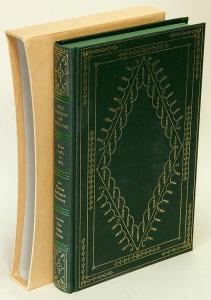
BH macaulayMACAULAY, Thomas Babington: The History of England from 1485 to 1685 (ed. Peter Rowland) (The Folio Society: London, 1985)

Before we look at Macaulay, let me give you one of mine from the classroom.  It’s always an attention-grabber – you can see students falling into a few different categories:

a) people who clearly haven’t considered the issue before but are now thinking rapidly;

b) those who panic at the agency I’m potentially giving them; and

c) the ones who get a twinkle in their eye and would like to test my theory but daren’t.

I hardly ever get a d) can’t be bothered or not listening …

Continue reading “Quote of the Week: 28 August”

Quote of the week: 21 August

BH saccioPeter Saccio, Shakespeare’s English Kings:  History, Chronicle, and Drama (Oxford University Press: Oxford, 2000)

One of the biggest problems with being on holiday with non-reading friends is that you become embarrassed by the amount of time you want, no NEED, to spend in bookshops.

So this was a book I could easily have missed whilst browsing a second-hand bookshop in Leominster.  I was really lucky to have my other half on hand to find it out for me, because time was running out, and I was beginning to worry about the patience of the friends we were holidaying with, who had already politely wandered round the shop and were now at the ‘waiting outside for you‘ stage ….

Continue reading “Quote of the week: 21 August”

Boar’s Head Bookshelf update: ‘travelling light’ …

Books in the vault, Deck C, Folger Shakespeare Library, 9/11/09
image courtesy Folger Library

Spending practically all of the summer holidays away from home, you’d think I travelled loaded with books?

Not a bit of it – I simply brought down my Ponytail Shakespeare texts, so I could try to catch up on writing about the read-through.  Plus, experience told me that I’d be buying books wherever I went.  Shakespeare’s an exacting master, and wherever I go I usually end up returning to Cumbria laden like a donkey.

Half way through the hols, my score so far is:

Continue reading “Boar’s Head Bookshelf update: ‘travelling light’ …”

Quote of the week: 14 August 2017

BH okerlund coverArlene Okerlund, Elizabeth Wydville: The Slandered Queen (Tempus Publishing: Stroud, 2005)

Proof that even a stopped clock can occasionally be correct …

A book review of Professor Okerlund‘s book may well be in the offing – on the basis that (as I often tell students) it’s easier to write about something you don’t like, rather than something you do.  This book really annoyed me as few others have, but I managed to get to the end of it.

Continue reading “Quote of the week: 14 August 2017”

Sometimes, only a book can make it better …

image

Several days’ existential angst  was only ever going to be killed by one thing …

Continue reading “Sometimes, only a book can make it better …”

Quote of the Week: 24 July 2017

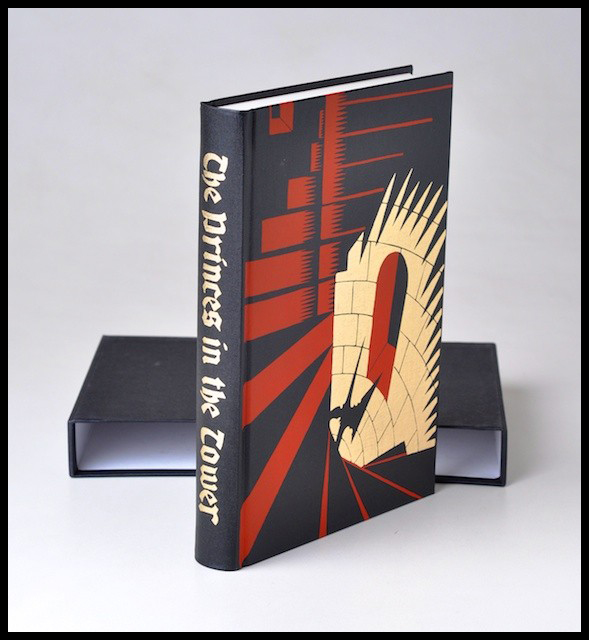
BH The-Princes-in-the-Tower-by-Alison-Weir

Alison Weir, The Princes In The Tower (London: The Folio Society, 1992)

A slight rearrangement of this section.  Instead of one huge sticky post, it’s easier to post as and when I come across something worth sharing.  You can see the previous mega-post by clicking here.

This week’s quotation is attributed to Elizabeth Wydville, widow of Edward IV.  She was, at this stage, in sanctuary with her youngest son, and determined to preserve their lives – and hers – by keeping the two boys separated.

Continue reading “Quote of the Week: 24 July 2017”

You don’t read Shakespeare. Shakespeare reads YOU.

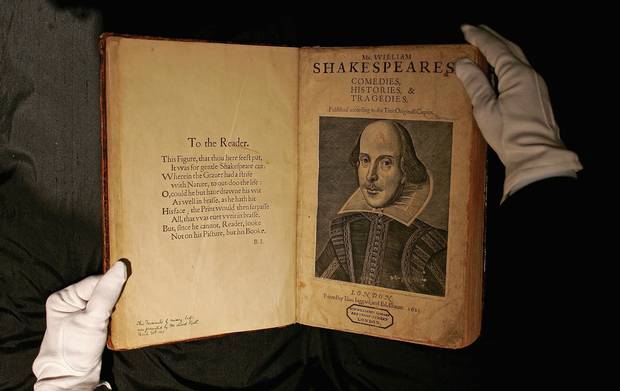
BH reading shakespeare

Whilst it sounds trite, I’m increasingly beginning to believe this.

Part of this comes from the Pony Tail Shakespeare project, I’m sure. With a gap of 400+ years now between the works and our readings, we’re constantly confronted with attitudes which are at a variance with ours.  Example?  This month it’s The Taming of the Shrew, with some ‘interesting’ ideas about marriage, domestic violence, and ‘men vs. women’.

Mostly, though, it comes from being a teacher of Shakespeare …

Continue reading “You don’t read Shakespeare. Shakespeare reads YOU.”

‘A delightful society’ …

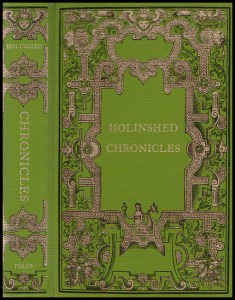
holinshedYou are holding in your hands one of the most interesting, influential – and readable – books in British history.

Raphael Holinshed’s Chronicles of England, Scotland and Ireland have long been famous as the key source of Shakespeare’s history plays.  Given the role of Shakespeare’s view of Tudor history in shaping English nationalism, Holinshed’s long-term influence on British culture and English literature can hardly be overstated.  Michael Wood (intro), Holinshed Chronicles  (The Folio Society:  London, 2012)

Continue reading “‘A delightful society’ …”

A plague on both your houses …

BH The Black Death 2‘When ignorant men are overwhelmed by forces totally beyond their control and their understanding it is inevitable that they will search for some explanation within their grasp.  When they are frightened and badly hurt then they will seek someone on whom they can be revenged. […]  What was needed, therefore, was a suitable target for the indignation of the people, preferably a minority group, easily identifiable, already unpopular, widely scattered and lacking any powerful protector.’

Philip Ziegler, The Black Death, (The Folio Society, London: 1997)  Cover image:  Francis Mosley

The plague was too immediate, too visceral, for Shakespeare to include more than a passing reference to it in his plays.  In Romeo and Juliet it’s a factor in the tragedy, but at a safe distance.

Continue reading “A plague on both your houses …”