Buying books is what we do … sometimes we even read them!
Ouch – where did those six weeks go, then?
I vividly remember sitting in a pub on the last day of term, almost too exhausted to take in the fact that we were finally finished. That seems like about 10 days ago. The rest has passed in a blur of walking (with blisters you wouldn’t believe); sleeping under canvas at every opportunity (I reckon upwards of two weeks); sleeping in general (storing up resources for next term and dealing with the futility of trying not to dream about school); writing resources for school and this blog; reading; and buying books …
An excellent addition to college / uni library shelves. Less sure about your personal collection …
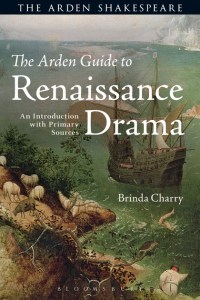
Brinda Charry, The Arden Guide to Renaissance Drama: An Introduction with Primary Sources (Arden Shakespeare) (Bloomsbury Publishing, London: 2017) £18.99 (paperback)
Renaissance plays are among the world’s most valuable literary artifacts. They are also historical documents, ideological statements, philosophical reflections and theatrical scripts.
Brinda Charry has produced a relatively accessible and comprehensive overview of the period and its drama, split into two distinct sections.
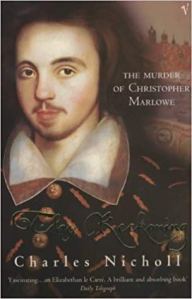
Our victim was brash, talented, and stabbed just above the eye before his 30th birthday …
Charles Nicholl, The Reckoning: The Murder of Christopher Marlowe (Vintage: London, 2002)
– – –
‘I am not trying to argue that Marlowe’s death has to have a meaning. My reading tends only to a more complex kind of meaninglessness than that of a ‘tavern brawl’.
Gifted, abominable, yet capable of producing ‘the mighty line’ …
Ben Wishaw and Karoline Herfurth in Tom Tykwer‘s 2006 film
It’s episode 52 – not a continuous year (the first post is here), but a year nonetheless, so I’m going to indulge myself a little this week. Will you be able to tell the difference, I hear you ask!
Bear with me whilst I tell you a story:
In eighteenth-century France there lived a man who was one of the most gifted and abominable personages in an era that knew no lack of gifted and abominable personages. His story will be told here. His name was Jean-Baptiste Grenouille, and if his name – in contrast to the names of other gifted abominations, de Sade’s, for instance, or Saint-Just’s, Fouché’s, Bonaparte’s, etc. – has been forgotten today, it is certainly not because Grenouille fell short of those more famous blackguards when it came to arrogance, misanthropy, immorality, or, more succinctly, wickedness, but because his gifts and his sole ambition were restricted to a domain that leaves no traces in history: to the fleeting realm of scent. [a]
Hot ice and wondrous strange snow: the appetite for articulation …
Destination 1592 … [a]Frequently, I ask my class to step into the time machine and join me back in 1592.
Why then?
Conveniently, it’s as close as we can get to dating both Richard III and Edward II, my Key Stage 5 texts. The other plays I teach at the moment – Much Ado About Nothing and Macbeth – follow on from here.
This period was a crucible in which Drama as we know it was being born, alchemically transmuted from the didactic Morality Plays into something fresh and exciting. With my Marxist critical hat on, if we can understand the contextual elements poured into that cauldron, we can better appreciate and analyse the resultant heady brew.
Love it, hate it? Just try it, and see what happens …
Stephen Greenblatt: Tyrant: Shakespeare on Power, (Bodley Head: London, 2018). ISBN: 9781847925046.
– – –
I probably need to declare my bias, not least for new visitors.
I’m an unashamed socialist (I don’t understand how an educator could be otherwise, given that our efforts benefit society more than ourselves); I’m anti-Brexit in the UK, and anti-Trump in the US. One of my most popular blog posts, from two years ago, equated Richard III with Trump. “I am unfit for state and majesty” indeed …
All the world IS a stage, where Richard is concerned …
Year 12 face their mock exam this coming Friday, with varying degrees of panic.
So, this week’s QotW is actually a BOGOF offer. I often talk about Richard III being a ‘season finale’ to the History plays. The chameleon quotation above comes from the penultimate episode, as you might remember, people. Richard is – at least until it all begins to unravel for him – the consummate actor.
Marlowe was never going to fit in. In some ways I wish he hadn’t tried so hard – he would have lasted longer.
What?
‘We don’t like mavericks here …’
– is what I was told some years back at my first school. My first school, just to be clear …
It’s not a default position, I promise you – I honestly don’t aspire to be a maverick. It’s simply about my always bearing in mind the attributed words of Einstein: the definition of insanity is doing the same thing again and again and expecting different results. So if it demonstrably doesn’t work or doesn’t make sense, you need to find someone else, if you want blind obedience. How do we improve, otherwise? Plus, my teaching mentor gave me advice I’ve never forgotten, and which has served me well (and my students, if results are anything to judge by*). We might paraphrase it as: ‘As long as you know where should be taking the students, don’t stress about abandoning the lesson plan and getting there via another route.‘
So, admittedly, I can be a:
maverickˈmav(ə)rɪk/ noun
1. an unorthodox or independent-minded person.
But, surely, no SURELY, this what we aim to foster in our children (what actually we reward in the subject: critical, evaluative thinking and independence of ideas – those terms are on the markschemes, at the top end) … right? Or does education exist to train people into unthinking passivity?
Students laugh when they hear it, but Anne was in deadly earnest …
We have hedgehogs.
I say ‘we’, but I’m appropriating the cute nocturnal visitors at my Snowdonia home (also known as ‘her place‘) …
Having spent most of the week camping in the back garden – yes, by choice – I’ve become a lot more familiar with their comings and goings: their enthusiastic crunching of mealworms (these are spoiled, and resolutely ignore the slugs they are supposed to be eating – I’ve seen them nudge slugs aside with their snouts!); their irritated huffing and snorting when a rival appears at bowl number two, all within a couple of feet of my head.
Which, of course, makes me more sensitive to the hedgehogs – just three of them* – in Shakespeare …






 The Boar's Head, Eastcheap