
“Don’t tell them, SHOW them.”
Last week, as an interesting experiment (interesting to me as much as to anyone else), I set my two KS4 classes the same question, to see how they fared with a little competition.
“Don’t tell them, SHOW them.”
Last week, as an interesting experiment (interesting to me as much as to anyone else), I set my two KS4 classes the same question, to see how they fared with a little competition.
“this it is, when men are ruled by women” – or at least by their groins …
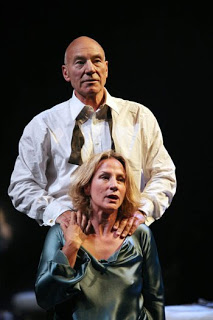
Although I’m never going to end up on stage, I often compare teaching to acting.
Non-teachers, think for a second: up to six performances a day, with audiences who require subtly different characterisations from you. (My timetable goes from Y12 to Y7 without interval on a Friday afternoon, for instance). That plus the teacher persona you can only shrug off when you’re safely indoors (because even walking down the street you end up intervening when you see pupils in uniform mucking about). To say nothing of the range of people you have to be – in five minute chunks – at Parents’ Evenings …
No wonder I’m perpetually exhausted.
But if I were asked to play a Shakespearean role, what would be my top three choices?
This weekend just gone marked the 40th RSPB Big Garden Birdwatch. As the ‘Upstart Crow‘ (or magpie) himself, I’m sure Shakespeare would have approved …
… is that the job is, frankly, shit. And that you have to be a shit to do it successfully.

PTS read-through: King John, Act IV.
If you’re not ‘born great’, if you want to achieve greatness, you have to put in the hours, right? Just think of the graft involved: wheeling and dealing; equivocating; making and breaking alliances; sucking up; marrying well (not, alas, for love); adding colours to the chameleon; changing shapes with Proteus; and generally setting the murderous Machiavel to school.
And for what?

It’s no wonder we love soliloquy …

Regular visitors know that I teach Richard III and Edward II at A Level – coincidentally, plays which seem to have appeared within months of each other, in or around 1592. Marlowe doesn’t get discussed much in the circles I move in online, and Edward II often feels even more overlooked – so when someone wanted to talk about the differences between Kit and Will on /r/shakespeare (after watching a performance of Tamburlaine), I couldn’t resist diving in. Here’s an edited extract of what I said:
The more I admire Juliet, the more protective I get about her …

PTS read-through: Romeo and Juliet, Act II, sc. ii
‘He jests at scars that never felt a wound.’ (II.ii.1) [a]
This is one of the reasons why I avoid teaching R&J at GCSE.
Continue reading “PTS 12/076: Keep Your Snake In Its Cage, Boy …”
Without any protection from his class background, Gaveston’s fall was always going to be fatal.

Meet Alex Honnold:
‘history’s greatest ever climber in the free solo style, meaning he ascends without a rope or protective equipment of any kind.'[a]
Just researching a picture for this post made me feel a little nauseous …
Continue reading “Forensic Friday (#09): Edward II (iv.400-407)”
‘You will, generally, be rewarded for originality, but the crazier your argument is, the better your reasoning should be’.

Originally intended as a confidence-builder for the chronically-tentative, it’s become a cliché in my teaching that ‘in English, there’s no such thing as a wrong answer’. Increasingly, though, and especially at A Level, I’m finding it necessary to qualify that empowering notion. Perhaps students were getting a little too emboldened, as we’ll see below. Just as Squealer in Animal Farm reminds us that ‘Some animals are more equal than others’, some answers are – obviously – better than others. [a]
Almost organically, as I refined the concept, it came to be known as The Continuum of Plausibility™. I’ve been using the term here, off and on, for a while now without properly explaining it, so here goes.
Should I oppose the slings and arrows of teaching the same thing year in, year out?

… THAT is the question occupying my thoughts at the moment.
No, this isn’t a Machiavellian masterplan for world domination (although see below, perhaps it’s just part of one).
What you see above is the bare bones of a 12-week (forty-eight lesson!) Scheme of Work on Julius Caesar that I’ve been toying with producing over the summer. I’m hoping for advice – not just on the skeleton of the scheme (although that would be highly appreciated), but on whether or not to bother …
 The Boar's Head, Eastcheap