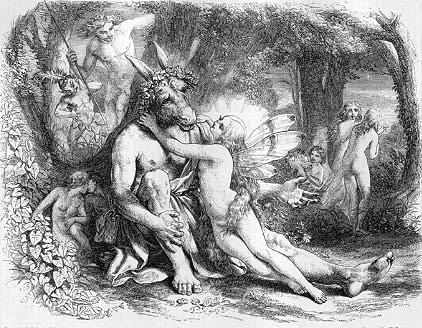
Being a Production Photographer has its moments – this is my favourite image from The Dream in Cambridge, 2012.
Ponytail Shakespeare read-through: A Midsummer Night’s Dream, Act V.
One of the things about a project like this read-through it that it gives you a certain discipline. In this case, although my timetable may be only notionally followed, it has forced me to read or re-read plays that I might not have, otherwise. Occasionally (Love’s Labour’s Lost, I’m looking at YOU), my reservations have been fully justified. On other occasions, this new-found steel in my soul has been intensely rewarding. I might not otherwise have read the Henry VI plays, for example. Or, indeed, re-read The Dream in any hurry (believing I knew it ‘well enough’), and that would have been a shame …
PTS read-through: A Midsummer Night’s Dream, Act IV
Not for the first time in my read-through, the main thing I want to know is: ‘did they, or didn’t they?’
In this I was egged on by Cedric Watts, though I needed little encouragement, in truth. Still, it’s convenient to blame him for my prurience. If my answer is the same as Watts’: ‘of course!’, it begs a second question on which we differ:
Act III places us at the game table, jostling Shakespeare for a view of the goings-on in that VERY busy wood …
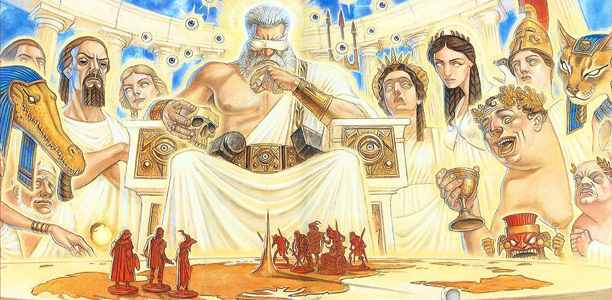
‘No smiting. Not up here. It is the rules. You want fight, you get your humans fight his humans. [1]A Midsummer Night’s Dream, Act III: with apologies to Albert Einstein [2]
On reflection, it seems odd that as a child experiencing / undergoing / suffering a Catholic education, once a year, on our ‘Saint’s Day’ – St Martin de Porres: 03 November – we were treated to a film in the school hall which was invariably a Ray Harryhausen epic.
Not that I want to complain. I loved them, and still do.
They fostered an appetite for the ancient world – for Perseus, Theseus, Hercules, Jason … any number of heroes and their associated monsters. And, like the Book of Genesis, they’ve proved to be invaluable in teaching Literature.
Puck and Ariel are first cousins – mischievous, not malicious …
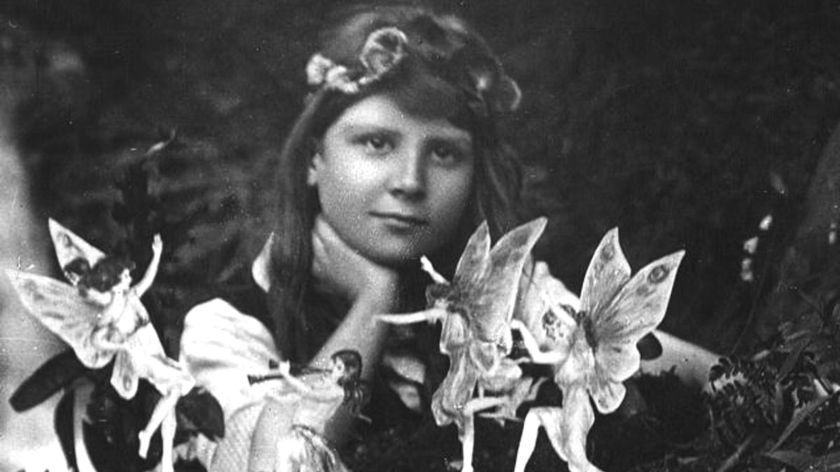
Sir Arthur Conan Doyle was taken in by the Cottingley Fairies. I might have been, too …
A Midsummer Night’s Dream, Act II
“You see, Wendy, when the first baby laughed for the first time, its laugh broke into a thousand pieces, and they all went skipping about, and that was the beginning of fairies.” […]
“And so,” he went on good-naturedly, “there ought to be one fairy for every boy and girl.”
“Ought to be? Isn’t there?”
“No. You see children know such a lot now, they soon don’t believe in fairies, and every time a child says, ‘I don’t believe in fairies,’ there is a fairy somewhere that falls down dead.”1
Discussing Act I, I alluded to the fact that my suspension of disbelief was more taxed by Helena‘s actions than by the whole idea of a fairy realm – how strange is that?
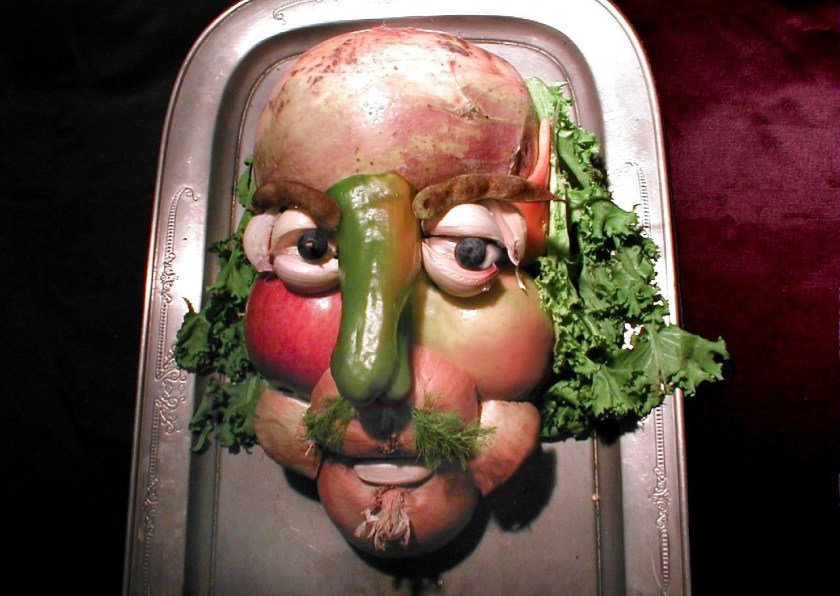
Putting Shakespeare in students’ mouths is often as much fun as feeding a baby – the faces they pull!
image (C) Francine Segan
A Midsummer Night’s Dream: Act I
Shakespeare’s language lives in the mouth, not the ears or eyes. It needs to be tasted, and one of the advantages of living alone is that I can pace up and down my flat’s lengthy corridor reading tricky lines out loud, or just playing with the inflections of favourites:
I wasted time and now doth time waste me.
I WASTED time and NOW doth time waste me.
I wasted TIME and now doth TIME waste ME.
And so on, like the celebrity skit in the BBC’s Shakespeare400 celebration. You get the picture.
If it needs to be tasted, it also needs, I suppose, to be CHEWED. That’s what we often do in the classroom …
Imagine, if you have been following, the difficulty in putting a soundtrack album together for Love’s Labour’s Lost – a play I was largely disconnected from and apathetic about.
Still, some thought and a trawl through my embarrassing CD collection served up a dozen or so songs, and a few pointers for others.
My life has been filled with obsessions, and for reasons too complex to go into here, about twenty-five years ago, one of them was Scottish history. With no knowledge ever completely wasted, it’s contributed to where and who I am today, struggling with this play, and especially to find any kind of empathy with its male characters.
Put simply, if I had a daughter, none of these men would be son-in-law material …





 The Boar's Head, Eastcheap