Regular visitors know that I teach Richard III and Edward II at A Level – coincidentally, plays which seem to have appeared within months of each other, in or around 1592. Marlowe doesn’t get discussed much in the circles I move in online, and Edward II often feels even more overlooked – so when someone wanted to talk about the differences between Kit and Will on /r/shakespeare (after watching a performance of Tamburlaine), I couldn’t resist diving in. Here’s an edited extract of what I said:
Can we just stop putting ideas in Shakespeare’s head, please?
GNU Sir Terry Pratchett
… just busy.
And increasingly grumpy … when I’ve found no time to blog, other than a single new Golden Dogberry.
Autumn Term is always a log-jam, and my least favourite of the three. I told my better half today that whilst there had been a LOT of time at home and weekends where I was too busy to see her, there wasn’t really any ‘me time’ in there. I haven’t read anything for weeks, and obviously, the blog has suffered. At least our school has finally been inspected now after years of being on ‘DEF-CON2’, and with any luck we won’t see THEM for a while …
‘Books are delightful society. If you go into a room and find it full of books – even without taking them from the shelves they seem to speak to you, to bid you welcome.’ William Ewart Gladstone
This post came out of a discussion on Reddit where I asserted that we weren’t seeing enough Shakespeare shelf-porn. SHAKESPORN, in fact. Yup. You heard me. So in the spirit of ‘I’ll show you mine; you show me yours‘, here’s a tour of my Shakespeare bookshelf: MY ‘delightful society‘ …
Richard II = Edward II = Prospero = Duke Vincentio = Henry VI = every useless boss you have ever worked for,
Richard’s return from Ireland is NOT a happy one …
Richard II appears on my reading list for Edward II each year. It’s not just me – this is what Jonathan Bate, who I recently gushed about, has to say:
Richard II’s relationship to Edward II is so obvious that it is not very interesting. The structure of the two plays is identical: the King is surrounded by flatterers and pitted against an assemblage of nobles with vested interests of their own, then isolated and uncrowned, stripped of his royal identity, thus forced to discover his inner self by means of a supple, reflective soliloquy delivered whilst humiliatingly in prison. In each play the Queen is pushed to the margins in part because of the king’s homoerotic leanings. Marlowe is bolder than Shakespeare in his explicit portrayal of the homosexuality and his neat device of joining the Queen with the rebels in revenge. [a]
It should be easy to find something in Richard which’ll look familiar to my Edward students, right? Let’s have a go …
Studying a History play? Look for the playwright’s sources …
My Marxist critical inclinations – that a text can’t be read in isolation from the contextual crucible that created it – get pretty much free reign when it comes to teaching Edward II. For the OCR A Level course, my students need to compare Marlowe’s drama to Tennyson‘s monodrama, ‘Maud‘ and, get this, 50% of the mark is context (that’s AO3, troops).
What, exactly, is context? I’d suggest that for both texts, maybe all texts, context is usually a mix of two things:
Jonathan Bate: The Genius of Shakespeare (Picador: London, 2008)
Professor Bate will probably be a familiar face, or voice, to anyone on the ‘Shake-scene’ in the UK. You can hear him participating in Shakespeare-themed episodes of BBC Radio’s ‘In Our Time’, he heads a University of Warwick MOOC on ‘Shakespeare and his World’, and amongst his many written accomplishments, he edited the Arden third edition of Titus Andronicus.
This is such an engaging book. Because ‘you don’t read Shakespeare, he reads you‘, we learn almost as much about Professor Bate as we do about Shakespeare. If you want to know what a modern Shakespeare scholar is like, you could do worse than start here.
Buying books is what we do … sometimes we even read them!
Ouch – where did those six weeks go, then?
I vividly remember sitting in a pub on the last day of term, almost too exhausted to take in the fact that we were finally finished. That seems like about 10 days ago. The rest has passed in a blur of walking (with blisters you wouldn’t believe); sleeping under canvas at every opportunity (I reckon upwards of two weeks); sleeping in general (storing up resources for next term and dealing with the futility of trying not to dream about school); writing resources for school and this blog; reading; and buying books …
An excellent addition to college / uni library shelves. Less sure about your personal collection …
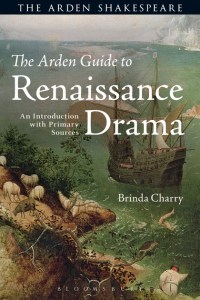
Brinda Charry, The Arden Guide to Renaissance Drama: An Introduction with Primary Sources (Arden Shakespeare) (Bloomsbury Publishing, London: 2017) £18.99 (paperback)
Renaissance plays are among the world’s most valuable literary artifacts. They are also historical documents, ideological statements, philosophical reflections and theatrical scripts.
Brinda Charry has produced a relatively accessible and comprehensive overview of the period and its drama, split into two distinct sections.



 ‘Books are delightful society. If you go into a room and find it full of books – even without taking them from the shelves they seem to speak to you, to bid you welcome.’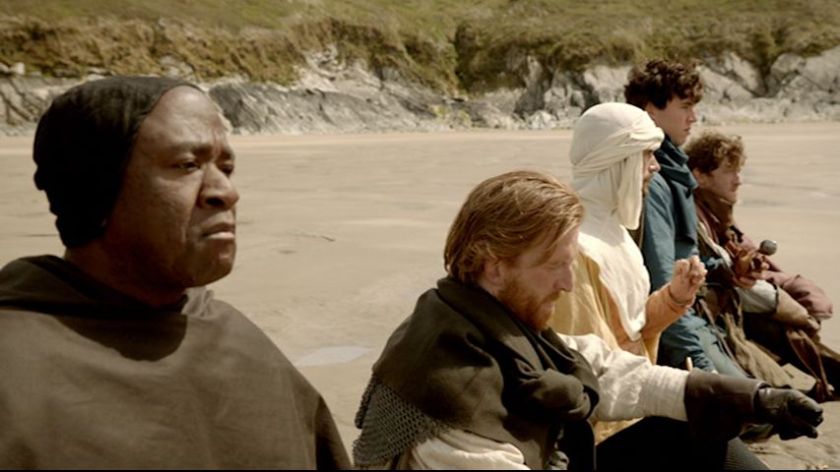
 My Marxist critical inclinations – that a text can’t be read in isolation from the contextual crucible that created it – get pretty much free reign when it comes to teaching
  Jonathan Bate

 The Boar's Head, Eastcheap