PTS Shakespeare read-through – Richard III, Act I sc iv.
Back in early 1997, I discovered that my eldest son was on his way. The pregnancy was unplanned, and to say the least a shock to a frankly very immature young man who was focussed on nothing but wine, women and song – not necessarily in that order. To be fair to that youth, books sometimes made an appearance, too. He was, I like to think, a completely different person to the one who’s writing this evening – I look back on him with some shame (on sleepless nights), listing the apologies I owe people.
I think I might finally have achieved critical mass. One of my students (thanks, Struckers) pointed out today that I’ve got a Shakespeare quotation for every occasion. That pleased me quite a bit, in the way that only an unabashed nerd can take pleasure from their weird obsession being recognised by others (even if they are being gently mocked) …
Working in a school, of courseI met several people who seemed genuinely frightened by the eerie sky that only half-illumined our collective journey to work on Monday – some, only some, of them were pupils …
Conditions really were awe-inspiring up here in the frozen North of England.
Laura Ashe, Richard II: A Brittle Glory (Penguin: London, 2016)
Emboldened by the excellent ‘Penguin Monarchs‘ volume on Edward II, I looked out which other volumes were available: the first that arrived in the post was this one.
Ashe‘s approach seems different to Given-Wilson‘s on Edward. Where he was reassuringly chronological, she deals with Richard’s reign (and I’ve seen this as a criticism of the volume online) thematically. It has, nonetheless, given me some useful insight into a king who I’ve always vaguely felt I owed a debt: I fell asleep watching Jeremy Irons in the title role – in Stratford, of all places – back in 1986/7. To this day, I blame the large lunch I had before the matinee performance …
Students, people who know me, or indeed regular visitors will know I have a bit of a fetish for Lego …
Just to be clear, I don’t play with it, but I do collect some of the minifigures, photograph them – sometimes for classroom posters, or just because I generally like them. My Schemes of Work for school, like the one on Conan Doyle‘s The Sign of Four, is full of Lego pics. I buy plenty of minifigures.
Christopher Given-Wilson, Edward II: The Terrors of Kingship (Penguin Monarchs series), (Penguin: London, 2016)
This series of books have been on my radar for a while, but it took a recommendation from an ex-student (thanks, Jay!) to finally push me into buying one. These are absolutely ideal for A Level students (who NEED the context for their final exams: hint, hint to both my classes) or people who wanted a potted history without getting too bogged down.
Given-Wilson‘s writing style was pitched just right, I thought – dryly academic without being off-putting, clear without being condescending to those of us who don’t need (or want) words of one syllable. It’s certainly inspired me to buy some more from the series: naturally, I’m now forced to wait until March 2018 for the Richard III volume, sigh …
This week’s quote of the week, is the final paragraph from the book, which sums up my views on Edward as presented in Marlowe‘s play.
I entertain by picking brains Sell my soul, by dropping names (Elton John, 1974) Photo: Terry O’Neil
Richard III: Act I, Sc iii (Ponytail Shakespeare read-through)
Richard has been a part of my life, a surprisingly large part, for about six years or so. In fact, we might call him part of the ‘soundtrack of my life’, since I turned 40. So whilst I try and inevitably fail to do the play justice in these posts, one of the things that’s already settled is the Shakespeare’s Jukebox ‘Soundtrack Album’ that I publish at the end of my amble through the play. Some songs have been ringfenced, so that I don’t use them for any other play … this is one.
If there’s a decidedly ‘camp’ flavour to the jukebox, in fact to these posts (I mean: Mercury, Hasselhoff and now EJ?), it could be down to two factors:
I’m teaching Edward II, to two classes, at the moment (conspiracy theorists, and I like one as much as the next person, will note that these two plays were probably written within months of each other, if not simultaneously); and
this is a camp play. At some stage I might get stuck into the relationship between Richard and Buckingham (a personal theory that causes wide-eyed incredulity in my classes, more often than not)
I’ve often described it as a pantomime for grown-ups. Ironically, because a child’s pantomime is possibly the worst way I can think of spending an evening. Perhaps this takes on board the criticisms of those who favour other, more mature or ‘intellectual’ plays. Richard is gleefully childish and petulant, at least until he becomes king, and there are several times where I want to shout:
He’s behind you!
or similar, at members of the cast: Clarence, Hastings, the young Duke of York, the hapless Burghers of London, at the very least.
But … having ambled through the HVI plays for the first time this year, I have a completely different understanding of and respect for this play. The Bitch is back in Act I scene iii, and there can be only one Bitch (capitalisation intended), as we saw in The Hollow Crown …
‘What though I killed her husband and her father?’
Richard III: Act I sc ii (Ponytail Shakespeare read-through)
Sub-title: ‘Do you have free wi-fi? Because I’m sensing a connection …’
At school, we have a department policy of sitting boy-girl where possible (until sixth form, at least), and in most classes there is a combination that seems to get on that bit too well. So, I’ve been researching chat-up lines I can embarrass those pupils with. Yes, I’m that kind of teacher …
These are the best clean ones I’ve found so far. If you can top this, let me know.
Anyway, back to the play! Shrug. If you’ve decided to behave badly, you may as well test your strength straight away, right? If we accept, after my last post, that the main thing on Richard‘s mind is the constant, inevitable rejection of women, it follows that his next step in the play (the true story is somewhat different) is to seduce someone …
(Can I also say it hurt my eyes to search for this image?
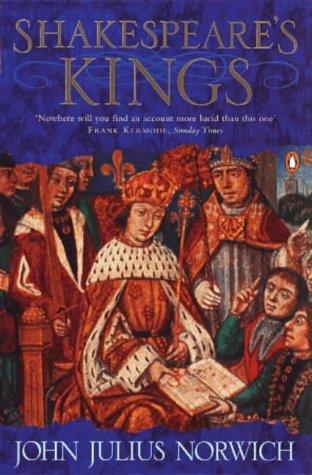
John Julius Norwich, Shakespeare’s Kings (Penguin: London, 2000)
I like this book very much, and as I’m currently teaching Edward II to two separate groups of sixth-formers, I thought I’d look out a quotation for them regarding our hapless king. Despite Edward not being one of Shakespeare‘s kings, Norwich doesn’t disappoint …
GR Elton, A History of England: England Under The Tudors (The Folio Society: London, 1997)
If there was ever a knockout blow in the ebooks vs. physical books debate, I think The Folio Society supplies it.
The heft of them, the slipcases, the overall production values – even the feel of the paper stock makes these a pleasure to read, and as someone who usually subjects his books to ‘tough love’, it makes me look after them in a way I rarely do other books.
And the contents never fail to live up to the packaging …



 Working in a school, of course I met several people who seemed genuinely frightened by the eerie sky that only half-illumined our collective journey to work on Monday – some, only some, of them were pupils …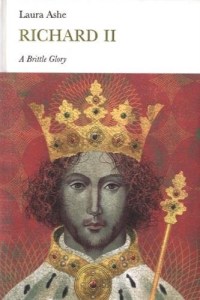



 The Boar's Head, Eastcheap