Imagine, if you have been following, the difficulty in putting a soundtrack album together for Love’s Labour’s Lost – a play I was largely disconnected from and apathetic about.
Still, some thought and a trawl through my embarrassing CD collection served up a dozen or so songs, and a few pointers for others.
This is a long read – I say that on a blog where posts often hit 1,300 words, against ‘accepted wisdom’ – so apologies in advance. YOUR blog is your blog; my blog is MY blog, and I write for catharsis and as a kind of journal, not ‘popularity’, ‘followers’, or ‘influence’. I was tempted to temper my words with a gallery of pictures, but that didn’t feel right, either. This post feels a little more personal than most.
In spite of, or maybe because of, constant trawling for Shakespeare-related content, I have only just found this. Last April, Peter Marks wrote a piece for The Washington Post (link below) suggesting that Americans are too ‘intellectually lazy’ to appreciate Shakespeare, and fearing for the future popularity of the plays. My immediate response was ‘you think it’s bad in the US? Try over here, where Shakespeare was born!’
My life has been filled with obsessions, and for reasons too complex to go into here, about twenty-five years ago, one of them was Scottish history. With no knowledge ever completely wasted, it’s contributed to where and who I am today, struggling with this play, and especially to find any kind of empathy with its male characters.
Put simply, if I had a daughter, none of these men would be son-in-law material …
It doesn’t get much more influential than the ‘good book’ in English Literature …
Do you see the light?
[Second in a series of articles aimed at our ‘A Level’ students, addressing gaps in their general and literary knowledge. Read the previous article, On Dante’s Inferno, here]
‘Good morning [big smile]!
In the Christmas season, who do you think is the greatest gift-giver of them all?’
(this happened to me a few weeks back)
No – don’t slam the door !I’m genuinely not here to convert you.But if there’s just one text that has gifted the most sources of inspiration and allusion to our Western literary tradition, it’s probably the Old Testament Book of Genesis.Estimates vary, but its very strong messages on obedience and patriarchy have been influencing society for about 3,000 years.
This would be the book to choose alongside Shakespeare’s Complete Works when looking for the most influential literary works.
Not drowning, necessarily – still waving, to paraphrase Stevie Smith, but wishing I wasn’t quite so far away from the shore, paddling blithely in the warm shallows of Romeo and Juliet, as I should be by the end of January; having splashy fun with the rest of the blog and my new excursions on Twitter. But fifty-plus posts and nine plays in? Not dead.
That said, despite plenty of opportunity, I’ve ‘not got round to‘ reading Act III of Love’s Labour’s Lost. I’m still reading: Iain M Banks, Paolo Bacigalupi, and chunks of George Wilson Knight on Julius Caesar, but, when all’s said and done, no Shakespeare or LLL.
We might say I’ve lost any love of my labour in this play … (sorry about that)
It’s man’s ‘imaginations and stupidities’ that makes the tragedies so affecting – and effective …
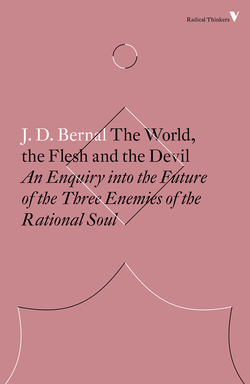
JD Bernal, The World, The Flesh and the Devil: An Enquiry into the Future of the Three Enemies of the Rational Soul (Verso: London, 2017)
Last year’s ‘reading river’ reflected a monomaniac attitude towards Shakespeare, which I think I’m going to try to avoid this year.
First off was a virtual trolley dash through the sale aisle of Verso Books, ‘the largest independent, radical publishing house in the English-speaking world‘ on New Year’s Eve. Only one of the baker’s dozen of political tracts I bought had any specific link to Shakespeare But I can’t and won’t dismiss Shakespeare entirely this year, and there’s some added fun in finding the ‘applicability’ – NOT ‘relatability’ – of my wider reading to the plays, and vice versa.

 Imagine, if you have been following, the difficulty in putting a soundtrack album together for Love’s Labour’s Lost – a play I was largely disconnected from and apathetic about.


 ‘Good morning [big smile]!


 The Boar's Head, Eastcheap