

‘Shakespeare in Ideology’, James H Kavanagh, in Alternative Shakespeares, (ed. John Drakasis), (Methuen: London, 1985)
A part of me is looking forward to moving onto ‘the Dream’ in my Pony Tail Shakespeare read-through more than I thought I would.
Re-reading a text every few years can be like reading it for the first time …
‘Shakespeare in Ideology’, James H Kavanagh, in Alternative Shakespeares, (ed. John Drakasis), (Methuen: London, 1985)
A part of me is looking forward to moving onto ‘the Dream’ in my Pony Tail Shakespeare read-through more than I thought I would.
The ‘tribes’ that make up an audience can be just as entertaining as the show itself …
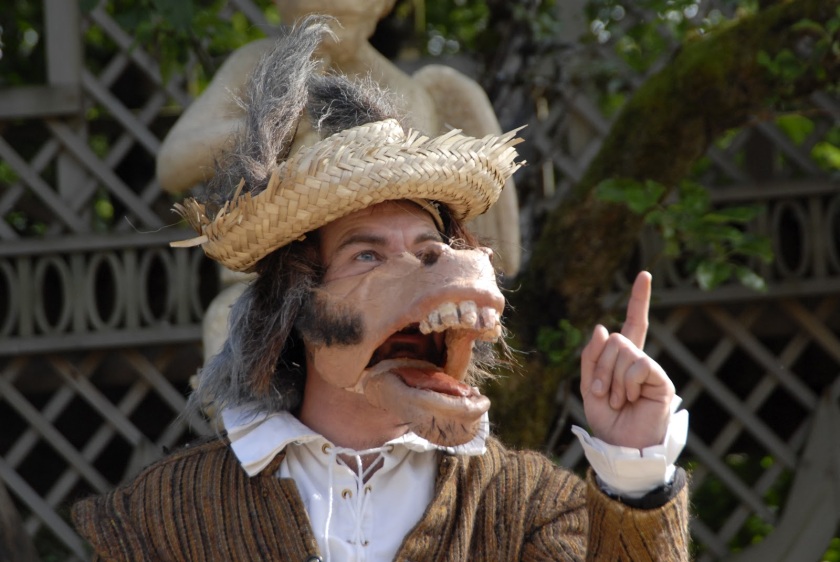
Malcom Evans, ‘Deconstructing Shakespeare’s Comedies’, in Alternative Shakespeares (ed. John Drakakis), (Methuen: London, 1985)
Why do we go to spectator events? What’s in an audience?
It’s man’s ‘imaginations and stupidities’ that makes the tragedies so affecting – and effective …
 JD Bernal, The World, The Flesh and the Devil: An Enquiry into the Future of the Three Enemies of the Rational Soul (Verso: London, 2017)
Last year’s ‘reading river’ reflected a monomaniac attitude towards Shakespeare, which I think I’m going to try to avoid this year.
First off was a virtual trolley dash through the sale aisle of Verso Books, ‘the largest independent, radical publishing house in the English-speaking world‘ on New Year’s Eve. Only one of the baker’s dozen of political tracts I bought had any specific link to Shakespeare But I can’t and won’t dismiss Shakespeare entirely this year, and there’s some added fun in finding the ‘applicability’ – NOT ‘relatability’ – of my wider reading to the plays, and vice versa.
Art not just as a time machine, but as a mirror, too …
 Germaine Greer: Shakespeare (Past Masters series) (Oxford University Press: Oxford, 1986)
I wonder if there was a time when, at least as an adult, the name Germaine Greer was unknown to me. Yet this slim volume, picked up in the last mad pre-demolition trolley dash round our old sixth-form building almost a year ago, is my first reading of any of her works. I feel a bit embarrassed about that.
Is royal blood THINNER than water?

Pollard, AJ: Edward IV, The Summer King (Penguin Monarchs) (Allen Lane: London, 2016)
It happens in the best of families. Royalty is often an accident of birth, and doesn’t guarantee fitness for rule, as we’ve seen in the exploits of Henry VI and Edward II – weak sons of strong fathers.
What I read in 2017, what YOU should read in 2018, and what to avoid like, ahem, the Plague …

Announcing my Ponytail Shakespeare read-through back in January did something to me; maybe several things.
Firstly, it made a public commitment. I’m just a bloke, and a busy one at that, being an English teacher, but I am still following the schedule – albeit several paces behind.
It also made me realise that however confident I might be, there was/is an awful lot I don’t/didn’t know for someone who enjoys being the ‘go-to’ at work for all matters Shakespearean – those ‘known unknowns’ were simultaneously a cause for embarrassment and a spur to do better.
These two ingredients combined to make me jump into bed with Shakespeare in 2017 …
The more things change, the more they stay the same …
 Neale, JE: Queen Elizabeth I (Pimlico: London, 1998)
Once again, I’m minded to say that we continue to study EMP Literature because whilst times and technology have undoubtedly moved on, human attitudes and the situations we face remain broadly the same.
Endemic Xenophobia? Check.
Effemination of rival men who dress too well? Check.
Aristocratic disdain for ‘upstarts’? Check.
‘Plus ça change, plus c’est la même chose,’ as Jean-Baptiste Alphonse Karr (another foreigner*, dammit!) might say …
We only want to be kings because we don’t fully understand what it involves?
 Christopher Lee, 1603 (Review: London, 2003)
Not THAT Christopher Lee, obviously!
In class, we’ve seen it in Edward II and, I think, Richard III. There are hints of it for my younger students in Macbeth. But I see it everywhere: in Richard II, Henry IV, Henry V, Henry VI.
In Twelfth Night, Malvolio tells us:
“be not afraid of greatness: some are born great, some achieve greatness, and some have greatness thrust upon ’em” (II.v)
Quite simply, the message I consistently get from EMP plays is that greatness – in this case being monarch – is never, ever, all it’s cracked up to be …
Are our masters “fettered with chains of gold”? Sir Thomas Wyatt (1503-42) thought so. Perhaps we could ask Theresa May …
Andrew Sanders, The Short Oxford History of English Literature (Oxford University Press, Oxford, 2004)
(A book I rescued – for under 50p – from a Greater Manchester library who had withdrawn it because it was not being taken out …)
I’m going to step back a little to someone who operated before Shakespeare lived, but will have influenced the development of poetry up until our boy arrived on the Shake-scene.
Flatterers … are destined to mud-wrestle each other in a lake of diarrhoea … representing the crap they spoke whilst alive, I suppose!
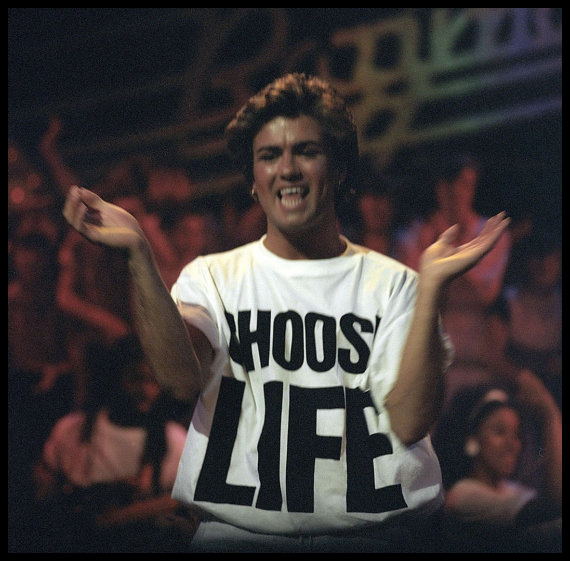
Subtitled: Big Mouth Strikes Again (The Smiths – my students will know why, today of all days)
This article was written for a forthcoming in-house newsletter/magazine. First, hopefully, in a series of articles (Cultural Capital) about influential, dare I say essential works that our students need to get under their belts. I set myself a STRICT word-count of 750, including quotations but excluding titles and references, tried to avoid being too professorial, and I’ve prioritised other texts related to what I’ll be teaching as part of the OCR A Level Engish Literature course. If I’m spared 😉
—
Inferno is a valuable source of AO1 and AO3, people. This won’t replace you reading the original, but it might at least persuade you to give it a go.
Next up? James I‘s Daemonologie, Machiavelli‘s The Prince or The Book of Genesis: open to suggestions …
—
[…] Midway on our path in life,
I came around and found myself searching
Through a wood, the right way blurred and lost.
I know the feeling. More importantly, so begins Dante’s Inferno, the sexiest-titled poem no-one’s read. Perhaps only at a certain age do you start asking Really Big Questions: ‘What am I doing with my life? What’s the point? What’s left?’ Tennyson’s like a dog with a bone on this. Ponytail Shakespeare readers – you’re fed up of hearing this sort of thing from me.
The most important question, though, is surely ‘what’s next?’
 The Boar's Head, Eastcheap