Regular visitors know that I teach Richard III and Edward II at A Level – coincidentally, plays which seem to have appeared within months of each other, in or around 1592. Marlowe doesn’t get discussed much in the circles I move in online, and Edward II often feels even more overlooked – so when someone wanted to talk about the differences between Kit and Will on /r/shakespeare (after watching a performance of Tamburlaine), I couldn’t resist diving in. Here’s an edited extract of what I said:
‘Books are delightful society. If you go into a room and find it full of books – even without taking them from the shelves they seem to speak to you, to bid you welcome.’ William Ewart Gladstone
This post came out of a discussion on Reddit where I asserted that we weren’t seeing enough Shakespeare shelf-porn. SHAKESPORN, in fact. Yup. You heard me. So in the spirit of ‘I’ll show you mine; you show me yours‘, here’s a tour of my Shakespeare bookshelf: MY ‘delightful society‘ …
An excellent addition to college / uni library shelves. Less sure about your personal collection …
Brinda Charry, The Arden Guide to Renaissance Drama: An Introduction with Primary Sources (Arden Shakespeare) (Bloomsbury Publishing, London: 2017) £18.99 (paperback)
Renaissance plays are among the world’s most valuable literary artifacts. They are also historical documents, ideological statements, philosophical reflections and theatrical scripts.
Brinda Charry has produced a relatively accessible and comprehensive overview of the period and its drama, split into two distinct sections.
Marlowe didn’t join them; he wanted to beat them, I think …
Marlowe increasingly seems a malcontent, fringe figure, occupying some very liminal spaces indeed on the shadowy edges of society …
Three weeks ago, I suggested that Marlowe had ‘learned too much at school‘, contributing to his generally accepted ‘atheism’. This week’s quote follows that, to consider his attitude to class … it also provides another useful adition to our store of understanding of why EMP writers wrote in the florid (at least to modern ears) style that they did. Getting to grips with this is, I maintain, key to deciphering the texts.
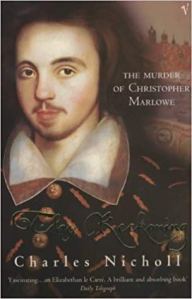
Our victim was brash, talented, and stabbed just above the eye before his 30th birthday …
Charles Nicholl, The Reckoning: The Murder of Christopher Marlowe (Vintage: London, 2002)
– – –
‘I am not trying to argue that Marlowe’s death has to have a meaning. My reading tends only to a more complex kind of meaninglessness than that of a ‘tavern brawl’.
Gifted, abominable, yet capable of producing ‘the mighty line’ …
Ben Wishaw and Karoline Herfurth in Tom Tykwer‘s 2006 film
It’s episode 52 – not a continuous year (the first post is here), but a year nonetheless, so I’m going to indulge myself a little this week. Will you be able to tell the difference, I hear you ask!
Bear with me whilst I tell you a story:
In eighteenth-century France there lived a man who was one of the most gifted and abominable personages in an era that knew no lack of gifted and abominable personages. His story will be told here. His name was Jean-Baptiste Grenouille, and if his name – in contrast to the names of other gifted abominations, de Sade’s, for instance, or Saint-Just’s, Fouché’s, Bonaparte’s, etc. – has been forgotten today, it is certainly not because Grenouille fell short of those more famous blackguards when it came to arrogance, misanthropy, immorality, or, more succinctly, wickedness, but because his gifts and his sole ambition were restricted to a domain that leaves no traces in history: to the fleeting realm of scent. [a]
Marlowe probably DID make a hazard of his head by easing his heart …
The more I read about Marlowe, the more I like and sympathise with him – arrogant, frustrated genius, malcontent, morally questionable, and attention-whore as he may have been. I sense a kindred spirit: my best friend would say the same about me – perhaps with a lot more arrogance and a lot less genius. As I get older, I like to think that my moral code is finally begining to crystallise, where it was entirely fluid 25 years ago, but then Marlowe never had the opportunity to mellow …
Increasingly, I see Marlowe as the kind of ‘mis-shape‘ Jarvis Cocker sung about in 1995:


 ‘Books are delightful society. If you go into a room and find it full of books – even without taking them from the shelves they seem to speak to you, to bid you welcome.’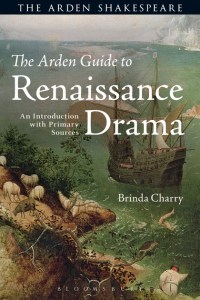




 The Boar's Head, Eastcheap