HEARD, Nigel, Tudor Economy and History (Access to History series), (Hodder & Stoughton: London, 1992)
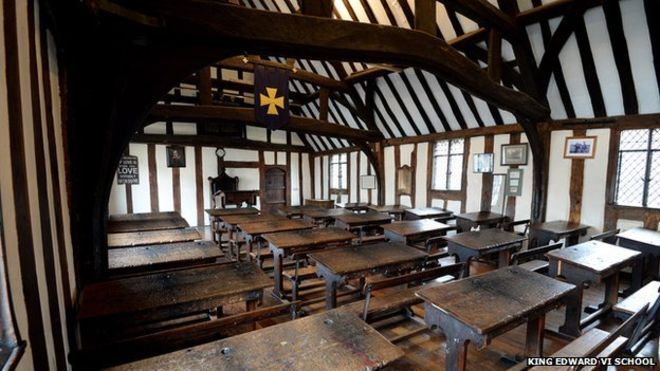
With school returning today (at least for the teachers) after the summer break, I think it’s appropriate to look at something education-related from my recent reading …
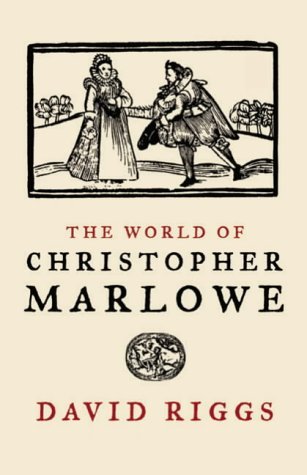
David Riggs: The World of Christopher Marlowe(Faber and Faber: London, 2004)
If you squint, you’ll see that this was one of the books I bought as retail therapy a short while back. I tackled this one first owing to my commitments to teach Edward II again this coming school year – I was hoping to get a few additional nuggets about Marlowe‘s private life.
The book has turned out to be an absolute revelation …
… nor custom stale his infinite variety. (Enobarbus: ANTHONY AND CLEOPATRA: II.ii.245-246) [bastardised by me, obviously]
Our timetables for next year were finalised last Friday, and this is what mine looks like – at least in terms of Shakespeare / EMP material. It’s more of the same, basically – although I finally lost The Tempest – which Top Set Y11 had voted to study back in the day when I had complete freedom about what to teach. I think it could be the last year I teach this combination – I want to make at least one change …
Edward V, like Edward II, like Richard II, like Macbeth, maybe even like Richard III, seems to think that the crown’s enough.Whilst there can be only one, physical possession of the golden round really isn’t a given. Everyone else has to believe you’re king – not just you!
They are but Lewis and Warwick; I am Edward,
Your King and Warwick’s and must have my will. (IV.i.15-16)
That’s all very well, but if it that attitude couldn’t save Julius Caesar:
‘I rather tell you what is to be feared / Than what I fear: for always I am Caesar’ (CAESAR, Julius Caesar I.ii.210-211)
– and he was a dozen times the man you are – then your goose is cooked.You have married in haste, and now you’re going to repent at leisure.Frankly, if Richard says so, it’s good enough for me:
I wanted to reflect on the play as a whole, looking back to my ‘Expectations’ back at the end of January.
Good literature is like a magic trick.It makes you believe you are in a different time and place, and care for characters who are constructs, and react to their (also fictitious) actions as if you were a participant.
Writing about this act has been an almost painful task.
It would have been too too easy to continue with the ‘Carry On Up the Dolphin’ theme I’d adopted for Act II, but I didn’t feel up to it, aside from referencing the incorrigible overfamiliarity of Charles:
Ay marry, sweeting, if we could do that,
France were no place for Henry’s warriors. (III.iii.21-2)
And off we go. First-time visitor? Click here and here to find out what Ponytail Shakespeare is all about. Then come back, read, and comment – either here or at the Shakespeare Reddit sub.
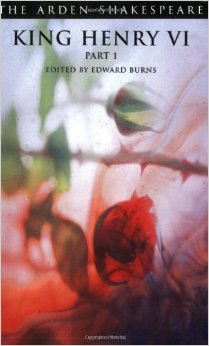
On to the play, and post two of God knows how many in this project.
I wonder if I lowered my expectations too far …
To shrug and say it was fine, good, OK, would be to do the opening act of Henry VI part I a disservice. Sure, there were moments of clunkiness – not least when the French Master Gunner feels the need to declare – to himself, his son, and thereby the audience – his employment:
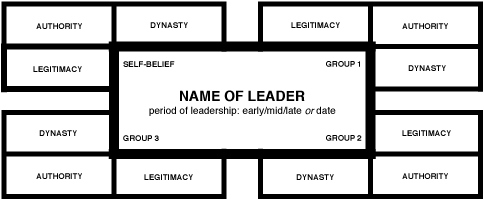
Abstract for the busy:this paradigm crystallises or articulates my recent thinking about kingship/leadership as it applies in Shakespeare’s plays and, I increasingly suspect, beyond.It gained critical mass after teaching Richard IIIat Key Stage 5 (Age 16-17) in Autumn 2016, where I found myself returning again and again to questions of Legitimacy, Authority and Dynasty, in plotting not just Richard’s journey and motives, but Richmond’s and, in fact, Queen Elizabeth’s.




 The Boar's Head, Eastcheap