
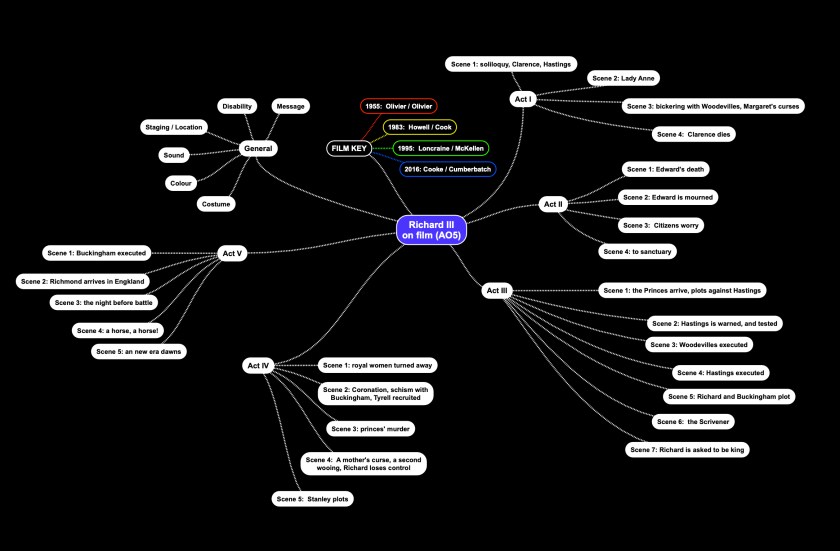
Welcome to my next stupidly ambitious project …
Welcome to my next stupidly ambitious project …
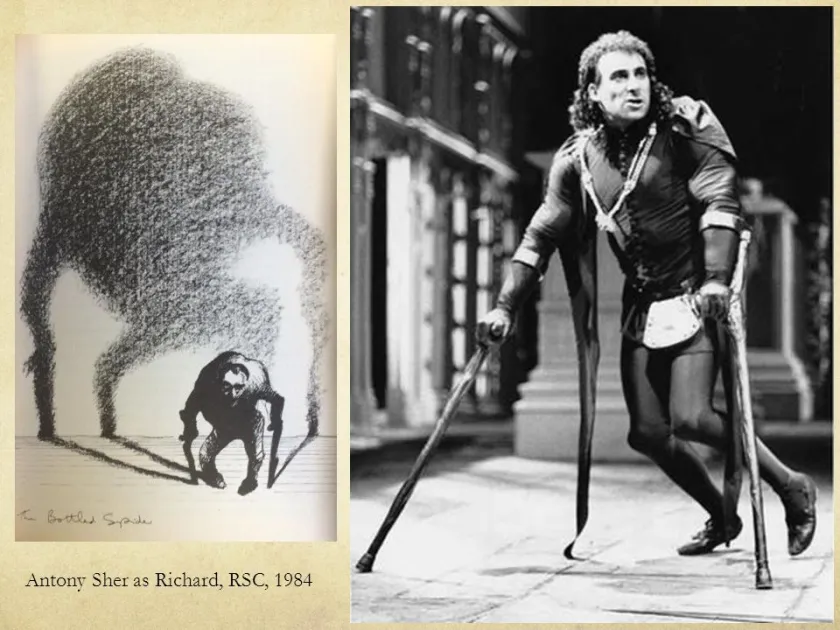
It’s nearly a year (where has the time gone?) since I last picked up a book and decided I’d love to get down the pub for a session with the author (and bear in mind I’m still not drinking: day 70 today). Imagine me, Anthony Sher and Michael Bogadanov setting the Shakespearean world to rights over a few scoops …
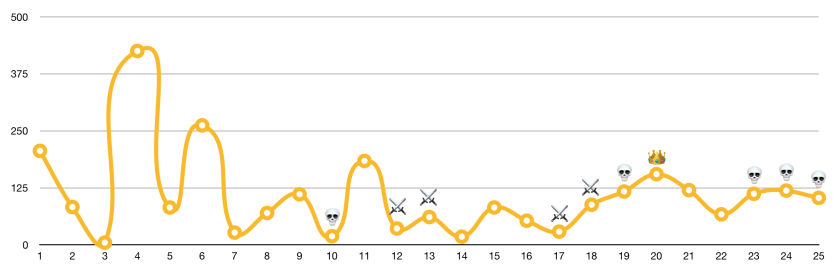
A Level pre-Easter mock assessments next week, and it struck me that amongst all the resources I had curated or created for my students, we didn’t have a decent synopsis of Edward II, for those who can never quite remember the story, or what happens when.
I had a train journey in front of me. What else could/would I do?

And we’re back with Forensic Fridays …
Partly because I’m teaching Richard III to a new A Level class, partly because my exam class will benefit, should they ever visit (you know who you are), and partly because yes, they are fun.
You can see the full rules here, but if you’ve been before, the task is to write a prize-winning forensic analysis of a very short extract in just 250 words, working to OCR’s mark-scheme in order to provide some models for my students.
In this passage, I returned to the dramatic moment when deposed Queen Margaret of Anjou, devastated by the killings of her son and then her husband (within 17 days, historically), calls down the heavens to curse Richard, Duke of Gloucester, who in the Henry VI cycle did what had to be done. It’s a very tense moment …

February 1570: in the blue corner, Elizabeth I; in the red corner, Pius V …
Commence au festival, as the Joker might say.
Ponytail Shakespeare read-through – King John, Act III
Continue reading “PTS 13/080: Remind me: who’s in charge here?”
Telling stories ABOUT stories seems to be my stock-in-trade when it comes to teaching Shakespeare.

Unusually, I’m going to start with the quotation of the week, from Stephen Greenblatt, rather than work towards it:
Humans cannot live without stories. We surround ourselves with them; we make them up in our sleep; we tell them to our children; we pay to have them told to us. Some of us create them professionally. And a few of us – myself included – spend our entire adult lives trying to understand their beauty, power, and influence. [a]

You probably know my taste for puerile humour by now.
This joke (and there are many versions of it knocking around) has been a favourite since before I got married, a good twenty years ago. You can imagine how well it went down, the first time I used it on my (rather fierce) ex-mother-in-law. I received what we might call an ‘old-fashioned look’, with added chilli. Nowadays, poking fun at someone’s verbosity is also self-referential, because, yes, I unashamedly like to talk! In my defence, it’s because I ‘live’ in 1592.
Which leads me nicely to this week’s QotW …
Elated, Validated, or just Deflated?

This post forms part two of my Standing on the Shoulders of Giants debate … IS it possible to have an original thought about Shakespeare?
But first, a digression back to the early 1990s …
An almost ascetic book haul this time out …
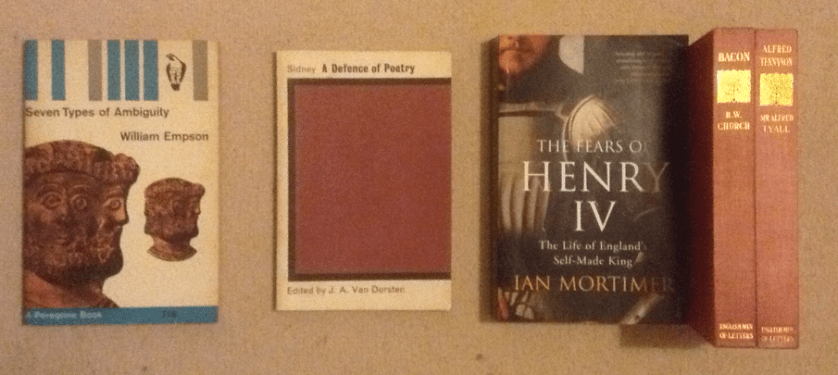
Sure, it’s only a week away from school, and I ought to be able to control myself. Many of you will also have a handle on the state of my bookshelves – I have no space for these, and yet. Half-terms are an opportunity to catch breath in more ways than one.
Some would suggest I oughtn’t to have bought anything; I like to think of this as a fairly restrained Book Haul, all sourced from the second hand bookshop about 300 yards from ‘her place’. So, what and why …
Infamy, infamy, they’ve all got it infamy …

Maybe it’s growing up in the 70s, but I enjoy an infantile dirty joke as much, if not more, than the next fellow. They don’t always work in the plays, or perhaps audiences are now vastly more sophisticated: I can imagine that even the weakest ones would have had them rolling in the aisles at The Globe.
This week, I decided to work my favourite Shakespearean knob-gag … ooh err!
 The Boar's Head, Eastcheap