An emerging theme in my reading – and teaching – is the notion of being careful what you wish for.For too many, Nietzsche’s ‘will to power’ is ephemeral, evaporating once a goal is achieved.To others, it is an insatiable addiction. What links both is the outcome: unhappiness and deep satisfaction – the former cannot easily retain their newly won goal; the latter need another, greater fix of achievement. Continue reading “PTS 11/068: ‘Team Richard’ T-shirt Time …”
BOTTOM: I will discharge it in either your straw colour beard, your orange-tawny beard, your purple-in-grain beard, or your French-crown-colour beard, your perfect yellow. [a]
Although The Guardian confidently proclaimed we’d reached ‘peak beard’ two years ago – in fact exactly two years ago today [b] – I stopped shaving before Christmas. I’m far from a fashion victim: this was initially sheer laziness (I loathe shaving); now increasingly compounded by curiosity about exactly what I might grow. After nearly thirty years of a more-or-less maintained goatee, I’ve gone wild.
It’s a work in progress (and had to survive a pre-Portugal pruning by She Who Must Be Obeyed), but I’ve ended up with a hybrid: think the hirsute love-child of Hemingway and Fidel Castro … the addition of a very disreputable cap during my Easter hols jolly to the Algarve has added, I like to think, a revolutionary aura to the whole thing. Plus, some students have given it a name of its own, like a stray dog. So, the beard is staying – for now.
Naturally, this started me thinking about beards and the Bard …
For God’s sake, let us sit upon the ground, and tell sad stories of the death of kings …
PTS read-through:Richard II, act III (part ONE)
Witnessing the utter disintegration of a human being – even a fictional one – is, I’d suggest, an uneasy, distressing experience.And yet …
Voyeuristic shame accompanies the compulsion to keep spectating what is usually such a private affair.My first experience of this type of slow-mo car-crash literature was Hardy’s The Mayor of Casterbridge, when I was about 12.It scarred me – I’ve never quite been able to revisit Michael Henchard’s self-induced immolation; it also, I think, gave me my first seductive bittersweet taste of tragedy.Like that initial stolen underage drink, whilst I wasn’t quite sure I liked it, I wanted another – just to be certain.
This week’s quotation is from Germaine Greer, Shakespeare (Past Masters series), (Oxford: OUP, 1986), p.75
Classroom experience tells me that [massive generalization] today’s students are disinclined to think for themselves [/massive generalization]. It’s part of the resistance to Shakespeare that seems to be coded into some pupils’ DNA (and another day I might talk about the ‘generational’ thing), but we see it with other texts. A while back, in Manchester, I taught the short film ‘The Virus’ – which I personally think is excellent:
– but it was met with howls of anger (only slight exaggeration) from students who couldn’t work out what had happened, why, and what might happen next. Watch the film, if you have under ten minutes, and then ask yourself if the main character is alive or dead at the end. Then, ask yourself why or how the answer couldn’t be obvious to 14/15 year-olds. This happened with TWO classes. I wasn’t just taken aback: I was worried. Not least because they thought it was ‘rubbish‘ because they couldn’t figure it out.
To be fair, this probably isn’t new – had my students been alive at the time, and in possession of the attention span required to read it, they would have been part of the contemporary outcry over the ending to Great Expectations. But Dickens‘ audience wanted their theories confirmed or refuted. In 2018, it just seems endemic that people have no theories. They just want to be told what to think … and that scares me.
Forget the Oscars, here are some winners that REALLY matter to me …
Not – quite – my collection of Ardens … soon, soon!
We HATE lists, don’t we?
Except, actually we bloody love them, if it’s something we’re interested in.
No, really.
That said, the last thing we want is a list that agrees with our perceptions – the dopamine rush of validation is very short-lived compared to the opportunity to passionately argue our disagreement. We LOVE subjective opinions. Trust me – my wonderfully fulfilling University years were full of essays arguing the toss – why, for example:
Dracula should not be judged for his ‘special dietary requirements’, whereas Van Helsing and his bunch are vindictive bastards;
we ought to respect Edward Hyde for his refreshing honesty, as opposed to Henry Jekyll‘s hypocrisy; or
Ursula K. Le Guin’s (RIP) The Left Hand of Darkness, whilst a superb book, had no place in the Science Fiction module
You get the picture: English Lit is a tailor-made subject for those who are argumentative and prepared to do the spadework to back-up their cockiness …
It’s man’s ‘imaginations and stupidities’ that makes the tragedies so affecting – and effective …
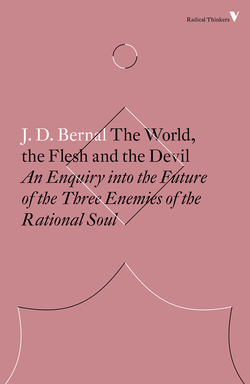
JD Bernal, The World, The Flesh and the Devil: An Enquiry into the Future of the Three Enemies of the Rational Soul (Verso: London, 2017)
Last year’s ‘reading river’ reflected a monomaniac attitude towards Shakespeare, which I think I’m going to try to avoid this year.
First off was a virtual trolley dash through the sale aisle of Verso Books, ‘the largest independent, radical publishing house in the English-speaking world‘ on New Year’s Eve. Only one of the baker’s dozen of political tracts I bought had any specific link to Shakespeare But I can’t and won’t dismiss Shakespeare entirely this year, and there’s some added fun in finding the ‘applicability’ – NOT ‘relatability’ – of my wider reading to the plays, and vice versa.
As Alice might say: ‘de tongues of de mans is be full of
deceits’
Love’s Labour’s Lost, Act II
‘We could do with a shot on goal, John. The game’s mostly being played in the middle of the pitch’ …
Our Princess arrives, and immediately impresses. In fact, she reminds me of my girlfriend: scarily competent, impervious to flattery (no, really), and icily, frustratingly logical at times.
Doormat or A-dor-ably Feisty? Luciana and Adriana swap roles in Act II …
Who needs a man when you have a sister? Adriana, that’s who …
Ponytail Shakespeare Read-Through: The Comedy of Errors, Act II
Aha! A single woman in a Shakespeare comedy – what she needs is a HUSBAND, I thought, my Jane Austen goggles firmly on. In this, I was egged on by Kent Cartwright, as I mentioned in writing about Act I, and who colluded with Jane and my previously-held assumptions.
And what a catch Luciana appears to be for our unreconstructed EMP man!
WE CANNOT, MUST NOT, WIPE ART WITH ANTI-BACTERIAL WIPES BEFORE ALLOWING THE NEXT GENERATION TO HANDLE IT …
‘Out, vile jelly’: the blinding of Gloucester …
I took this picture – from King Lear – at the Cambridge Shakespeare Festival back in 2012. I often show it to pupils who try to tell me that Shakespeare is ‘boring‘. Or indeed I give them some of the plot details from Titus Andronicus that have caused such concern of late …
It’s taken me a little while to allow this one to sink in to the extent that it became a ‘crime’, but in the Dock, ladies and gentlemen of the Jury, I give you no less than the English Faculty of Cambridge University (or at least some members of that august institution) …
‘What though I killed her husband and her father?’
Richard III: Act I sc ii (Ponytail Shakespeare read-through)
Sub-title: ‘Do you have free wi-fi? Because I’m sensing a connection …’
At school, we have a department policy of sitting boy-girl where possible (until sixth form, at least), and in most classes there is a combination that seems to get on that bit too well. So, I’ve been researching chat-up lines I can embarrass those pupils with. Yes, I’m that kind of teacher …
These are the best clean ones I’ve found so far. If you can top this, let me know.
Anyway, back to the play! Shrug. If you’ve decided to behave badly, you may as well test your strength straight away, right? If we accept, after my last post, that the main thing on Richard‘s mind is the constant, inevitable rejection of women, it follows that his next step in the play (the true story is somewhat different) is to seduce someone …
(Can I also say it hurt my eyes to search for this image?








 The Boar's Head, Eastcheap