Inspired by some course or other on children’s literacy, I’ve been keeping a ‘reading river‘ since January 2013. It sounded infantile, but I’ve kept to it remarkably more faithfully than logging my reading on Goodreads, or anything else. It’s become a diary, of sorts, something to idly flick through and recall times, places and people, such as the stay at my parents’ when I devoured all the Earle Stanley Gardenerand other Penguin Green Series crime paperbacks I could find on my dad’s shelves in a matter of days. That year, coincidentally, I read 75 books.
If we paid something forwards, maybe especially Shakespeare, once in a while, the world would be a better place …
It’s hard to believe this is post 150 at The Boar’s Head.
Google ‘150’ and the images aren’t especially inspiring, unless you are Canadian, it seems. This one – representing the 150 million horny spiders invading the homes we warm up as autumn approaches (according to Metro.co.uk) – is only here because I’m an arachnophobe.
June 27, 1996. George Street, Luton, at a bus stop opposite the town hall. Genuinely nauseous to the verge of throwing up. Could I have torn my eyes up from the book I was reading, I would broadly have seen the image below …
PTS Shakespeare read-through – Richard III, Act I sc iv.
Back in early 1997, I discovered that my eldest son was on his way. The pregnancy was unplanned, and to say the least a shock to a frankly very immature young man who was focussed on nothing but wine, women and song – not necessarily in that order. To be fair to that youth, books sometimes made an appearance, too. He was, I like to think, a completely different person to the one who’s writing this evening – I look back on him with some shame (on sleepless nights), listing the apologies I owe people.
I entertain by picking brains Sell my soul, by dropping names (Elton John, 1974) Photo: Terry O’Neil
Richard III: Act I, Sc iii (Ponytail Shakespeare read-through)
Richard has been a part of my life, a surprisingly large part, for about six years or so. In fact, we might call him part of the ‘soundtrack of my life’, since I turned 40. So whilst I try and inevitably fail to do the play justice in these posts, one of the things that’s already settled is the Shakespeare’s Jukebox ‘Soundtrack Album’ that I publish at the end of my amble through the play. Some songs have been ringfenced, so that I don’t use them for any other play … this is one.
If there’s a decidedly ‘camp’ flavour to the jukebox, in fact to these posts (I mean: Mercury, Hasselhoff and now EJ?), it could be down to two factors:
I’m teaching Edward II, to two classes, at the moment (conspiracy theorists, and I like one as much as the next person, will note that these two plays were probably written within months of each other, if not simultaneously); and
this is a camp play. At some stage I might get stuck into the relationship between Richard and Buckingham (a personal theory that causes wide-eyed incredulity in my classes, more often than not)
I’ve often described it as a pantomime for grown-ups. Ironically, because a child’s pantomime is possibly the worst way I can think of spending an evening. Perhaps this takes on board the criticisms of those who favour other, more mature or ‘intellectual’ plays. Richard is gleefully childish and petulant, at least until he becomes king, and there are several times where I want to shout:
He’s behind you!
or similar, at members of the cast: Clarence, Hastings, the young Duke of York, the hapless Burghers of London, at the very least.
But … having ambled through the HVI plays for the first time this year, I have a completely different understanding of and respect for this play. The Bitch is back in Act I scene iii, and there can be only one Bitch (capitalisation intended), as we saw in The Hollow Crown …
‘What though I killed her husband and her father?’
Richard III: Act I sc ii (Ponytail Shakespeare read-through)
Sub-title: ‘Do you have free wi-fi? Because I’m sensing a connection …’
At school, we have a department policy of sitting boy-girl where possible (until sixth form, at least), and in most classes there is a combination that seems to get on that bit too well. So, I’ve been researching chat-up lines I can embarrass those pupils with. Yes, I’m that kind of teacher …
These are the best clean ones I’ve found so far. If you can top this, let me know.
Anyway, back to the play! Shrug. If you’ve decided to behave badly, you may as well test your strength straight away, right? If we accept, after my last post, that the main thing on Richard‘s mind is the constant, inevitable rejection of women, it follows that his next step in the play (the true story is somewhat different) is to seduce someone …
(Can I also say it hurt my eyes to search for this image?
Ponytail Shakespeare read-through – Richard III (Act I, scene i)
Larger than life. One of a kind. Brash on the outside, to mask an inner vulnerability. The ultimate showman, whose memory lives on long after his death. Freddie Mercury is all these things, too …
I’ve arrived at Richard III, the first play in my read-through that I know well, with a sense of awe, almost a fear of not doing him justice. Unusually, I’m as tentative as I might have been had I met him with a pathetic autograph book in my hand (or Mercury, whose death in 1991 touched me as few other celebrity deaths have: Prince and Sir Terry Pratchett are the only others that I register, emotionally). My relationship with Richard grows more obsessive and complex every time I teach him, and my recent book-buying seems unconciously centred round the historical Richard and the major players in his accession and downfall. I’ve also realised there is no way I can do this in the usual 1,000-ish-words-per-act format, so all I’m going to do is try to avoid 1,000 words-per-scene, if I can.
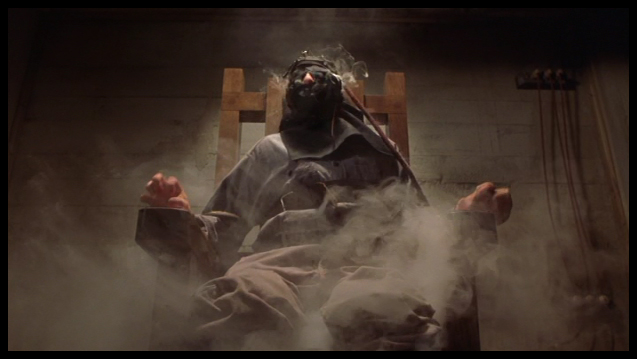
There’s a lot of unjustifiable hate out there for Titus Andronicus, I think.
Jonathan Bate introduces the play by saying that:
‘Even those who have approached Titus in a spirit of scholarly enquiry rather than critical judgement have been prejudiced by their distaste for the play […] nearly all scholars suppose that it is a very early work, a piece of crude and embarrassing juvenilia. I believe that every one of these arguments is wrong.
I’m with Prof. Bate. This was a rollercoaster ride. Although it does sketch issues we’ll see fleshed out in Lear and other ‘greats’, it’s a remarkable Revenge play, with a strong tragic journey and an utterly evil villain that surpasses any other I can readily think of. It also spoke strongly to me about public service, and the rewards thereof – especially for our armed forces.
So here’s my soundtrack album for the play. What’s missing?
BATE, Jonathan: ‘Introduction’, in Titus Andronicus (The Arden Shakespeare: London, 2003)
Some students see value in Literature as an end in itself. Others need a bit of persuading about why they have to study poetry, novels, and of course Shakespeare in particular (sigh).
‘What’s Shakespeare got to do with me? I want to be an air hostess!’
I was asked by a Year 9 pupil a few years ago. Henry Peacham, via Jonathan Bate, has an answer.

 Inspired by some course or other on children’s literacy, I’ve been keeping a ‘reading river‘ since January 2013. It sounded infantile, but I’ve kept to it remarkably more faithfully than logging my reading on Goodreads, or anything else. It’s become a diary, of sorts, something to idly flick through and recall times, places and people, such as the stay at my parents’ when I devoured all the Earle Stanley Gardener and other Penguin Green Series crime paperbacks I could find on my dad’s shelves in a matter of days. That year, coincidentally, I read 75 books.
 It’s hard to believe this is post




 There’s a lot of unjustifiable hate out there for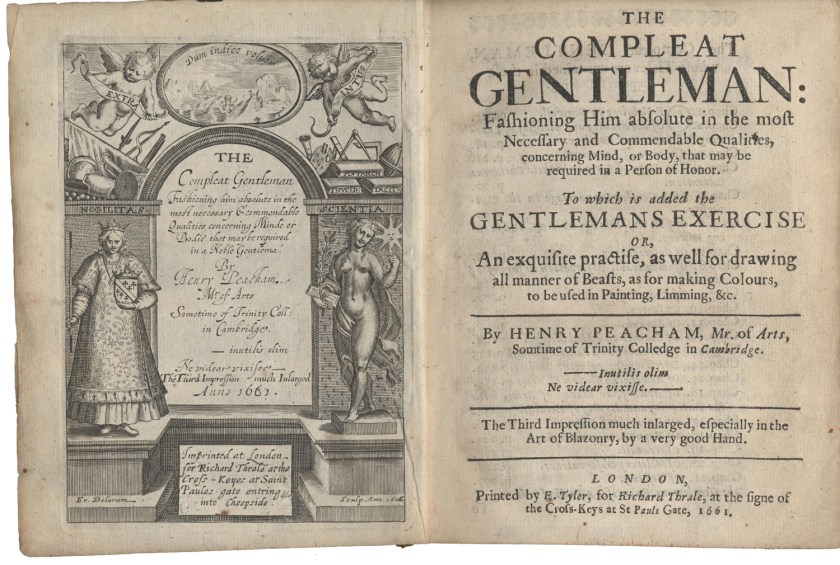
 The Boar's Head, Eastcheap