When you teach Richard IIIyou almost inevitably touch on the idea that ‘history is written by the winners’, as Orwell said in 1944 (and again, of course, so horrifically in Nineteen Eighty-Four). [a]
Who were victorious over Robert Devereux, second Earl of Essex in the end? Would he have recognised the history they wrote for him?
… is that the job is, frankly, shit. And that you have to be a shit to do it successfully.
Excuse me? I ordered a kingdom like I saw in the advert …
PTS read-through: King John, Act IV.
If you’re not ‘born great’, if you want to achieve greatness, you have to put in the hours, right? Just think of the graft involved: wheeling and dealing; equivocating; making and breaking alliances; sucking up; marrying well (not, alas, for love); adding colours to the chameleon; changing shapes with Proteus; and generally setting the murderous Machiavel to school.
there is an vpstart Crow, beautified with our feathers, that with his Tygers heart wrapt in a Players hide , supposes he is as well able to bumbast out a blanke verse as the best of you: and being an absolute Iohannes factotum , is in his owne conceit the onely Shake-scene in a countrie. [a]
Stop and think for a moment – the more you read, the less you find that is truly original. *
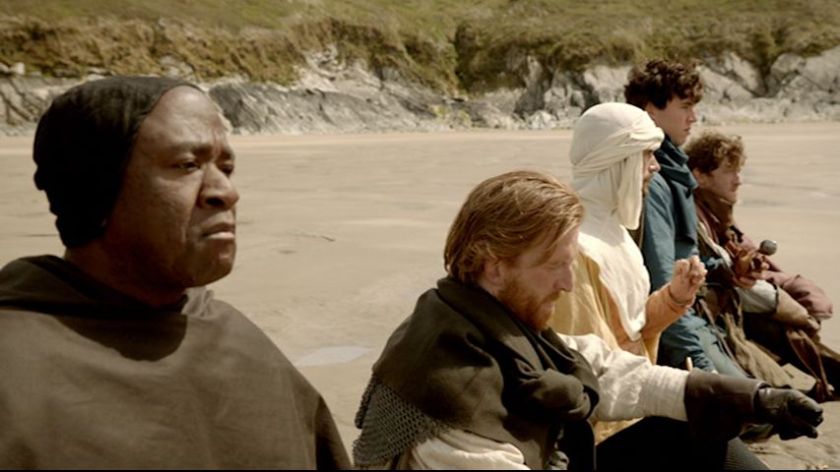
image: History Notes. The guy on the left is asking the king if he can go to the toilet …
King John, Act I
Having broken out of my Romeo and Juliet-induced enervation, I approached King John with a sense of excitement bolstered by my positive experiences with the Henry VI plays. Unusually, maybe impatiently, I skipped my Arden’s introduction and got stuck in after finding these hopeful signs elsewhere:
“a neglected play about a flawed king” [a]
and
“King John has all the beauties of language and all the richness of the imagination to relieve the painfulness of the subject.” [b]
Sure, it’s only a week away from school, and I ought to be able to control myself. Many of you will also have a handle on the state of my bookshelves – I have no space for these, and yet. Half-terms are an opportunity to catch breath in more ways than one.
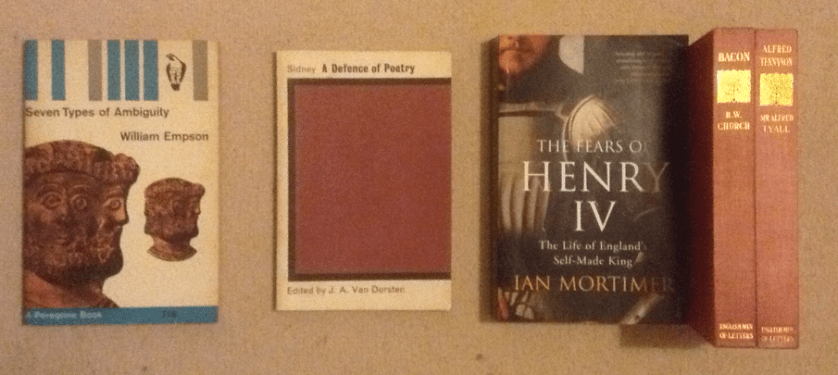
Some would suggest I oughtn’t to have bought anything; I like to think of this as a fairly restrained Book Haul, all sourced from the second hand bookshop about 300 yards from ‘her place’. So, what and why …
Regular visitors know that I teach Richard III and Edward II at A Level – coincidentally, plays which seem to have appeared within months of each other, in or around 1592. Marlowe doesn’t get discussed much in the circles I move in online, and Edward II often feels even more overlooked – so when someone wanted to talk about the differences between Kit and Will on /r/shakespeare (after watching a performance of Tamburlaine), I couldn’t resist diving in. Here’s an edited extract of what I said:
Richard II = Edward II = Prospero = Duke Vincentio = Henry VI = every useless boss you have ever worked for,
Richard’s return from Ireland is NOT a happy one …
Richard II appears on my reading list for Edward II each year. It’s not just me – this is what Jonathan Bate, who I recently gushed about, has to say:
Richard II’s relationship to Edward II is so obvious that it is not very interesting. The structure of the two plays is identical: the King is surrounded by flatterers and pitted against an assemblage of nobles with vested interests of their own, then isolated and uncrowned, stripped of his royal identity, thus forced to discover his inner self by means of a supple, reflective soliloquy delivered whilst humiliatingly in prison. In each play the Queen is pushed to the margins in part because of the king’s homoerotic leanings. Marlowe is bolder than Shakespeare in his explicit portrayal of the homosexuality and his neat device of joining the Queen with the rebels in revenge. [a]
It should be easy to find something in Richard which’ll look familiar to my Edward students, right? Let’s have a go …
Our victim was brash, talented, and stabbed just above the eye before his 30th birthday …
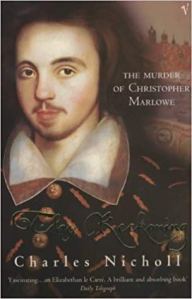
Charles Nicholl, The Reckoning: The Murder of Christopher Marlowe (Vintage: London, 2002)
– – –
‘I am not trying to argue that Marlowe’s death has to have a meaning. My reading tends only to a more complex kind of meaninglessness than that of a ‘tavern brawl’.
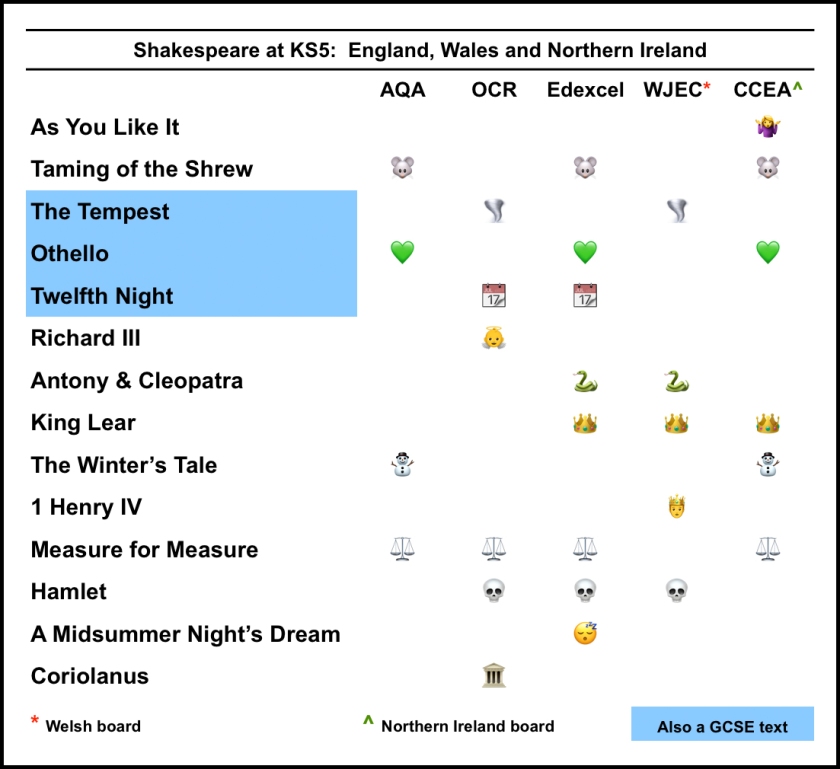
At 18, students ought to be able to handle History plays, but the exam boards don’t seem to like them?
Following my recent KS4 post, I extended my research to A Level – that is the exams taken by 18-year olds before they hit university. Again, I’d love to hear from students or teachers, especially in other countries. Here are a few thoughts of my own:
For too many of the 600,000 students who sit that GCSE, it’s their final taste of Shakespeare …
Shakespeare is the only author that everyone over here has to study. Unless, it appears, you live in Scotland (and someone might be able to correct me on that if I have misread the SQA specification) …
‘For divers unknown reasons‘ as Richard III would say, I’ve been engaged in a little research of what our exam boards offer at Key Stage 4 – that is for the 15/16 year-olds who sit their GCSE English Literature. I think it throws up some interesting points:






 Shakespeare is the only author that everyone over here has to study. Unless, it appears, you live in Scotland (and someone might be able to correct me on that if I have misread the SQA specification) …
 The Boar's Head, Eastcheap