

This is All Souls’ Day, fellow, is it not?
Why then, all Souls’ Day is my body’s doomsday. (Richard III – BUCKINGHAM: V.i.10-11)
Buckingham wants, needs, perhaps even deserves, a lover’s farewell …
This is All Souls’ Day, fellow, is it not?
Why then, all Souls’ Day is my body’s doomsday. (Richard III – BUCKINGHAM: V.i.10-11)
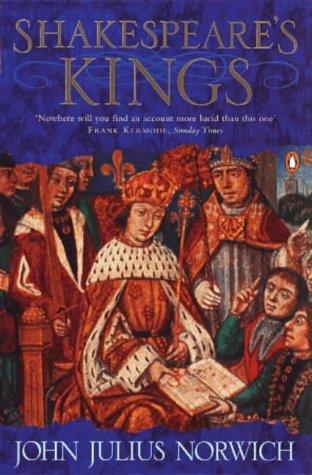 John Julius Norwich, Shakespeare’s Kings (Penguin: London, 2000)
I like this book very much, and as I’m currently teaching Edward II to two separate groups of sixth-formers, I thought I’d look out a quotation for them regarding our hapless king. Despite Edward not being one of Shakespeare‘s kings, Norwich doesn’t disappoint …

Titus Andronicus, Act V
(subtitled, far too obviously for the UK football fans amongst us, ‘who ate all the pies?’)
I warned you! I WARNED YOU! Did I warn you?
Yes, I did. And so did Francis Bacon. And Jonathan Bate. And Fredson Bowers. We all said that revenge was likely to spiral out of control, because once you lose your faith in the law, and in divine justice too, all bets are off. And because every stroke in the ‘rally of revenge‘ is that much harder, has that much more spin on it than the last. Let’s mix our metaphors again: in this particular poker game, someone, eventually, is going to see your stake and raise you with everything they’ve got, not caring any more whether they win or lose. The chips, and what they represent, are suddenly and utterly unimportant …

‘To sleep, perchance to dream – ay, there’s the rub’ (HAMLET: III.i.64)
Titus Andronicus: Act II
What tragedy would be complete without some element of the supernatural, as I have already intimated? This dreadful (in the sense of being full of dread, NOT poor quality) act begins with that classic Shakespearean trope, the bad night’s sleep:
‘I have been troubled in my sleep this night.’ (TITUS: II.i.9)
And Titus has every reason to be subconsciously troubled: although he begins the act quite enthusiastically:
‘The hunt is up’ (II.i.1)
He cannot imagine who the ‘dainty doe’ (DEMETRIUS: II.i. 26) might actually be ..

(Ponytail Shakespeare read-through) Titus Andronicus: Act I
My experience of Shakespeare’s Rome is the city where Cinna the Poet is torn apart by the mob for his ‘bad verses’ (Julius Caesar, III.iii), and the antagonistic opening to Coriolanus. So, what first struck me as the play opened was just how thin the veneer of civilisation proved to be.
Continue reading “PTS06/033: Thou Shalt not Suffer A Queen To Live”

Whilst not one of my true favourites, Lear’s a play I know quite well and which, having a taste for Tragedy more than Comedy, I enjoy. I studied it at University, and I’ve seen at least two stagings before that I can remember. The first, at the Cambridge Shakespeare Festival some years back, was memorable for the blinding of Gloucester, which involved one of his eyeballs being sucked out. I’ve got a great photo of it (with a stretched ‘optical nerve’ leading from eye socket to mouth) which I often use to frighten children who claim that Shakespeare is boring. The second performance starred Derek Jacobi. The most striking things about it were Jacobi’s unsatisfyingly-camp Lear, and the use of strobe lighting to great effect in recreating the storm. Reading it, I’m always struck by Edmund‘s louche sexuality, and that always seems to have been missing. What did I want today? Hubris, wanton cruelty, ingratitude, and ‘the Globe experience‘ …
Continue reading “King Lear at The Globe (dir. Nancy Meckler)”

‘Good comedy is tragedy narrowly averted’ Jonathan Bate
The Two Gentlemen of Verona: Act V
Over the past year I’ve used the question ‘What’s in a name?’ more than once, dismissing labelling in its many forms, but this feels the best way of articulating my unease with The Two Gentlemen as I finish the play …
Continue reading “PTS 05/031: I Don’t Know Whether To Laugh or Cry …”
 The Boar's Head, Eastcheap