QotW (#77): 20 May 2019

elizabeth essex film poster

When you teach Richard III you almost inevitably touch on the idea that ‘history is written by the winners’, as Orwell said in 1944 (and again, of course, so horrifically in Nineteen Eighty-Four). [a]

Who were victorious over Robert Devereux, second Earl of Essex in the end?  Would he have recognised the history they wrote for him?

Continue reading “QotW (#77): 20 May 2019”

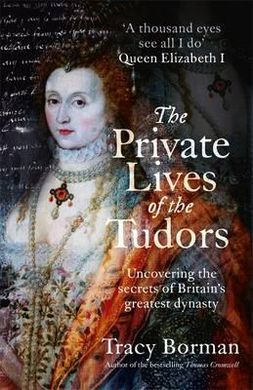
[book review] Tracy Borman: The Private Lives of the Tudors

borman tudors cover


Tracy BormanThe Private Lives of the Tudors: Uncovering the Secrets of Britain’s Greatest Dynasty (Hodder & Stoughton: London, 2016)

A salutary warning for would-be 21st-century celebrities?

Francis Bacon calls it correctly, as he so often does:

Men in great place […] have no freedom; neither in their persons, nor in their actions, nor in their times. It is a strange desire, to seek power and to lose liberty: or to seek power over others, and to lose power over a man’s self. [a]

Continue reading “[book review] Tracy Borman: The Private Lives of the Tudors”

QotW (#70): 04 March 2019

tilbury-blanchett1-600x350

Elizabeth I looms in the background of Shakespeare’s early-to-mid work like the spectre at the feast.

It isn’t solely the question of censorship: she is, I think, the yardstick for every depiction of monarchy, leadership or indeed of strong women.  Remember, too, that after a frantic period when the monarch (and ruling religion) changed every few years, she assumed the throne before Shakespeare was born, and was perhaps one of the few constants in that dangerous, fluid age, until she died in 1603.

She was also a real anachronism – a woman ruler in an incredibly patriarchal society.  But was she a feminist?  Should she be regarded as a feminist icon now?

Continue reading “QotW (#70): 04 March 2019”

QotW (#67): 11 February 2019

“this it is, when men are ruled by women” – or at least by their groins …

Claudius & Gertrude

Although I’m never going to end up on stage, I often compare teaching to acting.

Non-teachers, think for a second: up to six performances a day, with audiences who require subtly different characterisations from you.  (My timetable goes from Y12 to Y7 without interval on a Friday afternoon, for instance).  That plus the teacher persona you can only shrug off when you’re safely indoors (because even walking down the street you end up intervening when you see pupils in uniform mucking about).  To say nothing of the range of people you have to be – in five minute chunks – at Parents’ Evenings …

No wonder I’m perpetually exhausted.

But if I were asked to play a Shakespearean role, what would be my top three choices?

Continue reading “QotW (#67): 11 February 2019”

PTS 13/081: The Curse of Kings

… is that the job is, frankly, shit. And that you have to be a shit to do it successfully.

big mac
Excuse me?  I ordered a kingdom like I saw in the advert …

PTS read-through:  King John, Act IV.

If you’re not ‘born great’, if you want to achieve greatness, you have to put in the hours, right?  Just think of the graft involved: wheeling and dealing; equivocating; making and breaking alliances; sucking up; marrying well (not, alas, for love); adding colours to the chameleon; changing shapes with Proteus; and generally setting the murderous Machiavel to school.

And for what?

Continue reading “PTS 13/081: The Curse of Kings”

PTS 13/080: Remind me: who’s in charge here?

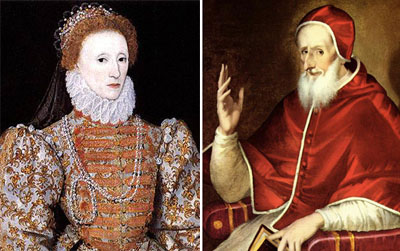
266_pius
OK, I want a good, clean fight …

February 1570:  in the blue corner, Elizabeth I; in the red corner, Pius V …

Commence au festival, as the Joker might say.

Ponytail Shakespeare read-through – King John, Act III

Continue reading “PTS 13/080: Remind me: who’s in charge here?”

QotW (#63): Monday 14 January 2019

king john donald trump
image: Mashable [a]
I mentioned the other day that I was coming into King John blind, apart from the Disney film and a vague notion of the Magna Carta.  The little I am beginning to accumulate through secondary reading and the play itself is startling.

Continue reading “QotW (#63): Monday 14 January 2019”

PTS 13/078: Homophone fun with King John

dubbing-the-knight-14th-century-miniature1
image:  History Notes.  The guy on the left is asking the king if he can go to the toilet …

King John, Act I

Having broken out of my Romeo and Juliet-induced enervation, I approached King John with a sense of excitement bolstered by my positive experiences with the Henry VI plays.  Unusually, maybe impatiently, I skipped my Arden’s introduction and got stuck in after finding these hopeful signs elsewhere:

“a neglected play about a flawed king” [a]

and

“King John has all the beauties of language and all the richness of the imagination to relieve the painfulness of the subject.” [b]

So, what did I make of Act I?

Continue reading “PTS 13/078: Homophone fun with King John”

Cultural Capital 07: Tragedy

We loved a fall from grace as much then as we do now …

BH travolta tragedy
For Christ’s sake, can’t you see I’m busy, Ophelia? Get thee to a nunnery!

[this article first appeared in the in-house magazine I edit for our sixth-form English students]

Tragedy!  When the  feeling’s gone and you can’t go on …

It’s not that long ago that I appalled a class by stating that whilst the death of a pet dog might be ‘quite sad’, it definitely wasn’t ‘tragic’. ^

I definitely spend too much time in the late 16th century!

Continue reading “Cultural Capital 07: Tragedy”

QotW: 16 July 2018 (#49)

Hot ice and wondrous strange snow: the appetite for articulation …

BH DeLorean_Launch
Destination 1592 … [a]
Frequently, I ask my class to step into the time machine and join me back in 1592.

Why then?

Conveniently, it’s as close as we can get to dating both Richard III and Edward II, my Key Stage 5 texts.  The other plays I teach at the moment – Much Ado About Nothing and Macbeth – follow on from here.

This period was a crucible in which Drama as we know it was being born, alchemically transmuted from the didactic Morality Plays into something fresh and exciting.  With my Marxist critical hat on, if we can understand the contextual elements poured into that cauldron, we can better appreciate and analyse the resultant heady brew.

Continue reading “QotW: 16 July 2018 (#49)”