Sometimes we need to be reminded that our historical figures are human beings.
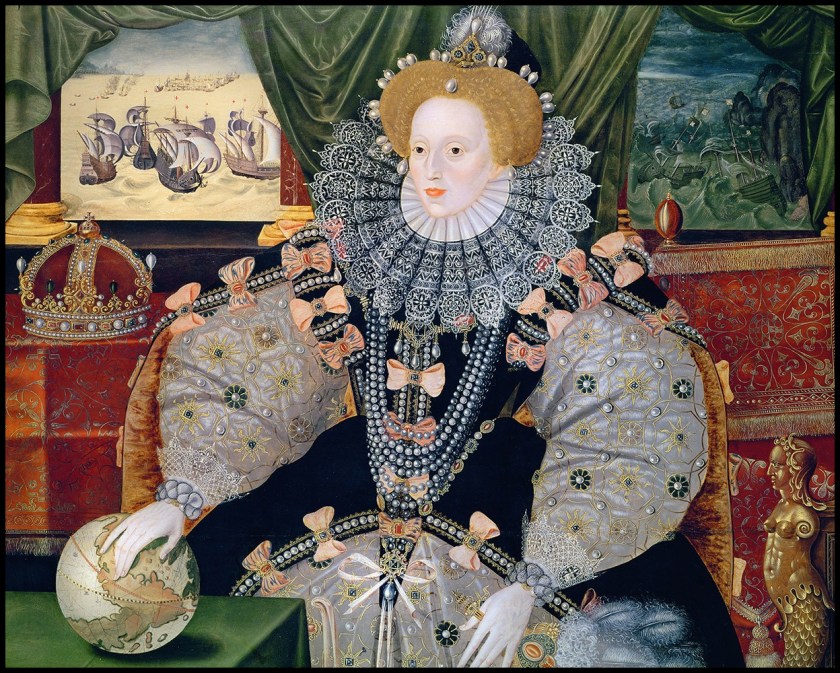
‘The Armada Portrait’
This week’s quotation is taken from Garrett Mattingly, The Defeat of the Spanish Armada(ed. J.H. Elliott), (The Folio Society: London, 2002)
– – –
This is just a humble tavern, and we’ve no real pretensions to royal patronage. Prince Hal, of course is a regular, but he doesn’t behave very … ahem … regally, when he’s here, Lor’ bless and keep him.
But like every good English ale-house, we do have a portrait of Good Queen Bess behind the bar, and it’s this one. This week, I’ve been thinking about Elizabeth I …
This week’s quotation is from Germaine Greer, Shakespeare (Past Masters series), (Oxford: OUP, 1986), p.75
Classroom experience tells me that [massive generalization] today’s students are disinclined to think for themselves [/massive generalization]. It’s part of the resistance to Shakespeare that seems to be coded into some pupils’ DNA (and another day I might talk about the ‘generational’ thing), but we see it with other texts. A while back, in Manchester, I taught the short film ‘The Virus’ – which I personally think is excellent:
– but it was met with howls of anger (only slight exaggeration) from students who couldn’t work out what had happened, why, and what might happen next. Watch the film, if you have under ten minutes, and then ask yourself if the main character is alive or dead at the end. Then, ask yourself why or how the answer couldn’t be obvious to 14/15 year-olds. This happened with TWO classes. I wasn’t just taken aback: I was worried. Not least because they thought it was ‘rubbish‘ because they couldn’t figure it out.
To be fair, this probably isn’t new – had my students been alive at the time, and in possession of the attention span required to read it, they would have been part of the contemporary outcry over the ending to Great Expectations. But Dickens‘ audience wanted their theories confirmed or refuted. In 2018, it just seems endemic that people have no theories. They just want to be told what to think … and that scares me.
Almost nothing seems to have changed in 400 years … as usual …
subtitled, ‘Food for powder‘
Matthew Beaumont: Nightwalking: A Nocturnal History of London (London: Verso Books, 2015)
My recent article on Gayle Rubin‘s important Feminist work, ‘The Traffic in Women’ touched upon what has been historically expected of women, especially working class ones. Rubin takes a look at the Marxist position before developing it into a gender rather than class-specific argument: the commodification of women in the marriage market. It’s an excellent read.
And we see Rubin’s position everywhere in Shakespeare and the EMP, where women constantly struggle against the social imperative to marry a man who ticks boxes for their family / parents, love coming as an unexpected bonus. Even comedies such as The Dreamfeature the tension between ‘kinship‘ and ‘companionate‘ marriages.
To say nothing of the pressures Elizabeth I was under, of course …
In my article, I dipped into Beaumont‘s book for a supporting quotation, but it’s been weighing on my mind. I think it needs to be considered on its own merits.
PTS read-through: A Midsummer Night’s Dream, Act IV
Not for the first time in my read-through, the main thing I want to know is: ‘did they, or didn’t they?’
In this I was egged on by Cedric Watts, though I needed little encouragement, in truth. Still, it’s convenient to blame him for my prurience. If my answer is the same as Watts’: ‘of course!’, it begs a second question on which we differ:
(For non-students, this is part of a series for my A Level students looking at important secondary texts which will assist their studies.)
Gayle Rubin, ‘The Traffic in Women: Notes on the “Political Economy” of Sex’ (1975)
An [If] you be mine, I’ll give you to my friend;
And you be not, hang, beg, starve, die in the streets,
For, by my soul, I’ll ne’er acknowledge thee
(Lord Capulet, Romeo and Juliet, Act III, sc v)
and
I beg the ancient privilege of Athens,
As she is mine, I may dispose of her:
Which shall be either to this gentleman
Or to her death, according to our law.
(Egeus, A Midsummer Night’s Dream, Act I, sc I)
Not much fun, being a teenage girl in Shakespeare’s day, was it? These intelligent, independent and emotional young women must often have felt like second-class citizens …
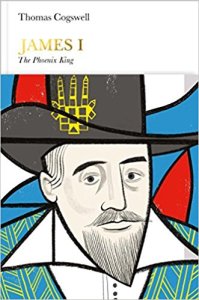
Should we pay more attention to James I before he became King of England?
Thomas Cogswell, James 1: The Phoenix King (Penguin Monarchs series), (Allen Lane: London, 2017)
Studying or teaching Shakespeare’s plays, the figure of Elizabeth looms in the background, like the spectre at the feast.
We see it in the ever-present censorship, in the light of the Treasons Acts in 1571 and 1581, outlawing public discussion of the succession. Or, more positively, in the ‘Gloriana’ cult that produced works like Spenser‘s The Faerie Queen, and flattering nods to Elizabeth wherever you look – like links between her and Theseus in A Midsummer Night’s Dream. We see it in her discomfort with comparisons to Richard II, and the propagandic lionization of Henry VII.
Reading Cogswell‘s short, sympathetic biography has made me reassess the extent to which we / I ignore James until the succession question becomes absolutely critical.
I wonder if there was a time when, at least as an adult, the name Germaine Greer was unknown to me. Yet this slim volume, picked up in the last mad pre-demolition trolley dash round our old sixth-form building almost a year ago, is my first reading of any of her works. I feel a bit embarrassed about that.
The more things change, the more they stay the same …
Neale, JE: Queen Elizabeth I (Pimlico: London, 1998)
Once again, I’m minded to say that we continue to study EMP Literature because whilst times and technology have undoubtedly moved on, human attitudes and the situations we face remain broadly the same.
Endemic Xenophobia? Check.
Effemination of rival men who dress too well? Check.
Aristocratic disdain for ‘upstarts’? Check.
‘Plus ça change, plus c’est la même chose,’ asJean-Baptiste Alphonse Karr(another foreigner*, dammit!) might say …
We only want to be kings because we don’t fully understand what it involves?
Christopher Lee, 1603 (Review: London, 2003)
Not THAT Christopher Lee, obviously!
In class, we’ve seen it in Edward II and, I think, Richard III. There are hints of it for my younger students in Macbeth. But I see it everywhere: in Richard II, Henry IV,Henry V, Henry VI.
In Twelfth Night, Malvolio tells us:
“be not afraid of greatness: some are born great, some achievegreatness, and some have greatness thrust upon ’em” (II.v)
Quite simply, the message I consistently get from EMP plays is that greatness – in this case being monarch – is never, ever, all it’s cracked up to be …
Anything other than modern ‘exclusivity’ could mean demotion and starvation at best, or – more likely – imprisonment, exile, or execution.
Painting by Marcus Stone: Edward and Gaveston frolic in front of Isabella et al …
CLASSROOM BASED ASSESSMENT: In Edward II, love is invariably possessive. Discuss.
Weightings:AO1 (25%); AO3 (50%); AO5 (25%)
God, I hate this question.
One of the things that I got from my teacher training, back in the day, was that if you asked a poor/stupid/inaccessible question, you only had yourself to blame for crap answers. This is an OCR question – at least the students get a choice of six to answer for their final exams. But for reasons beyond my ken, or immediate power to change, it is our first CBA on Edward II. It also comes too early in the course for people who were in school uniform less than 6 months ago to be asked to deal with AO5, if you ask me. They were being constantly drilled in AO2, and for this essay, it’s not required …
But enough whinging. In the spirit of never asking people to do something you wouldn’t do yourself, here’s a model answer for my class to play with. I tried to do this in the same conditions they were asked to do it in, without any ‘cheating’ on my part.
IF THIS IS THE FIRST TIME YOU’VE HAD A LOOK AT ONE OF MY ESSAYS, PLEASE CLICK HERE FOR THINGS YOU NEED TO KNOW.


 subtitled, ‘Food for powder‘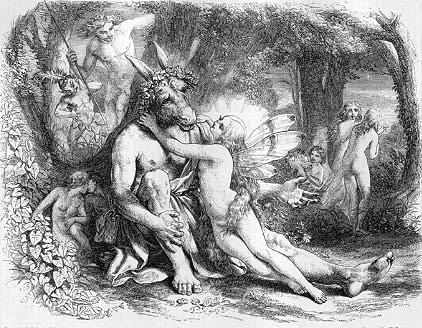


 Neale, JE
 Christopher Lee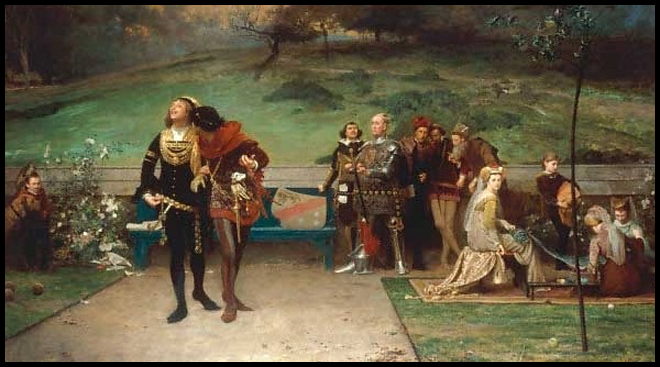
 The Boar's Head, Eastcheap