Our victim was brash, talented, and stabbed just above the eye before his 30th birthday …
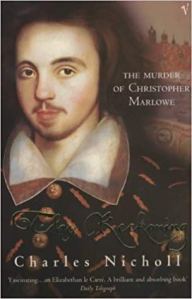
Charles Nicholl, The Reckoning: The Murder of Christopher Marlowe (Vintage: London, 2002)
– – –
‘I am not trying to argue that Marlowe’s death has to have a meaning. My reading tends only to a more complex kind of meaninglessness than that of a ‘tavern brawl’.
Gifted, abominable, yet capable of producing ‘the mighty line’ …
Ben Wishaw and Karoline Herfurth in Tom Tykwer‘s 2006 film
It’s episode 52 – not a continuous year (the first post is here), but a year nonetheless, so I’m going to indulge myself a little this week. Will you be able to tell the difference, I hear you ask!
Bear with me whilst I tell you a story:
In eighteenth-century France there lived a man who was one of the most gifted and abominable personages in an era that knew no lack of gifted and abominable personages. His story will be told here. His name was Jean-Baptiste Grenouille, and if his name – in contrast to the names of other gifted abominations, de Sade’s, for instance, or Saint-Just’s, Fouché’s, Bonaparte’s, etc. – has been forgotten today, it is certainly not because Grenouille fell short of those more famous blackguards when it came to arrogance, misanthropy, immorality, or, more succinctly, wickedness, but because his gifts and his sole ambition were restricted to a domain that leaves no traces in history: to the fleeting realm of scent. [a]
‘You will, generally, be rewarded for originality, but the crazier your argument is, the better your reasoning should be’.
Originally intended as a confidence-builder for the chronically-tentative, it’s become a cliché in my teaching that ‘in English, there’s no such thing as a wrong answer’. Increasingly, though, and especially at A Level, I’m finding it necessary to qualify that empowering notion.Perhaps students were getting a little too emboldened, as we’ll see below.Just as Squealer in Animal Farm reminds us that ‘Some animals are more equal than others’, some answers are – obviously – better than others. [a]
Almost organically, as I refined the concept, it came to be known as The Continuum of Plausibility™.I’ve been using the term here, off and on, for a while now without properly explaining it, so here goes.
Marlowe probably DID make a hazard of his head by easing his heart …
The more I read about Marlowe, the more I like and sympathise with him – arrogant, frustrated genius, malcontent, morally questionable, and attention-whore as he may have been. I sense a kindred spirit: my best friend would say the same about me – perhaps with a lot more arrogance and a lot less genius. As I get older, I like to think that my moral code is finally begining to crystallise, where it was entirely fluid 25 years ago, but then Marlowe never had the opportunity to mellow …
Increasingly, I see Marlowe as the kind of ‘mis-shape‘ Jarvis Cocker sung about in 1995:
Andrew Tiernan as Piers Gaveston: an unsettlingly naked, chittering demon, occupying Edward’s throne (Jarman, 1991)
Episode 6 of Forensic Friday – the rules are here for first-timers – effectively kicks off this summer’s likely obsession with Marlowe.
My OCR A Level students are not obliged to analyse Edward II in this way; perhaps they’ll wonder at the point of today’s exercise. The point is that you ought to be able to do this – and enjoy the process – for any text, people. We are, after all, archaeologists of the written word – this is what we do …
Anyway, here’s a tiny extract that speaks volumes about Edward II’s lover and their relationship …
For a perfectionist, it’s an opportunity: time to produce something better than ‘good enough’ …
Sun, sun, sun, here it comes …
It seems like years since it’s been here. [a]
So many people seem to resent our summer holiday. They bemoan having to take responsibility for their own offspring (my favourite pet peeve); whine about the cost of holidays; whinge about the number of tourists clogging their area (without appreciating how their local economy depends on that tourist pound, or how often they are the problem in other parts of the country).
Hot ice and wondrous strange snow: the appetite for articulation …
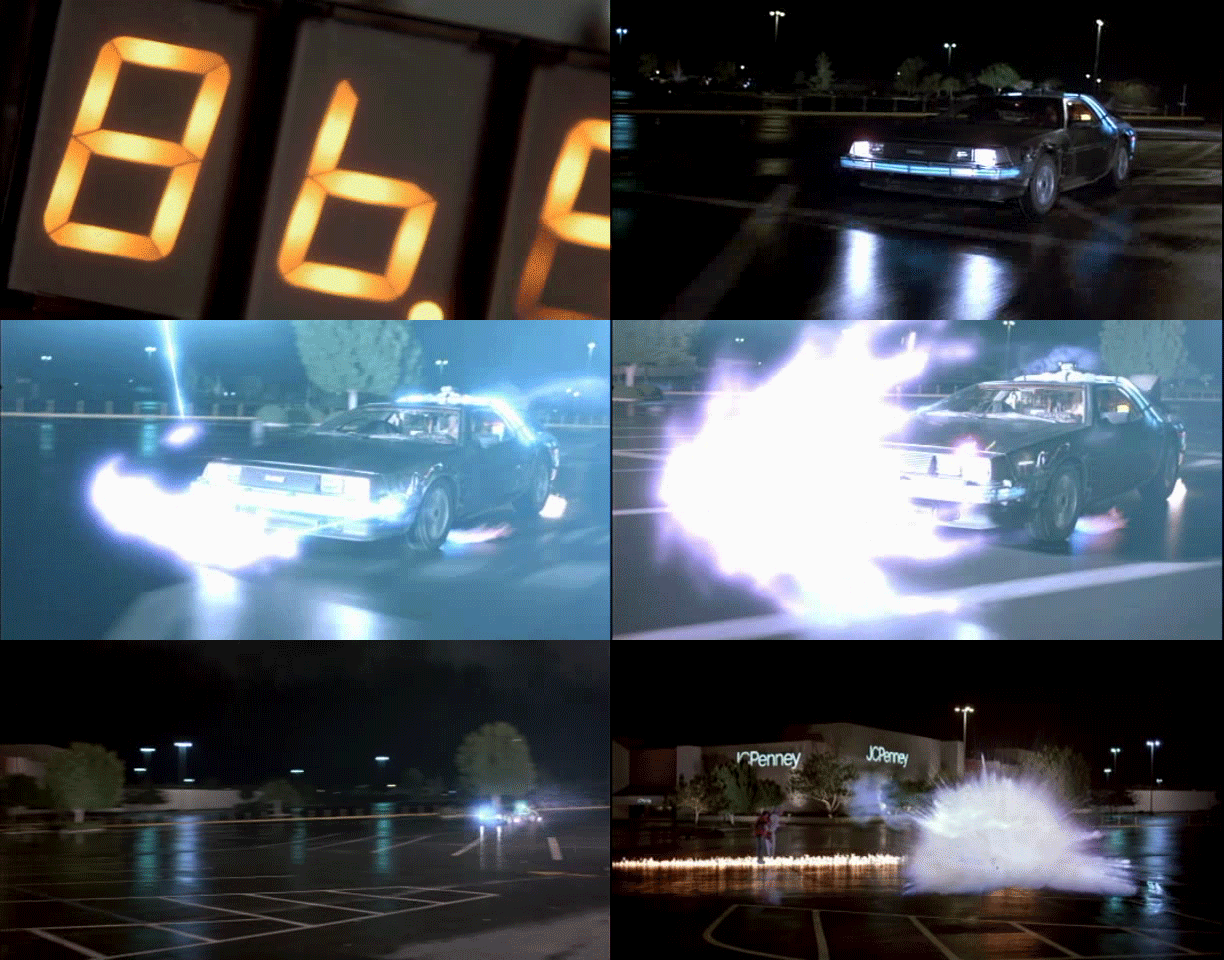
Destination 1592 … [a]Frequently, I ask my class to step into the time machine and join me back in 1592.
Why then?
Conveniently, it’s as close as we can get to dating both Richard III and Edward II, my Key Stage 5 texts. The other plays I teach at the moment – Much Ado About Nothing and Macbeth – follow on from here.
This period was a crucible in which Drama as we know it was being born, alchemically transmuted from the didactic Morality Plays into something fresh and exciting. With my Marxist critical hat on, if we can understand the contextual elements poured into that cauldron, we can better appreciate and analyse the resultant heady brew.
At 18, students ought to be able to handle History plays, but the exam boards don’t seem to like them?
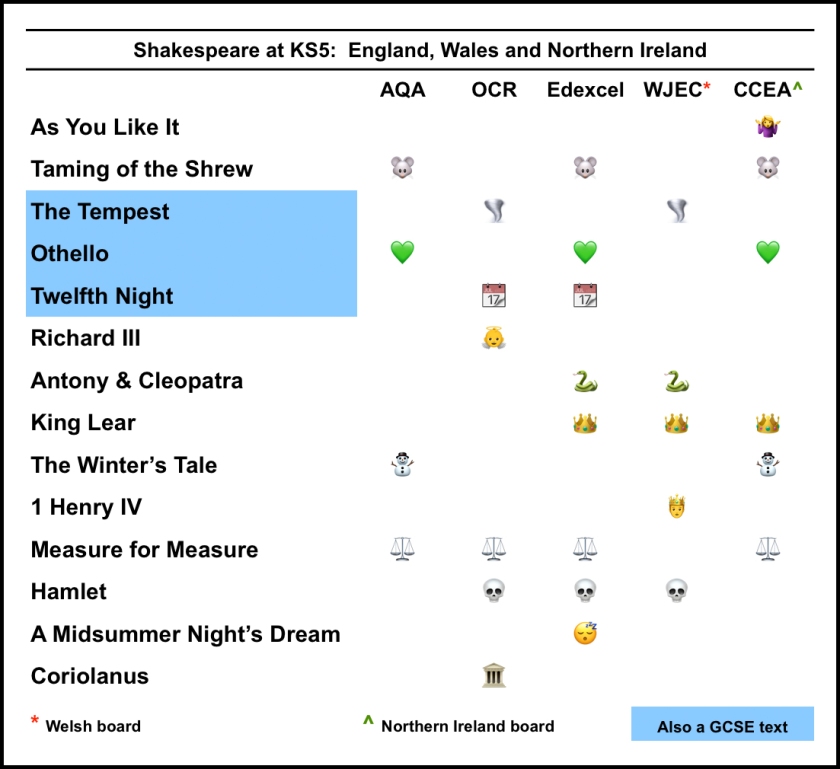
Following my recent KS4 post, I extended my research to A Level – that is the exams taken by 18-year olds before they hit university. Again, I’d love to hear from students or teachers, especially in other countries. Here are a few thoughts of my own:



 The Boar's Head, Eastcheap