Putting Shakespeare in students’ mouths is often as much fun as feeding a baby – the faces they pull!
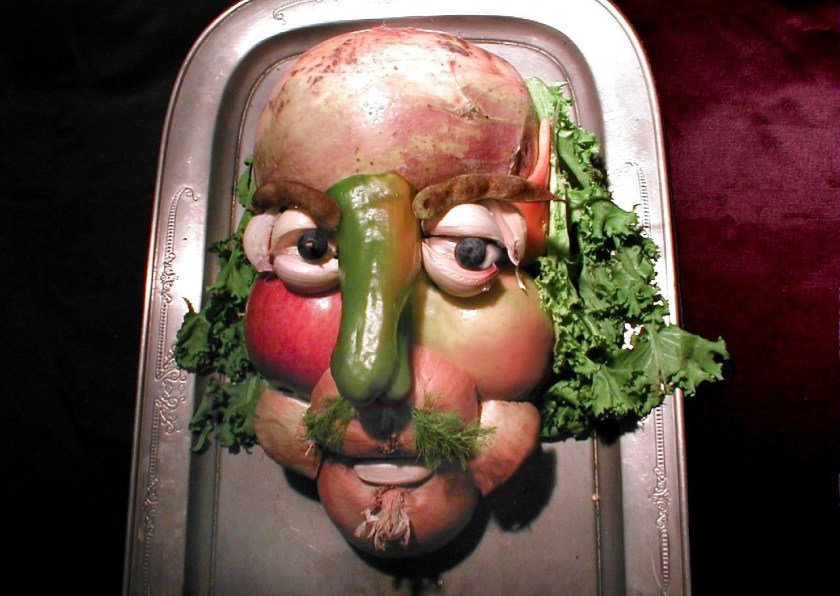
image (C) Francine Segan
A Midsummer Night’s Dream: Act I
Shakespeare’s language lives in the mouth, not the ears or eyes. It needs to be tasted, and one of the advantages of living alone is that I can pace up and down my flat’s lengthy corridor reading tricky lines out loud, or just playing with the inflections of favourites:
I wasted time and now doth time waste me.
I WASTED time and NOW doth time waste me.
I wasted TIME and now doth TIME waste ME.
And so on, like the celebrity skit in the BBC’s Shakespeare400 celebration. You get the picture.
If it needs to be tasted, it also needs, I suppose, to be CHEWED. That’s what we often do in the classroom …
As Alice might say: ‘de tongues of de mans is be full of
deceits’
Love’s Labour’s Lost, Act II
‘We could do with a shot on goal, John. The game’s mostly being played in the middle of the pitch’ …
Our Princess arrives, and immediately impresses. In fact, she reminds me of my girlfriend: scarily competent, impervious to flattery (no, really), and icily, frustratingly logical at times.
Lesson 1: Books, no matter how interesting, are not a girlfriend substitute …
‘You lay off that pet shop dame. Women weaken legs!’ ~ Mickey (Burgess Meredith)
PTS read through: Love’s Labour’s Lost, Act I
It feels appropriate to arrive at this play in the month when it seems you’re not a functioning member of society if you don’t add some kind of punishing denial to the post-Christmas blues: Dry January, the unappetising-sounding Veganuary, or in my case, the Walk 1,000 Miles in 2018 challenge (already behind schedule). Personally, I think we’ve enough to cope with, waiting for things to warm up and the nights to become appreciably longer.
Nevertheless, this is how the play opens – with a preposterous resolution by the foolish King of Navarre and three of his intimates to ‘abjure the rough magic’ of the fair sex. Unlike Rocky’s trainer Mickey, they’re worried about the intellectual rather than physical effects that women may have on them
I give them a maximum of ten minutes, stage time …
Antipholus (E) is NOT a twenty-first century role model – but was he a sixteenth-century one?
… but truly two.’ Robert Louis Stevenson, The Strange Case of Dr Jekyll and Mr Hyde.
PTS read through: Comedy of Errors, Act IV
In 2018, the notion of what it means to be a ‘man’ feels ever more opaque, with behaviours and attitudes being scrutinised as never before, perhaps. As a gender, we sometimes appear confused about the path we ought to take to find a satisfying and yet socially acceptable direction or self-definition.
Maybe it was ever thus.
In yesterday’s post on Macbeth I touched upon the fragility of our hero’s notions of himself when his masculinity was challenged by his wife. Macbeth is largely a play about what it means to be a man, but that’s way down the line in terms of my reading schedule. Reading Act IV of Comedy of Errors felt like one of those non-comic interludes towards the end of plays like Much Ado About Nothing, and instead of laughing, I found myself thinking about what Antipholus(E) implies a ‘man’ should be. It’s not an attractive picture …
Claiming ‘Shakespeare was this or that’, or worse, ‘Shakespeare did not write the plays’, does NOT entitle you to a mic-drop. It just shows your intellectual bankruptcy …
Siobhan Fahey and Marcella Detroit – women I fancied (at 19) as much for their deranged, dangerous, deep and devil-may-care personas as their looks.
I’ve written elsewhere about the Rally of Revenge – about my unease that once you abandon all faith in ‘due process‘ or ‘justice‘ (either earthly or divine); once you understand that inequality is endemic, you have nothing left to lose – if you are already losing – so keep raising the stakes until someone has to leave the game. If it’s uncomfortable, perhaps it’s also sometimes necessary, to affect change of a fundamentally broken system. You might not see the benefits yourself. Hey, if you have to leave the game, then so be it: losing can become preferable to playing along, eventually.
There are always other games, other paths, whilst we are still alive – experience has taught me that, even if Shakespeare hasn’t.
And that’s where I find myself, professionally, this weekend. Approaching change, but ready for it, and maybe, in some ways, relieved that an unhappy stasis has broken. There are always other games.
There is a third way – for revenge – I’ve not written about before. The poet George Herbert(1593-1633) suggested that:
Living well is the best revenge.
And I’ll embrace and adapt that, in a ‘standing on the shoulders of giants‘ sense.
Living well equals happiness. LAUGHTER is the best revenge.
Today, I intend to laugh at someone. Long, and hard.
‘To sleep, perchance to dream – ay, there’s the rub’ (HAMLET: III.i.64)
Titus Andronicus: Act II
What tragedy would be complete without some element of the supernatural, as I have already intimated? This dreadful (in the sense of being full of dread, NOT poor quality) act begins with that classic Shakespearean trope, the bad night’s sleep:
‘I have been troubled in my sleep this night.’ (TITUS: II.i.9)
And Titus has every reason to be subconsciously troubled: although he begins the act quite enthusiastically:
‘The hunt is up’ (II.i.1)
He cannot imagine who the ‘dainty doe’ (DEMETRIUS: II.i. 26) might actually be ..
‘Good comedy is tragedy narrowly averted’ Jonathan Bate
The Two Gentlemen of Verona: Act V
Over the past year I’ve used the question ‘What’s in a name?’ more than once, dismissing labelling in its many forms, but this feels the best way of articulating my unease with The Two Gentlemen as I finish the play …




 Ponytail Shakespeare read-through: The Comedy of Errors, Act III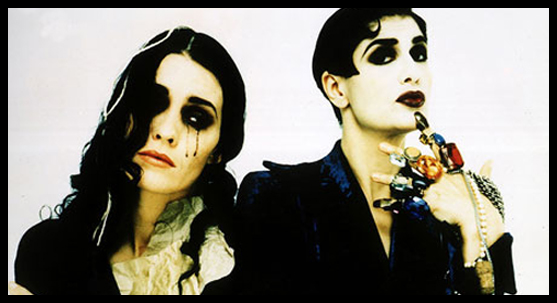


 The Boar's Head, Eastcheap