PTS 10/063: A Midsummer Night’s Dream Soundtrack

The Dream seemed an easy hit for songs from several genres and decades …

bh-wurlitzer

As ever, Shakespeare’s Jukebox provides a quick chance to cut loose and be a little mischievous between read-through plays.

Also, to embarrass myself, not least with my dodgy 80s credentials …

Finally to ask the time-honoured question:

What’s missing?

Let me know below!

Continue reading “PTS 10/063: A Midsummer Night’s Dream Soundtrack”

PTS 10/062: Wakey, Wakey …

I took you for granted for so long: I’m sorry …


BH MND11 76090
image:  Abel Guerrero

Being a Production Photographer has its moments – this is my favourite image from The Dream in Cambridge, 2012.

Ponytail Shakespeare read-through:  A Midsummer Night’s Dream, Act V.

One of the things about a project like this read-through it that it gives you a certain discipline.  In this case, although my timetable may be only notionally followed, it has forced me to read or re-read plays that I might not have, otherwise.  Occasionally (Love’s Labour’s Lost, I’m looking at YOU), my reservations have been fully justified. On other occasions, this new-found steel in my soul has been intensely rewarding.  I might not otherwise have read the Henry VI plays, for example.  Or, indeed, re-read The Dream in any hurry (believing I knew it ‘well enough’), and that would have been a shame …

Continue reading “PTS 10/062: Wakey, Wakey …”

Hapus Dydd Dewi Sant, look you!

Just how authentic are Shakespeare’s Welsh characters?

BH fluellen leek

‘if you can mock a leek, you can eat a leek’ [1]

Wales is my second home: my girlfriend is Welsh.  I lived there for a while, and visit frequently.  It’s a place I’ve come to know reasonably well, and to like very much.  One of the highlights of each year is watching the England vs Wales rugby union match – you simply haven’t tasted real passion and love of country until you’ve watched it on a big screen in a packed pub in North Wales (avoid wearing white, if you can).  They have a national anthem that genuinely moves me every time I hear it: inexplicably visceral and patriotic in a way that ‘God Save The Queen’ can never, ever be.  Take 90 seconds out of your life to watch this, below:

All this love doesn’t stop me from massively enjoying any opportunity to ‘mock the leek‘, but in an affectionate way …

Continue reading “Hapus Dydd Dewi Sant, look you!”

Quote of the Week: 26 February 2018 (#30)

Almost nothing seems to have changed in 400 years … as usual …

BH womans placesubtitled, ‘Food for powder

Matthew Beaumont:  Nightwalking: A Nocturnal History of London (London:  Verso Books, 2015)

My recent article on Gayle Rubin‘s important Feminist work, ‘The Traffic in Women’ touched upon what has been historically expected of women, especially working class ones.  Rubin takes a look at the Marxist position before developing it into a gender rather than class-specific argument:  the commodification of women in the marriage market.  It’s an excellent read.

And we see Rubin’s position everywhere in Shakespeare and the EMP, where women constantly struggle against the social imperative to marry a man who ticks boxes for their family / parents, love coming as an unexpected bonus.  Even comedies such as The Dream feature the tension between ‘kinship‘ and ‘companionate‘ marriages.

To say nothing of the pressures Elizabeth I was under, of course …

In my article, I dipped into Beaumont‘s book for a supporting quotation, but it’s been weighing on my mind.  I think it needs to be considered on its own merits.

Continue reading “Quote of the Week: 26 February 2018 (#30)”

PTS 10/061: What’s Good for the Goose …

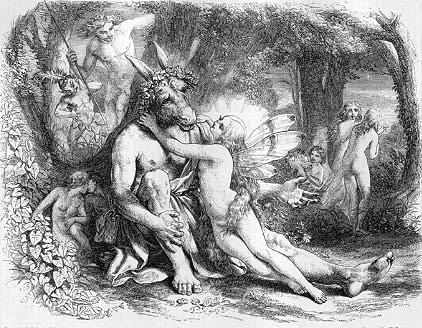
Bottoming out THAT relationship …

BH Paton_Titania
JN Paton

PTS read-through:  A Midsummer Night’s Dream, Act IV

Not for the first time in my read-through, the main thing I want to know is: ‘did they, or didn’t they?’

In this I was egged on by Cedric Watts, though I needed little encouragement, in truth.  Still, it’s convenient to blame him for my prurience.  If my answer is the same as Watts’: ‘of course!’, it begs a second question on which we differ:

‘Does it matter?’

Continue reading “PTS 10/061: What’s Good for the Goose …”

PTS 10/060: The Gods DO play dice …

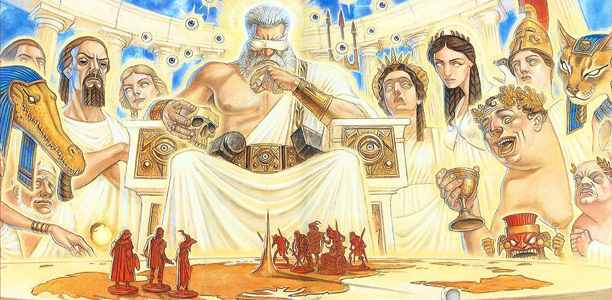
Act III places us at the game table, jostling Shakespeare for a view of the goings-on in that VERY busy wood …

BH Discworld Gods
‘No smiting.  Not up here.  It is the rules.  You want fight, you get your humans fight his humans. [1]
A Midsummer Night’s Dream, Act III: with apologies to Albert Einstein [2]

On reflection, it seems odd that as a child experiencing / undergoing / suffering a Catholic education, once a year, on our ‘Saint’s Day’ –  St Martin de Porres: 03 November – we were treated to a film in the school hall which was invariably a Ray Harryhausen epic.

Not that I want to complain.  I loved them, and still do.

They fostered an appetite for the ancient world – for Perseus, Theseus, Hercules, Jason … any number of  heroes and their associated monsters.  And, like the Book of Genesis, they’ve proved to be invaluable in teaching Literature.

Continue reading “PTS 10/060: The Gods DO play dice …”

Cultural Capital 04: Gayle Rubin, ‘The Traffic In Women’

Who gives this woman away?

bh-woman-power

(For non-students, this is part of a series for my A Level students looking at important secondary texts which will assist their studies.)

Gayle Rubin, ‘The Traffic in Women:  Notes on the “Political Economy” of Sex’ (1975)

An [If] you be mine, I’ll give you to my friend;

And you be not, hang, beg, starve, die in the streets,

For, by my soul, I’ll ne’er acknowledge thee

(Lord Capulet, Romeo and Juliet, Act III, sc v)

and

I beg the ancient privilege of Athens,

As she is mine, I may dispose of her:

Which shall be either to this gentleman

Or to her death, according to our law.

(Egeus, A Midsummer Night’s Dream, Act I, sc I)

Not much fun, being a teenage girl in Shakespeare’s day, was it?  These intelligent, independent and emotional young women must often have felt like second-class citizens …

Continue reading “Cultural Capital 04: Gayle Rubin, ‘The Traffic In Women’”

PTS 10/059: I DO Believe in Fairies …

Puck and Ariel are first cousins – mischievous, not malicious …

BH cottingley fairies
Sir Arthur Conan Doyle was taken in by the Cottingley Fairies.  I might have been, too …

A Midsummer Night’s Dream, Act II

“You see, Wendy, when the first baby laughed for the first time, its laugh broke into a thousand pieces, and they all went skipping about, and that was the beginning of fairies.” […]

“And so,” he went on good-naturedly, “there ought to be one fairy for every boy and girl.”

“Ought to be? Isn’t there?”

“No. You see children know such a lot now, they soon don’t believe in fairies, and every time a child says, ‘I don’t believe in fairies,’ there is a fairy somewhere that falls down dead.”1

Discussing Act I, I alluded to the fact that my suspension of disbelief was more taxed by Helena‘s actions than by the whole idea of a fairy realm – how strange is that?

Continue reading “PTS 10/059: I DO Believe in Fairies …”

PTS 10/058: Eat up your Shakespeare

Putting Shakespeare in students’ mouths is often as much fun as feeding a baby – the faces they pull!

BH Shakespeare Food
image (C) Francine Segan

A Midsummer Night’s Dream:  Act I

Shakespeare’s language lives in the mouth, not the ears or eyes.  It needs to be tasted, and one of the advantages of living alone is that I can pace up and down my flat’s lengthy corridor reading tricky lines out loud, or just playing with the inflections of favourites:

I wasted time and now doth time waste me.

I WASTED time and NOW doth time waste me.

I wasted TIME and now doth TIME waste ME.

And so on, like the celebrity skit in the BBC’s Shakespeare400 celebration.  You get the picture.

If it needs to be tasted, it also needs, I suppose, to be CHEWED.  That’s what we often do in the classroom …

Continue reading “PTS 10/058: Eat up your Shakespeare”

Quote of the Week: 05 February 2018

Re-reading a text every few years can be like reading it for the first time …

BH drakasis

‘Shakespeare in Ideology’, James H Kavanagh, in Alternative Shakespeares, (ed. John Drakasis), (Methuen: London, 1985)

A part of me is looking forward to moving onto ‘the Dream’ in my Pony Tail Shakespeare read-through more than I thought I would.

Continue reading “Quote of the Week: 05 February 2018”