Crimes Against Shakespeare 010: On ‘Dumbing Down’

This has been on my mind for a while …

BH dumbing down

This is a long read – I say that on a blog where posts often hit 1,300 words, against ‘accepted wisdom’ – so apologies in advance.  YOUR blog is your blog; my blog is MY blog, and I write for catharsis and as a kind of journal, not ‘popularity’, ‘followers’, or ‘influence’.  I was tempted to temper my words with a gallery of pictures, but that didn’t feel right, either.  This post feels a little more personal than most.

In spite of, or maybe because of, constant trawling for Shakespeare-related content, I have only just found this.  Last April, Peter Marks wrote a piece for The Washington Post  (link below) suggesting that Americans are too ‘intellectually lazy’ to appreciate Shakespeare, and fearing for the future popularity of the plays.  My immediate response was ‘you think it’s bad in the US?  Try over here, where Shakespeare was born!’

Continue reading “Crimes Against Shakespeare 010: On ‘Dumbing Down’”

PTS 09/055: The Rough Wooing of the Monstrous Regiment

Where is the ‘son-in-law’ material in LLL?


BH NIgel
Dad, this is Nigel … we’re in love!

Love’s Labour’s Lost:  Act IV

My life has been filled with obsessions, and for reasons too complex to go into here, about twenty-five years ago, one of them was Scottish history.  With no knowledge ever completely wasted, it’s contributed to where and who I am today, struggling with this play, and especially to find any kind of empathy with its male characters.

Put simply, if I had a daughter, none of these men would be son-in-law material …

Continue reading “PTS 09/055: The Rough Wooing of the Monstrous Regiment”

Quote of the Week: 08 January 2018

Methinks the Tudors did protest too much …

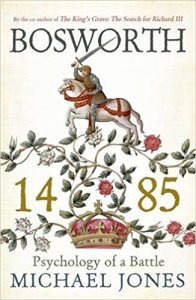
BH jones 1485

Michael K Jones, 1485: Bosworth – Psychology of a Battle (John Murray:  London, 2014)

My hopes for this book weren’t high, having bought it for £2-99 from one of those small discount bookstores that seem to defy all logic in staying afloat.  I’ve been pleasantly surprised:  Jones has something different to say, and he argues it clearly and persuasively.

One of the things he looks at is the demonisation of Richard, asking if it isn’t just a little over the top.  If so, why?

Continue reading “Quote of the Week: 08 January 2018”

PTS 08/048: Man is not truly one …

Antipholus (E) is NOT a twenty-first century role model – but was he a sixteenth-century one?

BH jekyll hyde

… but truly two.’  Robert Louis Stevenson, The Strange Case of Dr Jekyll and Mr Hyde.

PTS read through:  Comedy of Errors, Act IV

In 2018, the notion of what it means to be a ‘man’ feels ever more opaque, with behaviours and attitudes being scrutinised as never before, perhaps.  As a gender, we sometimes appear confused about the path we ought to take to find a satisfying and yet socially acceptable direction or self-definition.

Maybe it was ever thus.

In yesterday’s post on Macbeth I touched upon the fragility of our hero’s notions of himself when his masculinity was challenged by his wife.  Macbeth is largely a play about what it means to be a man, but that’s way down the line in terms of my reading schedule.  Reading Act IV of Comedy of Errors felt like one of those non-comic interludes towards the end of plays like Much Ado About Nothing, and instead of laughing, I found myself thinking about what Antipholus (E) implies a ‘man’ should be.  It’s not an attractive picture …

Continue reading “PTS 08/048: Man is not truly one …”

Quote of the Week: 01 January 2018

Is royal blood THINNER than water?

pollard_cover

Pollard, AJ:  Edward IV, The Summer King (Penguin Monarchs) (Allen Lane:  London, 2016)

It happens in the best of families.  Royalty is often an accident of birth, and doesn’t guarantee fitness for rule, as we’ve seen in the exploits of Henry VI and Edward II – weak sons of strong fathers.

Continue reading “Quote of the Week: 01 January 2018”

Quote of the Week: 18 December 2017

The more things change, the more they stay the same …

BH neale coverNeale, JE:  Queen Elizabeth I (Pimlico:  London, 1998)

Once again, I’m minded to say that we continue to study EMP Literature because whilst times and technology have undoubtedly moved on, human attitudes and the situations we face remain broadly the same.

Endemic Xenophobia?  Check.

Effemination of rival men who dress too well?  Check.

Aristocratic disdain for ‘upstarts’?  Check.

‘Plus ça change, plus c’est la même chose,’ as Jean-Baptiste Alphonse Karr (another foreigner*, dammit!) might say …

Continue reading “Quote of the Week: 18 December 2017”

Quote of the Week: 11 December 2017

We only want to be kings because we don’t fully understand what it involves?

BH Lee_1603Christopher Lee, 1603 (Review:  London, 2003)

Not THAT Christopher Lee, obviously!

In class, we’ve seen it in Edward II and, I think, Richard III.  There are hints of it for my younger students in Macbeth.  But I see it everywhere: in Richard II, Henry IV, Henry V, Henry VI.


In Twelfth Night, Malvolio tells us:

“be not afraid of greatness: some are born great, some achieve greatness, and some have greatness thrust upon ’em” (II.v)

Quite simply, the message I consistently get from EMP plays is that greatness – in this case being monarch – is never, ever, all it’s cracked up to be …

Continue reading “Quote of the Week: 11 December 2017”

Yesterday, and yesterday, and yesterday …

What’s not to like about spreadsheets? Except they make clumsy timelines …


BH nicholson joker

It feels like it needs a little refinement, but the future is here!  And I feel like my friend’s daughter when she spots a park from about half a mile away! PLAYYYYYY!

For some considerable time, I’ve been known as someone who guiltily, geekily enjoys spreadsheets and will create one at the drop of a hat.  I mean, what’s not to like? Especially when I get going on conditional formatting and things like that – you should see my school mark-books!

But there was one area where I felt Excel (or Numbers, actually) was letting me down.

Continue reading “Yesterday, and yesterday, and yesterday …”

Quote of the Week: 27 November 2017

Are our masters “fettered with chains of gold”? Sir Thomas Wyatt (1503-42) thought so. Perhaps we could ask Theresa May …

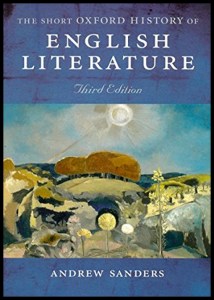
BH Sanders OXford History

Andrew Sanders, The Short Oxford History of English Literature (Oxford University Press, Oxford, 2004)

(A book I rescued – for under 50p – from a Greater Manchester library who had withdrawn it because it was not being taken out …)

I’m going to step back a little to someone who operated before Shakespeare lived, but will have influenced the development of poetry up until our boy arrived on the Shake-scene.

Continue reading “Quote of the Week: 27 November 2017”

Shakespeare’s Sister says: ‘YOU’RE HISTORY!’ …

Claiming ‘Shakespeare was this or that’, or worse, ‘Shakespeare did not write the plays’, does NOT entitle you to a mic-drop. It just shows your intellectual bankruptcy …

BH shakespeare's sister
Siobhan Fahey and Marcella Detroit – women I fancied (at 19) as much for their deranged, dangerous, deep and devil-may-care personas as their looks.

I’ve written elsewhere about the Rally of Revenge – about my unease that once you abandon all faith in ‘due process‘ or ‘justice‘ (either earthly or divine); once you understand that inequality is endemic, you have nothing left to lose – if you are already losing – so keep raising the stakes until someone has to leave the game.  If it’s uncomfortable, perhaps it’s also sometimes necessary, to affect change of a fundamentally broken system.  You might not see the benefits yourself.  Hey, if you have to leave the game, then so be it: losing can become preferable to playing along, eventually.

There are always other games, other paths, whilst we are still alive – experience has taught me that, even if Shakespeare hasn’t.

And that’s where I find myself, professionally, this weekend.  Approaching change, but ready for it, and maybe, in some ways, relieved that an unhappy stasis has broken. There are always other games.

There is a third way – for revenge – I’ve not written about before.  The poet George Herbert (1593-1633) suggested that:

Living well is the best revenge.

And I’ll embrace and adapt that, in a ‘standing on the shoulders of giants‘ sense.

Living well equals happiness.  LAUGHTER is the best revenge.

Today, I intend to laugh at someone.  Long, and hard.

Let’s get moving, shall we?

Continue reading “Shakespeare’s Sister says: ‘YOU’RE HISTORY!’ …”