PTS 11/065: Stop being such a Dick, Richard!

‘On Brexit, and Ignoring the Advice of Uncles’, as Montaigne might have written …


King Richard II

PTS read-through:  Richard II, act II

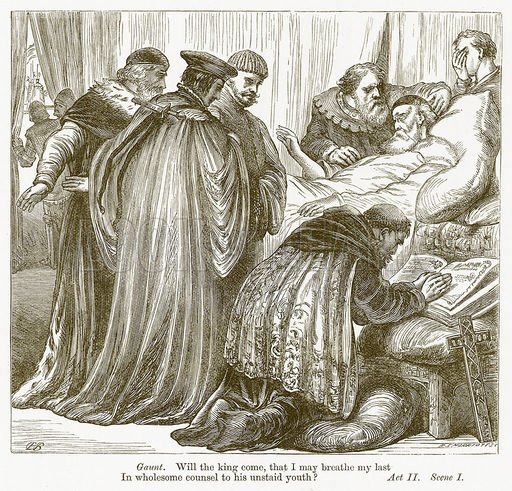
Richard II plays against the backdrop of an enormous cosmic clockface.  Our poetic but ineffective, spiteful monarch ends act I cynically hoping to arrive too late; he begins act II suffering the consequences of being early, getting an earful from his uncle.

What Richard does miss, though, is Uncle Gaunt’s remarkable crie de couer on the state of the nation.  It’s an interesting, beautiful swansong, the breathless anaphora creating a crescendo of patriotic fervour – but I have three issues with it.

Continue reading “PTS 11/065: Stop being such a Dick, Richard!”

Quote of the Week: 09 April 2018 (#36)

We all have something we can’t part with when we go abroad, surely?

BH suitcase-full-of-books

Kent Cartwright, ‘Introduction’ to William Shakespeare, The Comedy of Errors (Arden Third Edition), (Bloomsbury Publishing:  London, 2017)

Her:  [hefting my Arden Third copy of Richard II in her hand] ‘Don’t you think it’s a bit heavy to take on holiday?’

Me:  [defensively] ‘It’s as heavy as it needs to be.  That’s why you pay more for the Ardens.  And anyway, that’s the text I’m writing about at the moment.’

Her:  ‘But we’re going away.  You can access the play online.’  [statement, not a question]

Me:  That’s not the same!

Her:  [giving a silent ‘look’ and the merest suggestion of a shrug with one shoulder]

You probably know that look …

Continue reading “Quote of the Week: 09 April 2018 (#36)”

Quote of the Week: 26 March 2018 (#34)

The long road to the civil war begins here …

BH Richard II 86536
Photo by me:  taken at the Cambridge Shakespeare Festival, 2014

This week’s quotation is from:  Charles R. Forker, ‘Introduction’, in William Shakespeare, Richard II (Arden Third Edition), (Thomson Learning:  London, 2002)

A recent Reddit thread discussed the extent to which the History plays critiqued the monarchy.  To be honest, I didn’t want to get involved, because it looked like a straight request for homework help, and yet, it was hard to resist such a fascinating subject …

Continue reading “Quote of the Week: 26 March 2018 (#34)”

The 2018 Shakespeare Top 10

Forget the Oscars, here are some winners that REALLY matter to me …

BH Ardens
Not – quite – my collection of Ardens … soon, soon!

We HATE lists, don’t we?

Except, actually we bloody love them, if it’s something we’re interested in.

No, really.

That said, the last thing we want is a list that agrees with our perceptions – the dopamine rush of validation is very short-lived compared to the opportunity to passionately argue our disagreement.  We LOVE subjective opinions.  Trust me – my wonderfully fulfilling University years were full of essays arguing the toss – why, for example:

  • Dracula should not be judged for his ‘special dietary requirements’, whereas Van Helsing and his bunch are vindictive bastards;
  • we ought to respect Edward Hyde for his refreshing honesty, as opposed to Henry Jekyll‘s hypocrisy; or
  • Ursula K. Le Guin’s (RIP) The Left Hand of Darkness, whilst a superb book, had no place in the Science Fiction module

You get the picture:  English Lit is a tailor-made subject for those who are argumentative and prepared to do the spadework to back-up their cockiness …

Continue reading “The 2018 Shakespeare Top 10”

Cultural Capital 04: Gayle Rubin, ‘The Traffic In Women’

Who gives this woman away?

bh-woman-power

(For non-students, this is part of a series for my A Level students looking at important secondary texts which will assist their studies.)

Gayle Rubin, ‘The Traffic in Women:  Notes on the “Political Economy” of Sex’ (1975)

An [If] you be mine, I’ll give you to my friend;

And you be not, hang, beg, starve, die in the streets,

For, by my soul, I’ll ne’er acknowledge thee

(Lord Capulet, Romeo and Juliet, Act III, sc v)

and

I beg the ancient privilege of Athens,

As she is mine, I may dispose of her:

Which shall be either to this gentleman

Or to her death, according to our law.

(Egeus, A Midsummer Night’s Dream, Act I, sc I)

Not much fun, being a teenage girl in Shakespeare’s day, was it?  These intelligent, independent and emotional young women must often have felt like second-class citizens …

Continue reading “Cultural Capital 04: Gayle Rubin, ‘The Traffic In Women’”

Quote of the Week: 12 February 2018 (#28)

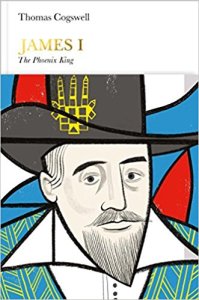
Should we pay more attention to James I before he became King of England?

BH cogwell james i

Thomas Cogswell, James 1:  The Phoenix King (Penguin Monarchs series), (Allen Lane:  London, 2017)

Studying or teaching Shakespeare’s plays, the figure of Elizabeth looms in the background, like the spectre at the feast.

We see it in the ever-present censorship, in the light of the Treasons Acts in 1571 and 1581, outlawing public discussion of the succession.  Or, more positively, in the ‘Gloriana’ cult that produced works like Spenser‘s The Faerie Queen, and flattering nods to Elizabeth wherever you look – like links between her and Theseus in A Midsummer Night’s Dream.  We see it in her discomfort with comparisons to Richard II, and the propagandic lionization of Henry VII.

Reading Cogswell‘s short, sympathetic biography has made me reassess the extent to which we / I ignore James until the succession question becomes absolutely critical.

Continue reading “Quote of the Week: 12 February 2018 (#28)”

PTS 09/055: The Rough Wooing of the Monstrous Regiment

Where is the ‘son-in-law’ material in LLL?


BH NIgel
Dad, this is Nigel … we’re in love!

Love’s Labour’s Lost:  Act IV

My life has been filled with obsessions, and for reasons too complex to go into here, about twenty-five years ago, one of them was Scottish history.  With no knowledge ever completely wasted, it’s contributed to where and who I am today, struggling with this play, and especially to find any kind of empathy with its male characters.

Put simply, if I had a daughter, none of these men would be son-in-law material …

Continue reading “PTS 09/055: The Rough Wooing of the Monstrous Regiment”

Cultural Capital 02: The Book of Genesis

It doesn’t get much more influential than the ‘good book’ in English Literature …

BH blues brothers
Do you see the light?

[Second in a series of articles aimed at our ‘A Level’ students, addressing gaps in their general and literary knowledge.  Read the previous article, On Dante’s Inferno, here]


Jehovahs Witnesses‘Good morning [big smile]!

In the Christmas season, who do you think is the greatest gift-giver of them all?’

(this happened to me a few weeks back)

No – don’t slam the door !  I’m genuinely not here to convert you.  But if there’s just one text that has gifted the most sources of inspiration and allusion to our Western literary tradition, it’s probably the Old Testament Book of Genesis.  Estimates vary, but its very strong messages on obedience and patriarchy have been influencing society for about 3,000 years.

This would be the book to choose alongside Shakespeare’s Complete Works when looking for the most influential literary works.

Continue reading “Cultural Capital 02: The Book of Genesis”

Quote of the Week: 08 January 2018

Methinks the Tudors did protest too much …

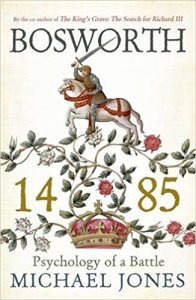
BH jones 1485

Michael K Jones, 1485: Bosworth – Psychology of a Battle (John Murray:  London, 2014)

My hopes for this book weren’t high, having bought it for £2-99 from one of those small discount bookstores that seem to defy all logic in staying afloat.  I’ve been pleasantly surprised:  Jones has something different to say, and he argues it clearly and persuasively.

One of the things he looks at is the demonisation of Richard, asking if it isn’t just a little over the top.  If so, why?

Continue reading “Quote of the Week: 08 January 2018”

Macbeth: Villain, or Victim?

Can I REALLY be an apologist for Macbeth? I think so.

BH macbeth stewart and fleetwood
Kate Fleetwood and Sir Patrick Stewart as the happy couple …

“Something something isn’t Macbeth a villain!?!?!? something something.”

This is someone’s response to my suggestion that Macbeth (and, incidentally, his wife) is one of Shakespeare’s most ‘memorable’ characters.  The ‘something’s are their words.

It set me thinking … IS he a villain, or simply a victim?  Can I really be an apologist for him, I asked myself?

I reached for my Arden …

Continue reading “Macbeth: Villain, or Victim?”