Niccolò Machiavelli: The Prince, (transl. George Bull, ed. Anthony Grafton), (Penguin Classics: London, 2003). e-book ISBN: 9780141912004 (£2.99)
– – –
Niccolò Machiavelli … the name has a seductive musicality, like all the Devil’s best tunes, and in Italian, ‘Il Principe’ uncoils like a snake, before hissing and then biting. This, his most famous work, has insinuated its way into our psyche until ‘Machiavellian’ has become part of a sinister cabal of authorial-adjectives including ‘Orwellian‘, ‘Lovecraftian’ and ‘Kafkaesque‘.Yet how many people appreciate its true meaning, having read ‘The Prince’?Is its reputation merited?Is it a useful, topical read, or a dusty, centuries-old curiosity?
‘On Brexit, and Ignoring the Advice of Uncles’, as Montaigne might have written …
PTS read-through: Richard II, act II
Richard II plays against the backdrop of an enormous cosmic clockface. Our poetic but ineffective, spiteful monarch ends act I cynically hoping to arrive too late; he begins act II suffering the consequences of being early, getting an earful from his uncle.
What Richard does miss, though, is Uncle Gaunt’s remarkable crie de couer on the state of the nation. It’s an interesting, beautiful swansong, the breathless anaphora creating a crescendo of patriotic fervour – but I have three issues with it.
We all have something we can’t part with when we go abroad, surely?
Kent Cartwright, ‘Introduction’ to William Shakespeare, The Comedy of Errors (Arden Third Edition), (Bloomsbury Publishing: London, 2017)
Her:[hefting my Arden Third copy of Richard II in her hand] ‘Don’t you think it’s a bit heavy to take on holiday?’
Me:[defensively] ‘It’s as heavy as it needs to be. That’s why you pay more for the Ardens. And anyway, that’s the text I’m writing about at the moment.’
Her: ‘But we’re going away. You can access the play online.’ [statement, not a question]
Me: That’s not the same!
Her:[giving a silent ‘look’ and the merest suggestion of a shrug with one shoulder]
To buy, or not to buy? A completely rhetorical question when it comes to books …
“The struggle itself toward the heights is enough to fill a man’s heart. One must imagine Sisyphus happy.” Albert Camus (1)
Consider Sisyphus … (2)
A mythical king condemned to spend eternity atoning for his lifetime sins by pushing a boulder up a mountain in Tartarus, only to have it roll to the bottom overnight: as a result, he was obliged to start afresh each morning.
I like to think he is the patron saint of English teachers. If you are struggling to work out why, the answer’s at the foot of the post.
Bogdanov (and Shakespeare) on the corrosive effects of real life on the soul …
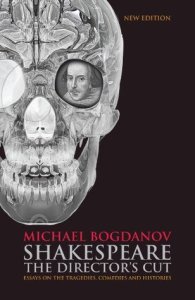
Michael Bogdanov, ‘Richard II: The skipping King’, in Shakespeare : The Director’s Cut (Capercaillie Books: Edinburgh, 2005)
I picked this startling book up from Waterstones in Gower Street, London on Saturday – remaindered at a measly £5-99. Scuffed but basically sound, it seemed destined for the upper slopes of my ever-growing Mount Tsundoku – about which I’m bound to post at some stage, recently becoming familiar with the term.
Either way, as I often do with new Shakespeare-related books, I ambled through the Introduction. Not properly knowing who Bogdanov was in truth, I wanted a sense of who I’d invited to share my bookshelves. I’m at my parents’, and despite the TV blaring at a volume only a practically-deaf father can justify, I became completely immersed.
Bogdanov died almost a year ago, at 78 (a little older than my father is). If we’d been contemporaries, and moved in similar circles, I reckon we would have been drinking buddies …
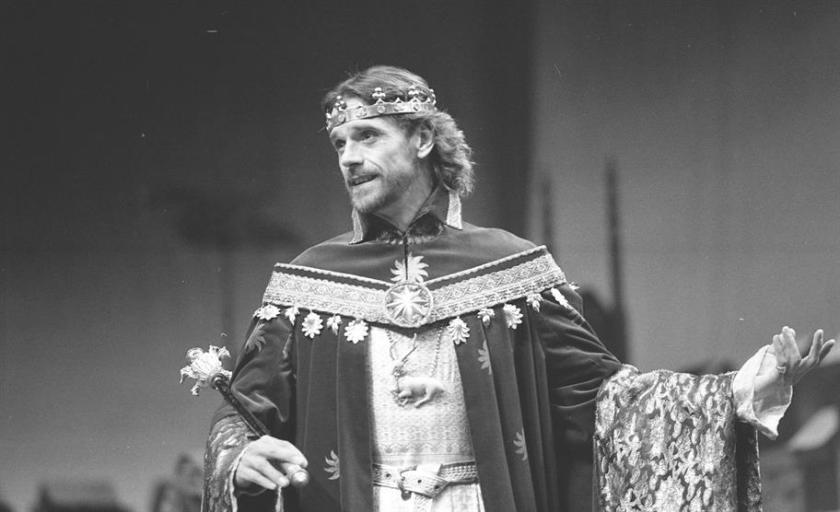
All’s far from well for Richard, and a facility with words isn’t helping …
image: RSC
PTS read-through: Richard II, Act I
The lengthy gap since I finished posting about A Midsummer Night’s Dream has everything to do with volume of work, and absolutely nothing to do with what I’m about to confess you now.But we ought to get it out of the way, or it will cloud all my posts about Richard II …
On today’s journey to the late 1590s, let’s take a detour via 1987 …
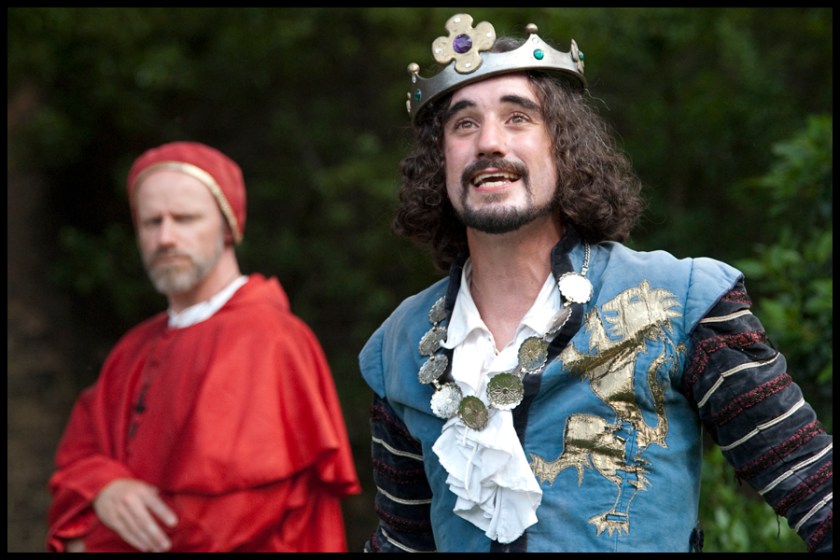
Photo by me: taken at the Cambridge Shakespeare Festival, 2014
This week’s quotation is from: Charles R. Forker, ‘Introduction’, in William Shakespeare, Richard II (Arden Third Edition), (Thomson Learning: London, 2002)
A recent Reddit thread discussed the extent to which the History plays critiqued the monarchy. To be honest, I didn’t want to get involved, because it looked like a straight request for homework help, and yet, it was hard to resist such a fascinating subject …
This week’s quotation is from Germaine Greer, Shakespeare (Past Masters series), (Oxford: OUP, 1986), p.75
Classroom experience tells me that [massive generalization] today’s students are disinclined to think for themselves [/massive generalization]. It’s part of the resistance to Shakespeare that seems to be coded into some pupils’ DNA (and another day I might talk about the ‘generational’ thing), but we see it with other texts. A while back, in Manchester, I taught the short film ‘The Virus’ – which I personally think is excellent:
– but it was met with howls of anger (only slight exaggeration) from students who couldn’t work out what had happened, why, and what might happen next. Watch the film, if you have under ten minutes, and then ask yourself if the main character is alive or dead at the end. Then, ask yourself why or how the answer couldn’t be obvious to 14/15 year-olds. This happened with TWO classes. I wasn’t just taken aback: I was worried. Not least because they thought it was ‘rubbish‘ because they couldn’t figure it out.
To be fair, this probably isn’t new – had my students been alive at the time, and in possession of the attention span required to read it, they would have been part of the contemporary outcry over the ending to Great Expectations. But Dickens‘ audience wanted their theories confirmed or refuted. In 2018, it just seems endemic that people have no theories. They just want to be told what to think … and that scares me.
Forget the Oscars, here are some winners that REALLY matter to me …
Not – quite – my collection of Ardens … soon, soon!
We HATE lists, don’t we?
Except, actually we bloody love them, if it’s something we’re interested in.
No, really.
That said, the last thing we want is a list that agrees with our perceptions – the dopamine rush of validation is very short-lived compared to the opportunity to passionately argue our disagreement. We LOVE subjective opinions. Trust me – my wonderfully fulfilling University years were full of essays arguing the toss – why, for example:
Dracula should not be judged for his ‘special dietary requirements’, whereas Van Helsing and his bunch are vindictive bastards;
we ought to respect Edward Hyde for his refreshing honesty, as opposed to Henry Jekyll‘s hypocrisy; or
Ursula K. Le Guin’s (RIP) The Left Hand of Darkness, whilst a superb book, had no place in the Science Fiction module
You get the picture: English Lit is a tailor-made subject for those who are argumentative and prepared to do the spadework to back-up their cockiness …

 Niccolò Machiavelli: The Prince, (transl. George Bull, ed. Anthony Grafton), (Penguin Classics: London, 2003). e-book ISBN: 9780141912004 (£2.99)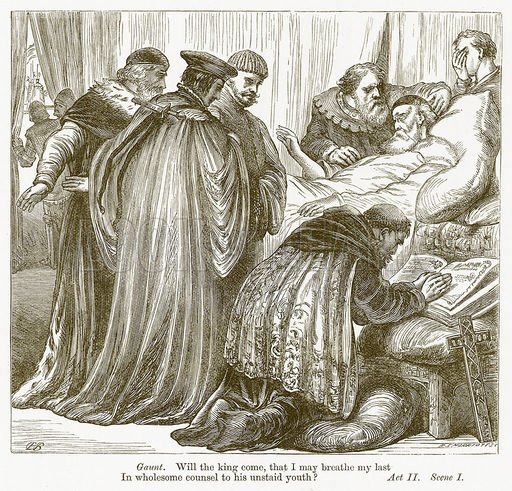



 The Boar's Head, Eastcheap