Today marks two year since Prince died. It’s not that long ago that I confessed that his was one of the very few celebrity deaths that have personally touched me. Step aside, Princess Diana! People have got tired of me saying he was the ‘effing Mozart of his age‘, I think.
This weekend is a busy one – or should be. One of my favourite watering holes, Beerwolf, are hosting a live music tribute on Sunday afternoon, marvellously entitled ‘Prince you’ve been gone‘. I suspect this might put a dent in my Sixth Form marking – sorry, people.
Whilst there’s an argument to be made that Shakespeare himself was a multi-faceted genius, you know me by now: I started thinking about who the Shakespearean ‘Prince’ might be. These were my criteria …
Don’t Panic, as Douglas Adams might say. Together we can beat this awful disease.
This is a PUBLIC HEALTH WARNING brought to you by the Boar’s Head, Eastcheap.
There is a deadly, debilitating disease sweeping schools in the UK. Parents, teachers, and especially students need to be informed. Many people do not realise they have it until it is too late. Treatment can be lengthy, and painful, and some patients (err, I mean students) never recover.
To buy, or not to buy? A completely rhetorical question when it comes to books …
“The struggle itself toward the heights is enough to fill a man’s heart. One must imagine Sisyphus happy.” Albert Camus (1)
Consider Sisyphus … (2)
A mythical king condemned to spend eternity atoning for his lifetime sins by pushing a boulder up a mountain in Tartarus, only to have it roll to the bottom overnight: as a result, he was obliged to start afresh each morning.
I like to think he is the patron saint of English teachers. If you are struggling to work out why, the answer’s at the foot of the post.
This week’s quotation is from Germaine Greer, Shakespeare (Past Masters series), (Oxford: OUP, 1986), p.75
Classroom experience tells me that [massive generalization] today’s students are disinclined to think for themselves [/massive generalization]. It’s part of the resistance to Shakespeare that seems to be coded into some pupils’ DNA (and another day I might talk about the ‘generational’ thing), but we see it with other texts. A while back, in Manchester, I taught the short film ‘The Virus’ – which I personally think is excellent:
– but it was met with howls of anger (only slight exaggeration) from students who couldn’t work out what had happened, why, and what might happen next. Watch the film, if you have under ten minutes, and then ask yourself if the main character is alive or dead at the end. Then, ask yourself why or how the answer couldn’t be obvious to 14/15 year-olds. This happened with TWO classes. I wasn’t just taken aback: I was worried. Not least because they thought it was ‘rubbish‘ because they couldn’t figure it out.
To be fair, this probably isn’t new – had my students been alive at the time, and in possession of the attention span required to read it, they would have been part of the contemporary outcry over the ending to Great Expectations. But Dickens‘ audience wanted their theories confirmed or refuted. In 2018, it just seems endemic that people have no theories. They just want to be told what to think … and that scares me.
Forget the Oscars, here are some winners that REALLY matter to me …
Not – quite – my collection of Ardens … soon, soon!
We HATE lists, don’t we?
Except, actually we bloody love them, if it’s something we’re interested in.
No, really.
That said, the last thing we want is a list that agrees with our perceptions – the dopamine rush of validation is very short-lived compared to the opportunity to passionately argue our disagreement. We LOVE subjective opinions. Trust me – my wonderfully fulfilling University years were full of essays arguing the toss – why, for example:
Dracula should not be judged for his ‘special dietary requirements’, whereas Van Helsing and his bunch are vindictive bastards;
we ought to respect Edward Hyde for his refreshing honesty, as opposed to Henry Jekyll‘s hypocrisy; or
Ursula K. Le Guin’s (RIP) The Left Hand of Darkness, whilst a superb book, had no place in the Science Fiction module
You get the picture: English Lit is a tailor-made subject for those who are argumentative and prepared to do the spadework to back-up their cockiness …
John Gielgud, ‘Richard II’ in Charles Ede (ed.), Introductions to Shakespeare, (London: Folio Society, 1977) p.59
[and a small celebration of this as my 201st post]
The Wheel of Fortune moves inexorably away from Edward II at school (which students will have to compare to Tennyson‘s Maud in their exam – easy peasy, whatever they may think, if they work hard and LISTEN between now and then), and in terms of the Ponytail Shakespeare read-through, to Richard II.
I can’t be the only one to reflect that the two plays are remarkably similar. Indeed, I’ve chosen this week’s quotation as an intrigiung bridge between them.
Being a Production Photographer has its moments – this is my favourite image from The Dream in Cambridge, 2012.
Ponytail Shakespeare read-through: A Midsummer Night’s Dream, Act V.
One of the things about a project like this read-through it that it gives you a certain discipline. In this case, although my timetable may be only notionally followed, it has forced me to read or re-read plays that I might not have, otherwise. Occasionally (Love’s Labour’s Lost, I’m looking at YOU), my reservations have been fully justified. On other occasions, this new-found steel in my soul has been intensely rewarding. I might not otherwise have read the Henry VI plays, for example. Or, indeed, re-read The Dream in any hurry (believing I knew it ‘well enough’), and that would have been a shame …
Almost nothing seems to have changed in 400 years … as usual …
subtitled, ‘Food for powder‘
Matthew Beaumont: Nightwalking: A Nocturnal History of London (London: Verso Books, 2015)
My recent article on Gayle Rubin‘s important Feminist work, ‘The Traffic in Women’ touched upon what has been historically expected of women, especially working class ones. Rubin takes a look at the Marxist position before developing it into a gender rather than class-specific argument: the commodification of women in the marriage market. It’s an excellent read.
And we see Rubin’s position everywhere in Shakespeare and the EMP, where women constantly struggle against the social imperative to marry a man who ticks boxes for their family / parents, love coming as an unexpected bonus. Even comedies such as The Dreamfeature the tension between ‘kinship‘ and ‘companionate‘ marriages.
To say nothing of the pressures Elizabeth I was under, of course …
In my article, I dipped into Beaumont‘s book for a supporting quotation, but it’s been weighing on my mind. I think it needs to be considered on its own merits.
Prepare yourself for a glorious improvement in your AO5 skills, comrades!
(For non-students, this is part of a series for my A Level students looking at important secondary texts which will assist their studies.)
‘I am not a Marxist’ – Karl Marx
‘Reading The Communist Manifesto does not make you a Communist, any more than reading the Bible makes you a Christian’
says Nigel Cawthorne in the introduction to my copy. This reassuring sentiment is only slightly undermined by his point that:
‘While reading The Communist Manifesto, it is as well to remember that millions of people have shed blood over this document.’ As they have, to be fair, with last month’s text …
Being overwhelmed with books is a problem I’ve had to get used to …
NOT quite my situation, yet … image: curatormagazine.com
Today, I looked EVERYWHERE for a book that I wanted to quote from and couldn’t find it …
I know you’re in here, somewhere. You were a Christmas present; when I got back from my second home in Wales I put you down when I unpacked. You’ve not left the flat. The only place I didn’t check was the kitchen: it’s got no windows and I don’t go in there if I can help it.





 John Gielgud, ‘Richard II’ in Charles Ede (ed.), Introductions to Shakespeare, (London: Folio Society, 1977) p.59
 subtitled, ‘Food for powder‘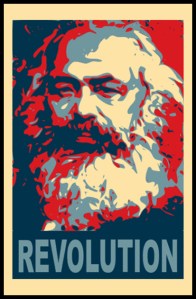

 The Boar's Head, Eastcheap